

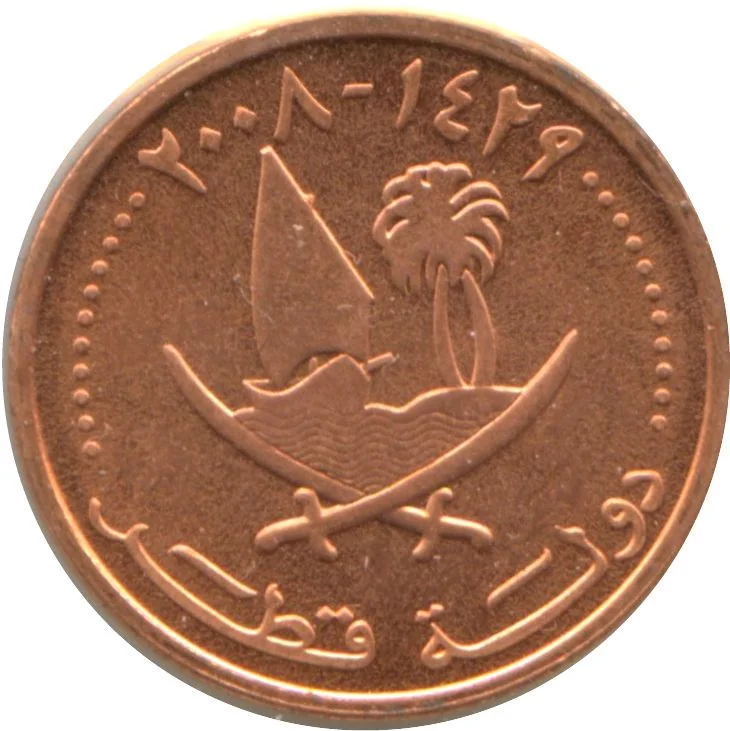
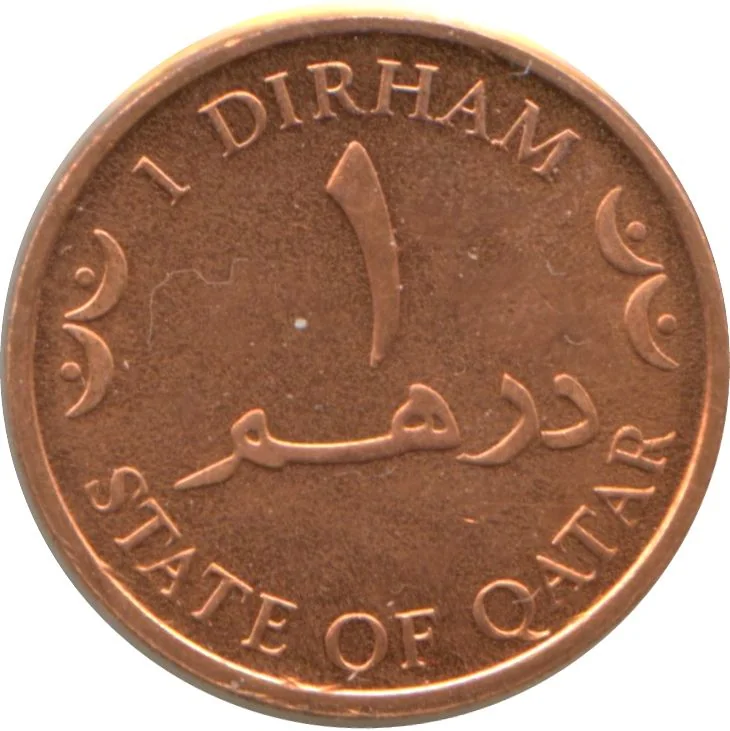
1 dirham – Qatar
Add to wishlist
Qatar
Context
Years: 2008–2012
Issuer: Qatar
Ruler: Hamad bin Khalifa Al Thani
Currency:
(since 1973)
Total mintage: 1,000,000
Material
References
KM: #
Numista: #24352
Value
Exchange value: 0.01 QAR
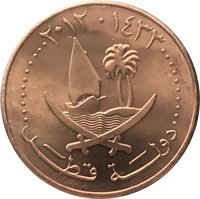
Obverse
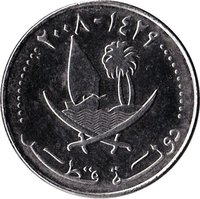
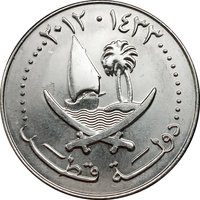
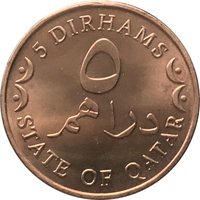
Reverse
Edge
Plain
Categories
| Transportation> Watercraft |
| Plant> Tree |
| Symbols> Coat of Arms |
| Object> Cold weapons |
Mints
| Name | Mark |
|---|---|
| Royal Mint | - |
| Münze Österreich | . |
Mintings
| Year | Mint Mark | Mintage | Quality | Collection |
|---|---|---|---|---|
| 2008 | — | — | ||
| 2012 | — | 1,000,000 |
Historical background
In 2008, Qatar's currency, the Qatari Riyal (QAR), was formally pegged to the U.S. dollar at a fixed rate of 3.64 QAR per USD, a policy established in July 2001. This peg provided stability for the booming economy, which was heavily reliant on hydrocarbon exports priced in dollars, and facilitated foreign investment in massive infrastructure projects. However, the peg also meant Qatar imported U.S. monetary policy, which became a significant challenge in 2008 as the Federal Reserve aggressively cut interest rates to combat the unfolding global financial crisis.
This created a policy divergence, as soaring oil and gas revenues were fueling intense domestic inflation in Qatar—peaking at over 15% in 2008—which demanded higher interest rates to cool the economy. Instead, Qatar was forced to follow the U.S. rate cuts, which risked exacerbating inflationary pressures and asset bubbles. Consequently, 2008 saw serious market speculation and debate about whether Qatar, along with other Gulf Cooperation Council (GCC) states, would break or revalue its dollar peg to regain control of its monetary policy and combat inflation more effectively.
Ultimately, Qatari officials repeatedly and forcefully reaffirmed their commitment to the dollar peg throughout the year, viewing long-term stability and GCC monetary union plans as higher priorities than short-term adjustments. The speculation subsided in late 2008 as the global crisis deepened and commodity prices fell, rapidly reducing inflationary pressures. The episode highlighted the inherent tensions of a dollar peg for a rapidly growing, commodity-driven economy, but Qatar maintained the peg, a policy that has remained in place ever since.
This created a policy divergence, as soaring oil and gas revenues were fueling intense domestic inflation in Qatar—peaking at over 15% in 2008—which demanded higher interest rates to cool the economy. Instead, Qatar was forced to follow the U.S. rate cuts, which risked exacerbating inflationary pressures and asset bubbles. Consequently, 2008 saw serious market speculation and debate about whether Qatar, along with other Gulf Cooperation Council (GCC) states, would break or revalue its dollar peg to regain control of its monetary policy and combat inflation more effectively.
Ultimately, Qatari officials repeatedly and forcefully reaffirmed their commitment to the dollar peg throughout the year, viewing long-term stability and GCC monetary union plans as higher priorities than short-term adjustments. The speculation subsided in late 2008 as the global crisis deepened and commodity prices fell, rapidly reducing inflationary pressures. The episode highlighted the inherent tensions of a dollar peg for a rapidly growing, commodity-driven economy, but Qatar maintained the peg, a policy that has remained in place ever since.
🌱 Fairly Common