

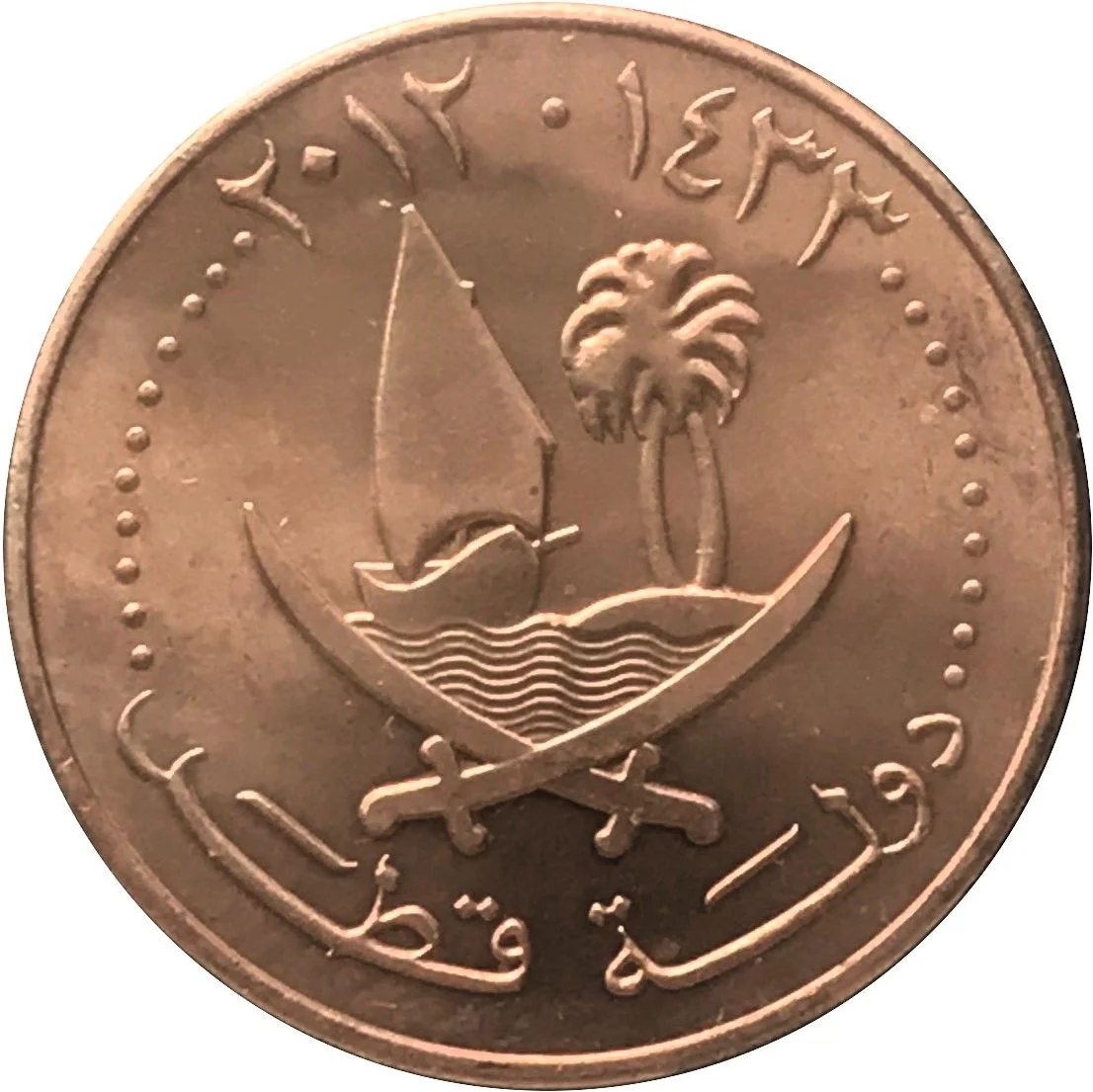
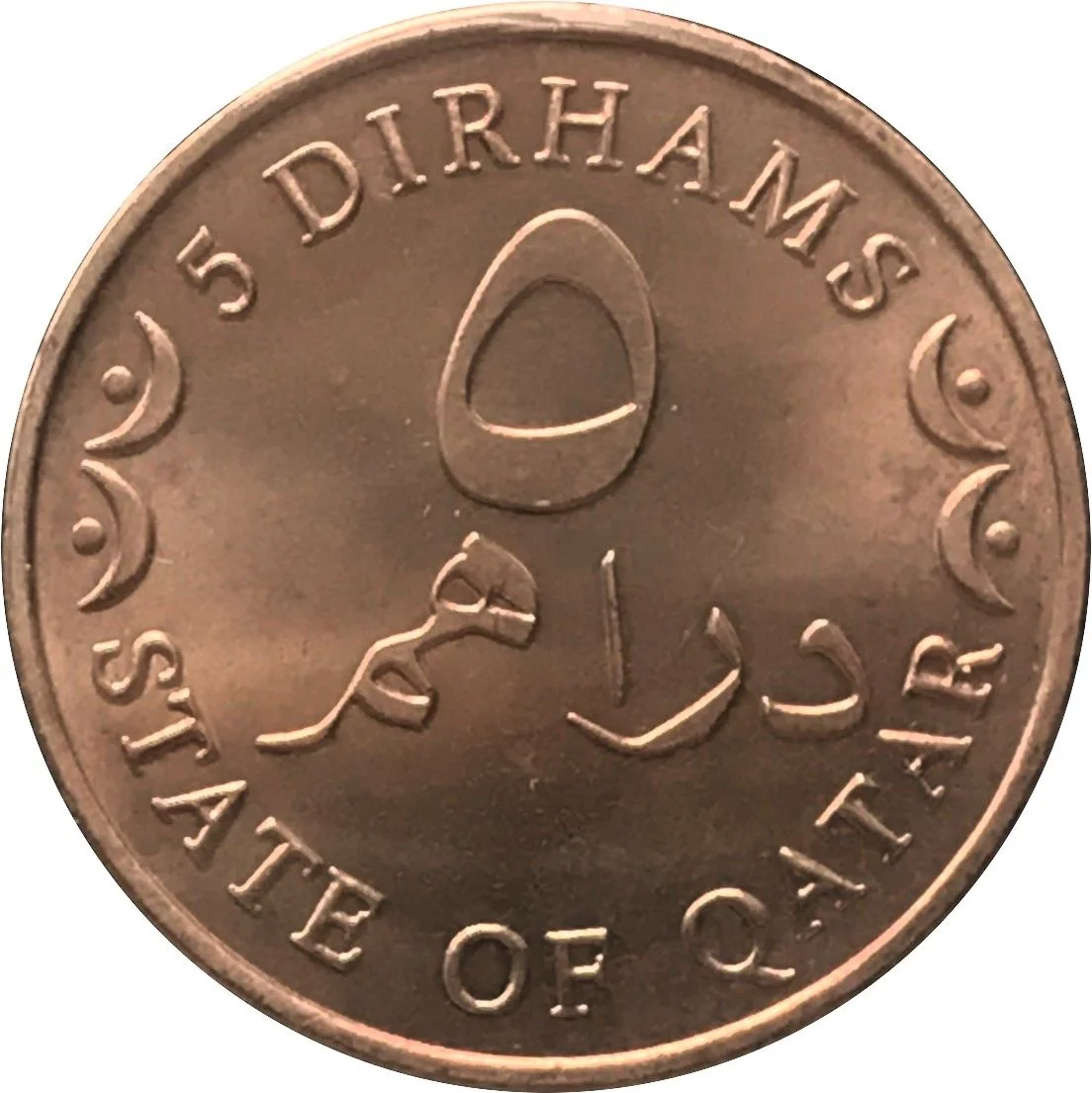
5 dirhams – Qatar
Add to wishlist
Qatar
Context
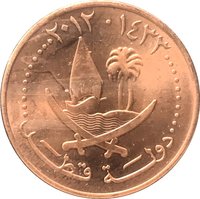
Year: 2012
Islamic (Hijri) Year:: 1433
Issuer: Qatar
Ruler: Hamad bin Khalifa Al Thani
Currency:
(since 1973)
Total mintage: 1,000,000
Material
References
KM: #
Numista: #46253
Value
Exchange value: 0.05 QAR
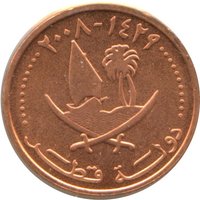
Obverse
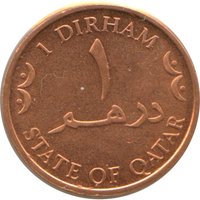
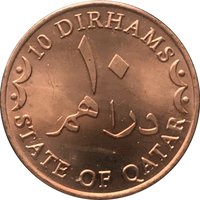
Reverse
Edge
Plain
Categories
| Symbols> Coat of Arms |
| Object> Cold weapons |
| Transportation> Watercraft |
| Plant> Tree |
Mints
| Name | Mark |
|---|---|
| Münze Österreich | — |
Mintings
| Year | Mint Mark | Mintage | Quality | Collection |
|---|---|---|---|---|
| 2012 | — | 1,000,000 |
Historical background
In 2012, Qatar's currency, the Qatari Riyal (QAR), was characterized by exceptional stability, firmly pegged to the US Dollar at a fixed rate of USD 1 = QAR 3.64. This long-standing peg, managed by the Qatar Central Bank (QCB), provided a crucial anchor for the nation's hydrocarbon-driven economy. It ensured predictable exchange rates for the vast majority of Qatar's imports and its critical exports of liquefied natural gas (LNG) and oil, which were priced in dollars. This stability was a cornerstone of investor confidence and economic planning during a period of massive infrastructure development in preparation for the 2022 FIFA World Cup.
The primary monetary policy challenge for the QCB in 2012 was not exchange rate volatility but managing domestic inflationary pressures and liquidity within the constraints of the dollar peg. With the US Federal Reserve keeping interest rates near zero following the 2008 financial crisis, Qatar faced the risk of imported loose monetary policy, which could overheat its booming economy. The central bank's efforts were therefore focused on using tools like reserve requirements and treasury bill issuances to control money supply and curb inflation, which remained a moderate concern despite significant government spending on construction and development projects.
Furthermore, 2012 solidified the Qatari Riyal's position within the broader Gulf Cooperation Council (GCC) monetary framework. Discussions for a proposed single GCC currency had stalled following the United Arab Emirates' withdrawal from the project in 2009, but Qatar remained formally committed to the long-term goal. In practice, however, the fixed dollar peg served Qatar's national economic interests effectively, insulating its currency from regional geopolitical uncertainties and aligning it with the currency of its primary trading and investment partners. Thus, the 2012 currency landscape was one of deliberate and managed stability, supporting the country's rapid economic expansion.
The primary monetary policy challenge for the QCB in 2012 was not exchange rate volatility but managing domestic inflationary pressures and liquidity within the constraints of the dollar peg. With the US Federal Reserve keeping interest rates near zero following the 2008 financial crisis, Qatar faced the risk of imported loose monetary policy, which could overheat its booming economy. The central bank's efforts were therefore focused on using tools like reserve requirements and treasury bill issuances to control money supply and curb inflation, which remained a moderate concern despite significant government spending on construction and development projects.
Furthermore, 2012 solidified the Qatari Riyal's position within the broader Gulf Cooperation Council (GCC) monetary framework. Discussions for a proposed single GCC currency had stalled following the United Arab Emirates' withdrawal from the project in 2009, but Qatar remained formally committed to the long-term goal. In practice, however, the fixed dollar peg served Qatar's national economic interests effectively, insulating its currency from regional geopolitical uncertainties and aligning it with the currency of its primary trading and investment partners. Thus, the 2012 currency landscape was one of deliberate and managed stability, supporting the country's rapid economic expansion.
🌱 Fairly Common