

1 dirham – Khoqand Khanate
Add to wishlist
Context
Year: 1811
Islamic (Hijri) Year:: 1226
Country: Central Asia
Issuer: Khoqand Khanate
Ruler: Muhammad Umar Khan
Currency:
(1796—1876)
Demonetized: Yes
Material
References
Numista: #242362
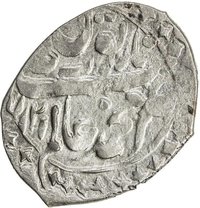
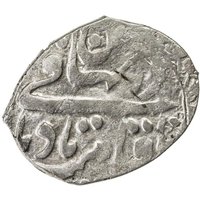
Obverse
Reverse
Edge
Mintings
| Year | Mint Mark | Mintage | Quality | Collection |
|---|---|---|---|---|
| 1811 | — | — |
Historical background
In 1811, the Khoqand Khanate, a burgeoning Central Asian power, was grappling with a complex and inflationary currency crisis. The state's rapid territorial expansion and military campaigns, particularly against the Kyrgyz tribes and into the Tian Shan region, placed immense strain on its treasury. To finance these endeavors, the rulers in Khoqand significantly increased the minting of silver tanga coins, but with a critical debasement—reducing their silver content and weight while maintaining their nominal face value. This practice, while providing short-term liquidity, eroded public trust and the currency's intrinsic worth.
The monetary landscape was further complicated by the circulation of older, purer coins from rival khanates like Bukhara and Khiva, as well as remnants from the earlier Durrani Empire. These foreign and historic coins, often valued higher due to their reliable silver content, circulated alongside Khoqand's own debased issues, creating a chaotic multi-currency system. Merchants and money-changers (sarraf) became essential but often exploitative intermediaries, determining exchange rates and deepening economic instability, especially for the common populace who bore the brunt of the hidden tax of inflation.
Despite this turmoil, the year 1811 fell within a period of significant economic ambition under rulers like Alim Khan. The crisis was paradoxically a symptom of the khanate's aggressive growth, as the state sought to centralize control over trade routes and fund a burgeoning administrative apparatus. The currency debasement was thus a deliberate, if ultimately destabilizing, fiscal policy to fund imperial aspirations, setting a precedent for the severe monetary disorders that would plague Khoqand throughout the 19th century until its annexation by the Russian Empire.
The monetary landscape was further complicated by the circulation of older, purer coins from rival khanates like Bukhara and Khiva, as well as remnants from the earlier Durrani Empire. These foreign and historic coins, often valued higher due to their reliable silver content, circulated alongside Khoqand's own debased issues, creating a chaotic multi-currency system. Merchants and money-changers (sarraf) became essential but often exploitative intermediaries, determining exchange rates and deepening economic instability, especially for the common populace who bore the brunt of the hidden tax of inflation.
Despite this turmoil, the year 1811 fell within a period of significant economic ambition under rulers like Alim Khan. The crisis was paradoxically a symptom of the khanate's aggressive growth, as the state sought to centralize control over trade routes and fund a burgeoning administrative apparatus. The currency debasement was thus a deliberate, if ultimately destabilizing, fiscal policy to fund imperial aspirations, setting a precedent for the severe monetary disorders that would plague Khoqand throughout the 19th century until its annexation by the Russian Empire.

✨ Legendary