

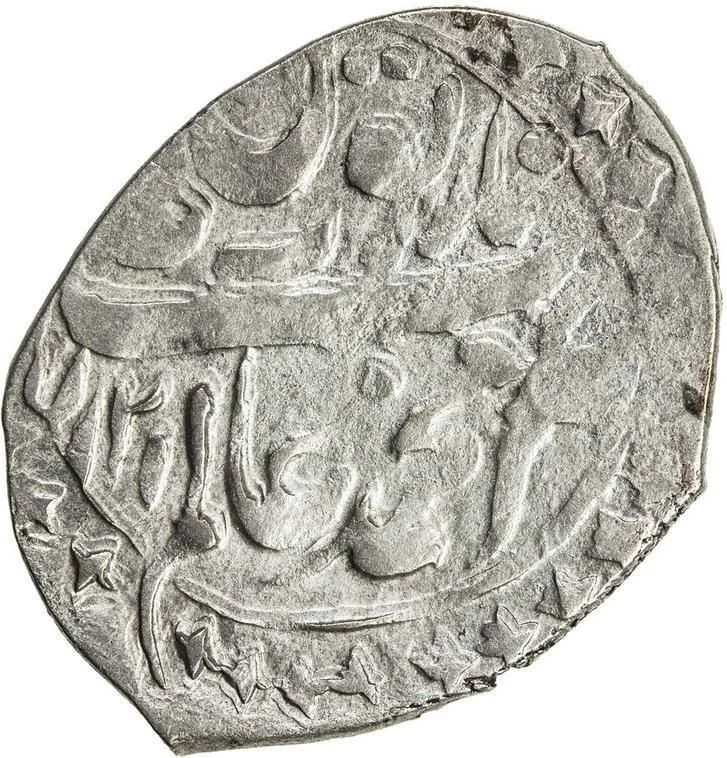
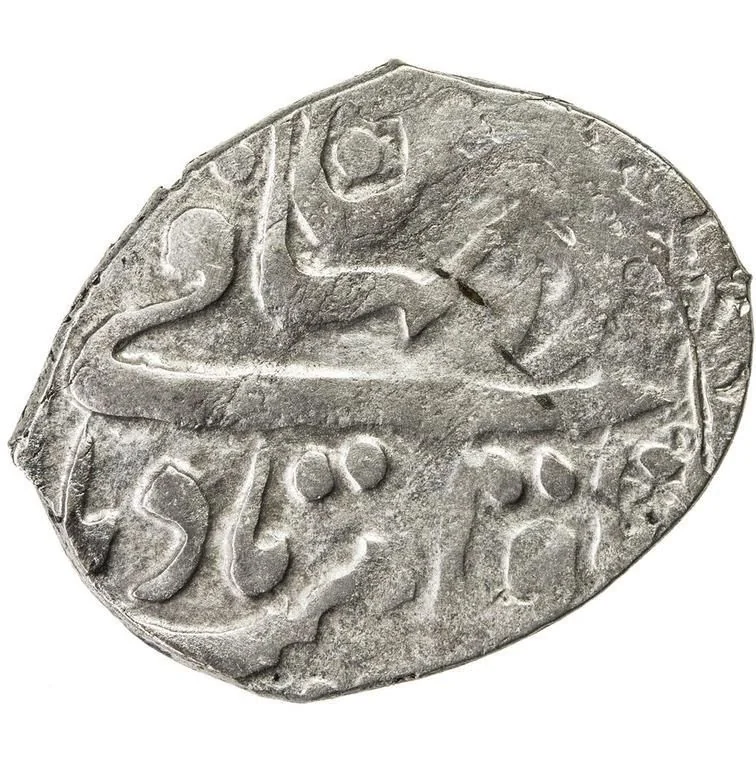
1 Dirham – Khoqand Khanate
Context
Years: 1801–1802
Country: Central Asia
Issuer: Khoqand Khanate
Ruler: Alim Khan
Currency:
(1796—1876)
Demonetized: Yes
Material
Diameter: 22 mm
Weight: 3.96 g
Silver weight: 3.96 g
Shape: Irregular round
Composition: Silver
Magnetic: No
References
Numista: #242361
Value
Bullion value: $11.03
Obverse
Reverse
Edge
Mintings
| Year | Mint Mark | Mintage | Quality | Collection |
|---|---|---|---|---|
| 1801 | — | — | ||
| 1802 | — | — |
Historical background
In 1801, the Khoqand Khanate, a Central Asian state controlling the fertile Fergana Valley and key segments of the Silk Road, operated a complex and strained monetary system. The primary currency was the silver tanga (or tenga), minted in the Khanate's capital and other cities like Andijan. However, the integrity and supply of this coinage were under significant pressure. Decades of almost constant military expansion under rulers like Narbuta Bey (c. 1770–1800) had drained the state's silver reserves, leading to chronic debasement—reducing the silver content in coins to fund the treasury and military campaigns.
This debasement created a multi-layered currency environment. Alongside the official, but weakened, Khoqandi tanga, older Bukharan and even Mughal rupees circulated, often valued higher due to their more reliable silver content. Furthermore, the economy relied heavily on copper puls for small-scale daily transactions, with their exchange rate against silver tangas fluctuating based on royal decree and market distrust. The Khanate's economy was fundamentally agrarian and trade-based, with taxes collected in both coin and kind, but the unstable coinage hampered commercial certainty.
Therefore, in 1801, the monetary situation was characterized by fragmentation and inflationary pressure. The incoming ruler, Alim Khan (r. 1800–1809), would inherit this challenge as he sought to centralize power. His policy of aggressively minting even more debased silver coinage to fund his professional army and further conquests would temporarily finance state strength but ultimately exacerbate the long-term economic instability, making the currency system a reflection of the Khanate's militaristic and expansionist priorities at the expense of monetary solidity.
This debasement created a multi-layered currency environment. Alongside the official, but weakened, Khoqandi tanga, older Bukharan and even Mughal rupees circulated, often valued higher due to their more reliable silver content. Furthermore, the economy relied heavily on copper puls for small-scale daily transactions, with their exchange rate against silver tangas fluctuating based on royal decree and market distrust. The Khanate's economy was fundamentally agrarian and trade-based, with taxes collected in both coin and kind, but the unstable coinage hampered commercial certainty.
Therefore, in 1801, the monetary situation was characterized by fragmentation and inflationary pressure. The incoming ruler, Alim Khan (r. 1800–1809), would inherit this challenge as he sought to centralize power. His policy of aggressively minting even more debased silver coinage to fund his professional army and further conquests would temporarily finance state strength but ultimately exacerbate the long-term economic instability, making the currency system a reflection of the Khanate's militaristic and expansionist priorities at the expense of monetary solidity.

✨ Legendary