

1 pul – Khoqand Khanate
Add to wishlist
Context
Years: 1823–1842
Country: Central Asia
Issuer: Khoqand Khanate
Ruler: Muhammad Ali Khan
Currency:
(1796—1876)
Demonetized: Yes
Material
References
Numista: #152241
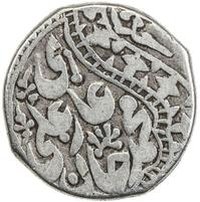
Obverse
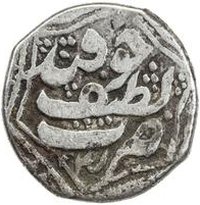
Reverse
Edge
Plain
Mintings
| Year | Mint Mark | Mintage | Quality | Collection |
|---|---|---|---|---|
| — | — | — |
Historical background
In 1823, the currency system of the Khoqand Khanate was a complex and deteriorating reflection of the state's political and economic pressures. The khanate, controlling key Silk Road cities and fertile Fergana Valley, minted its own coins, primarily silver tangas and copper puls. However, the authority and purity of these coins were increasingly unstable. Rampant counterfeiting by both private individuals and local feudal lords (beks) eroded public trust, while the central treasury, strained by military campaigns against the Emirate of Bukhara and Kyrgyz tribes, frequently debased the silver content to finance its expenditures. This created a multi-tiered currency environment where older, purer coins were hoarded and traded at a premium, while newer, inferior coins circulated at a discount.
The monetary chaos was exacerbated by the simultaneous circulation of a wide variety of older regional coins and foreign currencies, particularly Russian silver rubles and Bukharan tillas, which were often preferred for large transactions due to their more reliable intrinsic value. This effectively pushed the Khoqand Khanate towards a fractured monetary zone, where the state's currency competed with, and was often undermined by, more stable alternatives. The lack of uniform value not only hampered internal trade and tax collection but also reflected the weakening central authority of Khan Muhammad Ali (Madali), who struggled to control both the economy and his vast, rebellious territories.
Consequently, by 1823, the currency situation was a significant symptom of the khanate's deeper systemic issues. The debasement and counterfeit coins acted as a hidden tax on the population, fueling inflation and economic discontent. This financial instability weakened the state's capacity to govern and project power, coming at a critical juncture just as the khanate faced escalating internal rebellions and the gathering long-term geopolitical threat of the Russian Empire's southward expansion into Central Asia.
The monetary chaos was exacerbated by the simultaneous circulation of a wide variety of older regional coins and foreign currencies, particularly Russian silver rubles and Bukharan tillas, which were often preferred for large transactions due to their more reliable intrinsic value. This effectively pushed the Khoqand Khanate towards a fractured monetary zone, where the state's currency competed with, and was often undermined by, more stable alternatives. The lack of uniform value not only hampered internal trade and tax collection but also reflected the weakening central authority of Khan Muhammad Ali (Madali), who struggled to control both the economy and his vast, rebellious territories.
Consequently, by 1823, the currency situation was a significant symptom of the khanate's deeper systemic issues. The debasement and counterfeit coins acted as a hidden tax on the population, fueling inflation and economic discontent. This financial instability weakened the state's capacity to govern and project power, coming at a critical juncture just as the khanate faced escalating internal rebellions and the gathering long-term geopolitical threat of the Russian Empire's southward expansion into Central Asia.

✨ Legendary