

1 Tenga – Khoqand Khanate
Context
Year: 1875
Islamic (Hijri) Year: 1292
Country: Central Asia
Issuer: Khoqand Khanate
Ruler: Nasruddin Khan
Currency:
(1796—1876)
Demonetized: Yes
Material
References
Numista: #242354
Obverse
Reverse
Edge
Mintings
| Year | Mint Mark | Mintage | Quality | Collection |
|---|---|---|---|---|
| 1875 | — | — |
Historical background
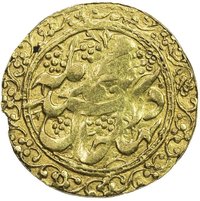
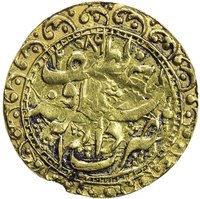
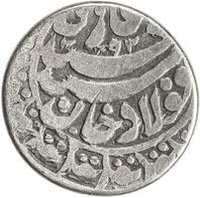
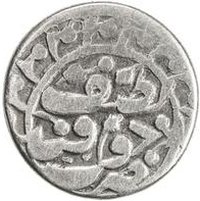
By 1875, the currency system of the Khoqand Khanate was in a state of severe crisis, reflecting the political and economic disintegration of the state itself. The Khanate, located in the Fergana Valley, had long relied on a bimetallic system of silver tangas and copper puls, but decades of internal strife, succession conflicts, and costly wars with its Bukharan rival and the expanding Russian Empire had exhausted the treasury. Successive khans resorted to drastic debasement, sharply reducing the silver content in coins to fund military expenditures and court luxury, leading to rampant inflation and a loss of public trust in the official currency.
This monetary collapse created a fragmented and unreliable economic environment. Alongside the debased official coinage, older, purer coins from earlier reigns remained in circulation but were hoarded, while barter became increasingly common for everyday transactions. The situation was further complicated by the circulation of currencies from neighboring powers, particularly Russian rubles and Bukharan coins, which were often preferred for their stability in border regions and trade. This effectively meant the Khanate was losing monetary sovereignty, as its own currency became unfit for large-scale commerce or storing value.
The chaotic currency situation of 1875 was a direct symptom of the Khanate's terminal decline. Later that same year, following a popular uprising against the ruling Khan Khudayar, the Russian Empire launched a final military campaign, citing the instability as a threat to its Central Asian interests. The conquest was swift, and by early 1876, the Khanate was fully annexed as the Fergana Oblast of Russian Turkestan. The Russian administration promptly abolished the local coinage, replacing it with the imperial ruble, thereby definitively ending Khoqand's independent monetary history.
This monetary collapse created a fragmented and unreliable economic environment. Alongside the debased official coinage, older, purer coins from earlier reigns remained in circulation but were hoarded, while barter became increasingly common for everyday transactions. The situation was further complicated by the circulation of currencies from neighboring powers, particularly Russian rubles and Bukharan coins, which were often preferred for their stability in border regions and trade. This effectively meant the Khanate was losing monetary sovereignty, as its own currency became unfit for large-scale commerce or storing value.
The chaotic currency situation of 1875 was a direct symptom of the Khanate's terminal decline. Later that same year, following a popular uprising against the ruling Khan Khudayar, the Russian Empire launched a final military campaign, citing the instability as a threat to its Central Asian interests. The conquest was swift, and by early 1876, the Khanate was fully annexed as the Fergana Oblast of Russian Turkestan. The Russian administration promptly abolished the local coinage, replacing it with the imperial ruble, thereby definitively ending Khoqand's independent monetary history.
✨ Legendary