

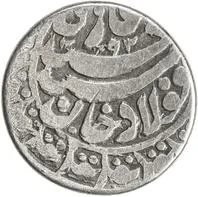
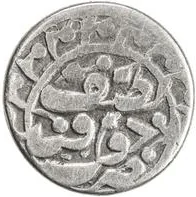
1 tenga – Khoqand Khanate
Add to wishlist
Context
Year: 1876
Islamic (Hijri) Year:: 1293
Country: Central Asia
Issuer: Khoqand Khanate
Ruler: Muhammad Pulad Beg Khan
Currency:
(1796—1876)
Demonetized: Yes
Material
References
Numista: #242353
Value
Bullion value: $7.01
Mintings
| Year | Mint Mark | Mintage | Quality | Collection |
|---|---|---|---|---|
| 1876 | — | — |
Historical background
By 1876, the currency situation in the Khoqand Khanate was one of profound instability and decline, mirroring the political fate of the state itself. For decades, the Khanate had issued its own silver tilla and copper pul coins, but the repeated Russian military incursions and punitive indemnities imposed after the 1865 capture of Tashkent had drained the treasury of precious metal reserves. This led to a severe debasement of the coinage, with later issues containing significantly less silver, undermining public trust and the currency's value in both domestic and regional trade.
The monetary chaos was exacerbated by the circulation of a wide variety of older Khoqandi coins alongside currencies from the neighboring Emirate of Bukhara and the Russian Empire. As Russian political and economic influence became dominant following the establishment of the Turkestan Governor-Generalship in 1867, Russian rubles and kopecks began to circulate more widely, particularly in northern territories and among officials and merchants engaged with the colonial administration. This created a dual monetary system that was fragmented and inefficient.
The situation reached its terminus in early 1876. Following the anti-Russian uprising led by Pulad Khan, Russian forces under General Konstantin von Kaufman moved to fully annex the Khanate. In February 1876, Tsar Alexander II formally abolished the Khoqand Khanate, incorporating its territories into the Russian Empire as the Fergana Oblast. With this political extinction, the Khoqand mint ceased operation permanently. The Russian ruble was declared the sole official currency, systematically replacing the debased and discredited Khoqandi coinage and ending its centuries-long monetary history.
The monetary chaos was exacerbated by the circulation of a wide variety of older Khoqandi coins alongside currencies from the neighboring Emirate of Bukhara and the Russian Empire. As Russian political and economic influence became dominant following the establishment of the Turkestan Governor-Generalship in 1867, Russian rubles and kopecks began to circulate more widely, particularly in northern territories and among officials and merchants engaged with the colonial administration. This created a dual monetary system that was fragmented and inefficient.
The situation reached its terminus in early 1876. Following the anti-Russian uprising led by Pulad Khan, Russian forces under General Konstantin von Kaufman moved to fully annex the Khanate. In February 1876, Tsar Alexander II formally abolished the Khoqand Khanate, incorporating its territories into the Russian Empire as the Fergana Oblast. With this political extinction, the Khoqand mint ceased operation permanently. The Russian ruble was declared the sole official currency, systematically replacing the debased and discredited Khoqandi coinage and ending its centuries-long monetary history.

✨ Legendary