

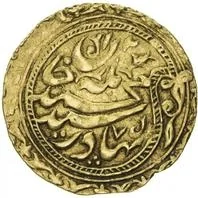
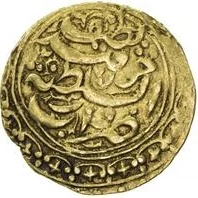
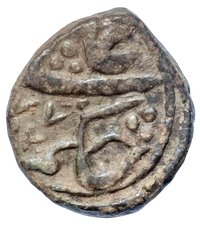
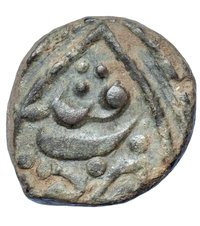
1 tilla – Khoqand Khanate
Add to wishlist
Context
Years: 1859–1861
Country: Central Asia
Issuer: Khoqand Khanate
Ruler: Muhammad Mallya Beg Khan
Currency:
(1796—1876)
Demonetized: Yes
Material
References
Numista: #242352
Value
Bullion value: $687.78
Mintings
| Year | Mint Mark | Mintage | Quality | Collection |
|---|---|---|---|---|
| 1859 | — | — | ||
| 1859 | — | — | ||
| 1860 | — | — | ||
| 1861 | — | — |
Historical background
By 1859, the currency system of the Khoqand Khanate was in a state of severe crisis, reflecting the broader political and economic instability of the realm. The Khanate, a major Central Asian power centered in the Fergana Valley, had long minted its own silver tanga and copper pul coins. However, decades of expensive military campaigns against the Emirate of Bukhara, the Kyrgyz tribes, and most pressingly, the advancing Russian Empire, had drained the state treasury. To finance these wars, successive Khans, particularly Khudayar Khan (in his third reign, 1858-1862), resorted to drastic debasement, significantly reducing the silver content in the tanga while increasing its nominal value.
This monetary policy led to rampant inflation, a collapse in public trust, and chaotic circulation. The debased Khoqandi coins circulated alongside older, purer issues, as well as a flood of foreign currencies including Russian rubles, Bukharan tenga, and even Persian and Afghan coins, creating a bewildering and inefficient marketplace. The disparity between the official and market value of the currency was stark, crippling both internal trade and the vital caravan commerce that crossed the Khanate. Artisans, merchants, and the peasantry bore the brunt of this instability, facing unpredictable price surges for basic goods.
The currency chaos of 1859 was a direct symptom of the Khoqand Khanate's fading sovereignty. Khudayar Khan's attempts at centralization and reform, including in the monetary sphere, were undermined by powerful, rebellious tribal leaders and the ever-present Russian threat from the north. The unreliable money supply eroded the state's economic foundation, making it increasingly difficult to pay soldiers and administer effectively. This financial disintegration paralleled the political fragmentation that would, within a decade and a half, culminate in the Khanate's complete annexation by the Russian Empire in 1876.
This monetary policy led to rampant inflation, a collapse in public trust, and chaotic circulation. The debased Khoqandi coins circulated alongside older, purer issues, as well as a flood of foreign currencies including Russian rubles, Bukharan tenga, and even Persian and Afghan coins, creating a bewildering and inefficient marketplace. The disparity between the official and market value of the currency was stark, crippling both internal trade and the vital caravan commerce that crossed the Khanate. Artisans, merchants, and the peasantry bore the brunt of this instability, facing unpredictable price surges for basic goods.
The currency chaos of 1859 was a direct symptom of the Khoqand Khanate's fading sovereignty. Khudayar Khan's attempts at centralization and reform, including in the monetary sphere, were undermined by powerful, rebellious tribal leaders and the ever-present Russian threat from the north. The unreliable money supply eroded the state's economic foundation, making it increasingly difficult to pay soldiers and administer effectively. This financial disintegration paralleled the political fragmentation that would, within a decade and a half, culminate in the Khanate's complete annexation by the Russian Empire in 1876.
✨ Legendary