

5 francs – Monaco
Add to wishlist
Monaco
Context
Years: 1970–1995
Issuer: Monaco
Ruler: Rainier III
Currency:
(1960—2001)
Demonetized: Yes
Total mintage: 674,700
Material
Diameter: 29 mm
Weight: 10 g
Thickness: 2.2 mm
Shape: Round
Composition: Copper-nickel
Technique: Milled
Alignment: Coin alignment
flip
References
KM: #
Numista: #2419
Value
Exchange value: 5 MCF
Obverse
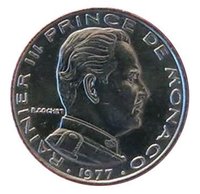
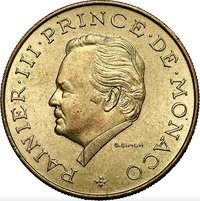
Description:
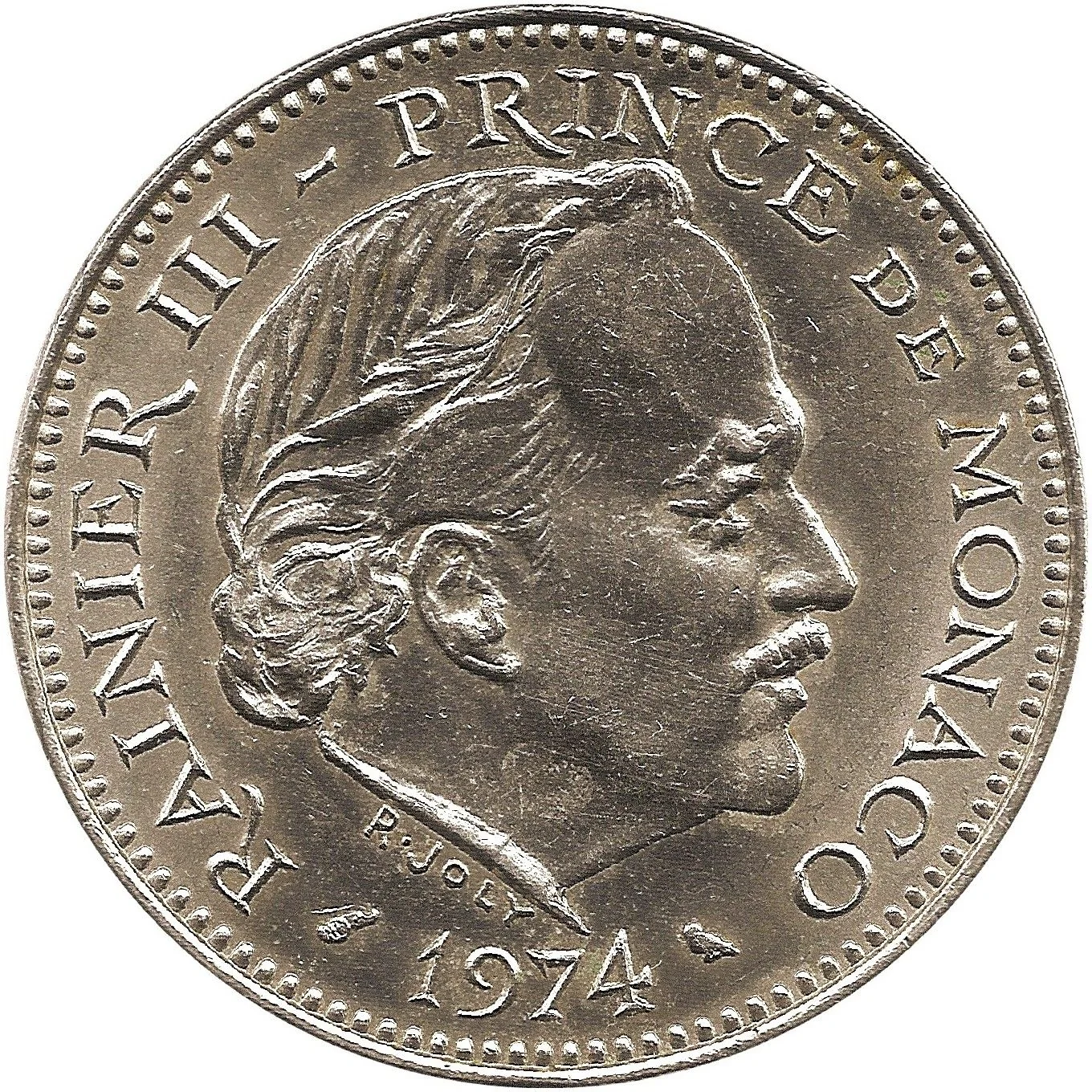
Rainier III, right-facing portrait with date beneath.
Inscription:
RAINIER III - PRINCE DE MONACO
R. JOLY
1974
R. JOLY
1974
Translation:
Rainier III - Prince of Monaco
R. Joly
1974
R. Joly
1974
Script: Latin
Language: French
Engraver: Raymond Joly
Reverse
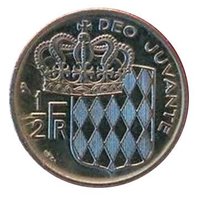
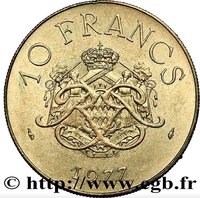
Description:
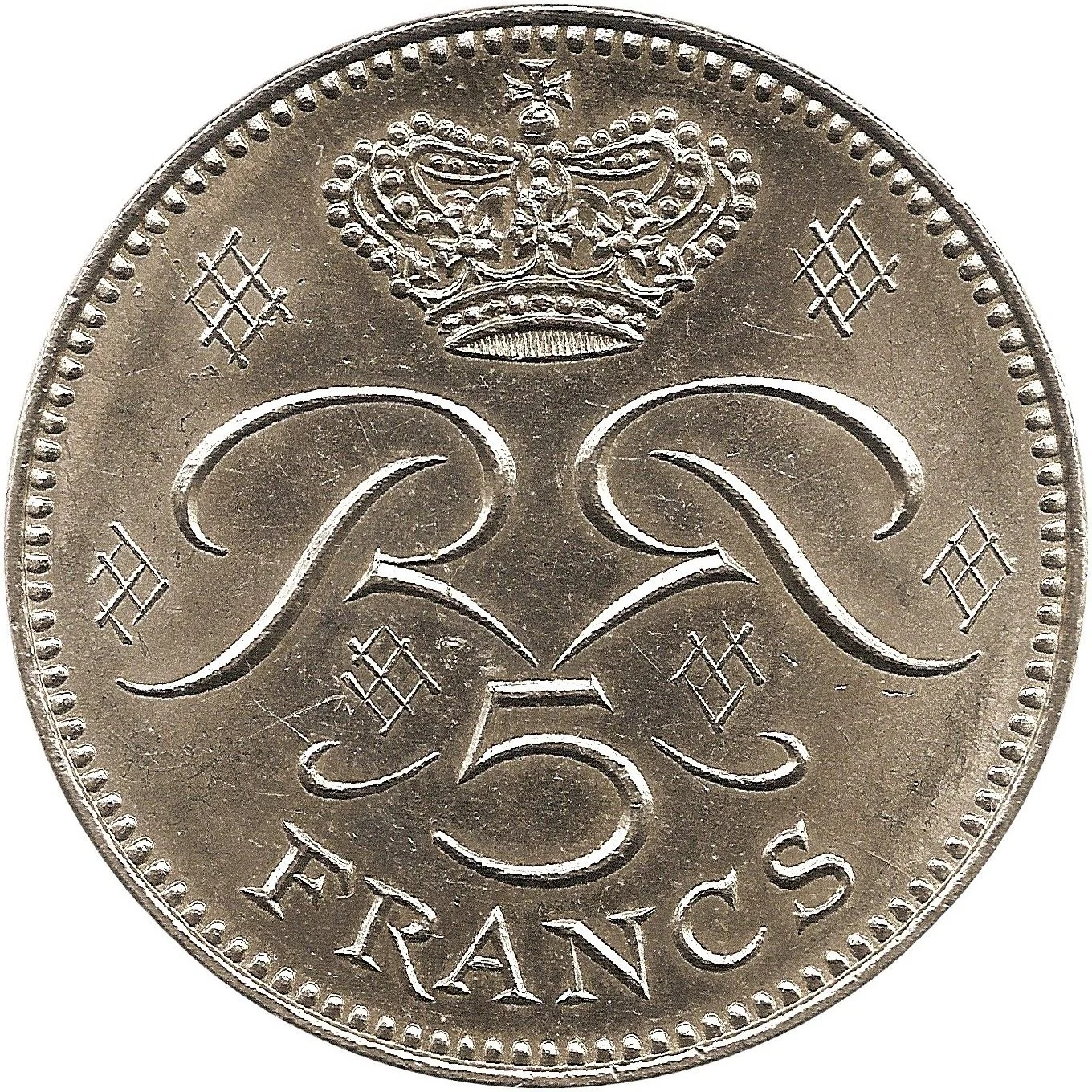
Monogram and crown over lined designs.
Inscription:
RR
5
FRANCS
5
FRANCS
Script: Latin
Engraver: Raymond Joly
Edge
Reeded
Mints
| Name | Mark |
|---|---|
| Monnaie de Paris | — |
Mintings
| Year | Mint Mark | Mintage | Quality | Collection |
|---|---|---|---|---|
| 1970 | — | — | ||
| 1971 | — | 250,000 | ||
| 1974 | — | 145,000 | ||
| 1975 | — | 14,000 | ||
| 1976 | — | 14,000 | ||
| 1977 | — | 14,500 | ||
| 1978 | — | 10,000 | ||
| 1979 | — | 10,000 | ||
| 1982 | — | 152,200 | ||
| 1989 | — | 35,000 | ||
| 1995 | — | 30,000 | In sets |
Historical background
In 1970, Monaco's currency situation was fundamentally defined by its unique political and economic relationship with France, governed by the 1963 Monetary Convention. This treaty solidified Monaco's integration into the French franc zone, making the French franc (FRF) the principality's official legal tender. The Monegasque government, while possessing the right to mint its own coinage, did so strictly in alignment with French specifications, ensuring these coins circulated at par with French francs and were accepted interchangeably throughout France. This arrangement effectively ceded monetary sovereignty to France, with the Banque de France managing monetary policy for the principality.
Economically, this system provided immense stability for Monaco's burgeoning tourism and luxury sectors. By pegging itself to a major international currency, Monaco eliminated exchange rate risk with its largest economic partner, facilitated seamless cross-border transactions, and bolstered investor confidence. The principality's own coinage, featuring the effigy of Prince Rainier III, served more as a symbol of national identity and a collector's item than as an independent monetary instrument. The financial landscape was dominated by French banking institutions, which provided the necessary services for the local economy and the growing number of international businesses and wealthy residents.
Therefore, the currency "situation" in 1970 was one of deliberate and stable dependency. There were no currency crises or debates about monetary independence, as seen in some other microstates. The system functioned smoothly, supporting Monaco's economic growth and elite status. This framework would remain unchanged for decades until the next major shift, which was driven externally by France's own adoption of the euro, leading to a new treaty in 2002 that seamlessly integrated Monaco into the eurozone.
Economically, this system provided immense stability for Monaco's burgeoning tourism and luxury sectors. By pegging itself to a major international currency, Monaco eliminated exchange rate risk with its largest economic partner, facilitated seamless cross-border transactions, and bolstered investor confidence. The principality's own coinage, featuring the effigy of Prince Rainier III, served more as a symbol of national identity and a collector's item than as an independent monetary instrument. The financial landscape was dominated by French banking institutions, which provided the necessary services for the local economy and the growing number of international businesses and wealthy residents.
Therefore, the currency "situation" in 1970 was one of deliberate and stable dependency. There were no currency crises or debates about monetary independence, as seen in some other microstates. The system functioned smoothly, supporting Monaco's economic growth and elite status. This framework would remain unchanged for decades until the next major shift, which was driven externally by France's own adoption of the euro, leading to a new treaty in 2002 that seamlessly integrated Monaco into the eurozone.
🌱 Very Common