Logo Title
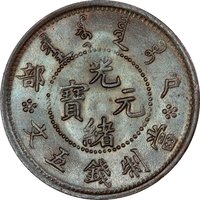
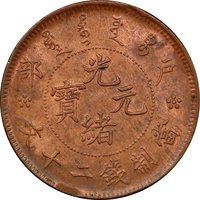
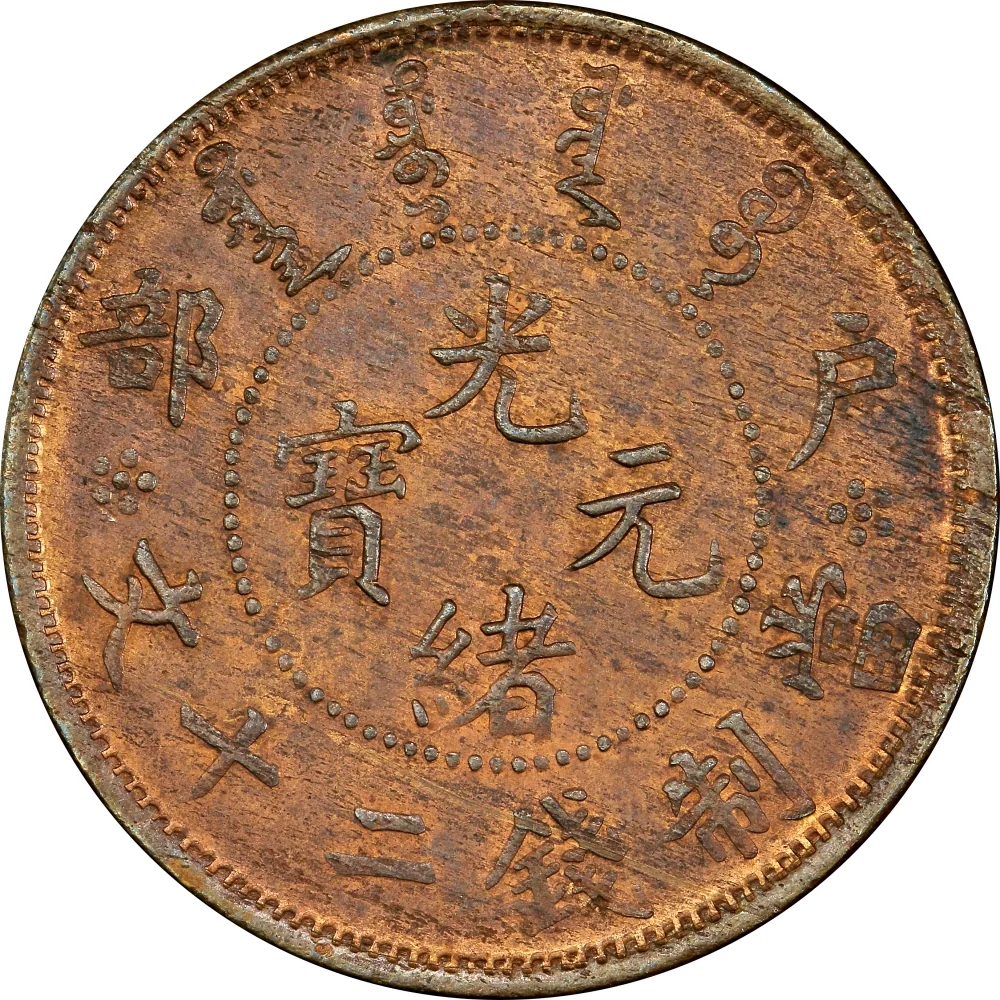
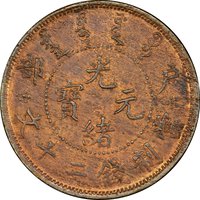
obverse
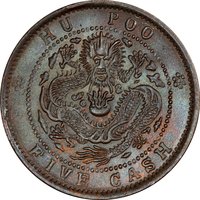
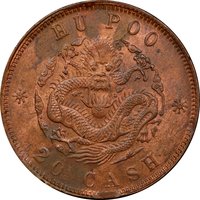
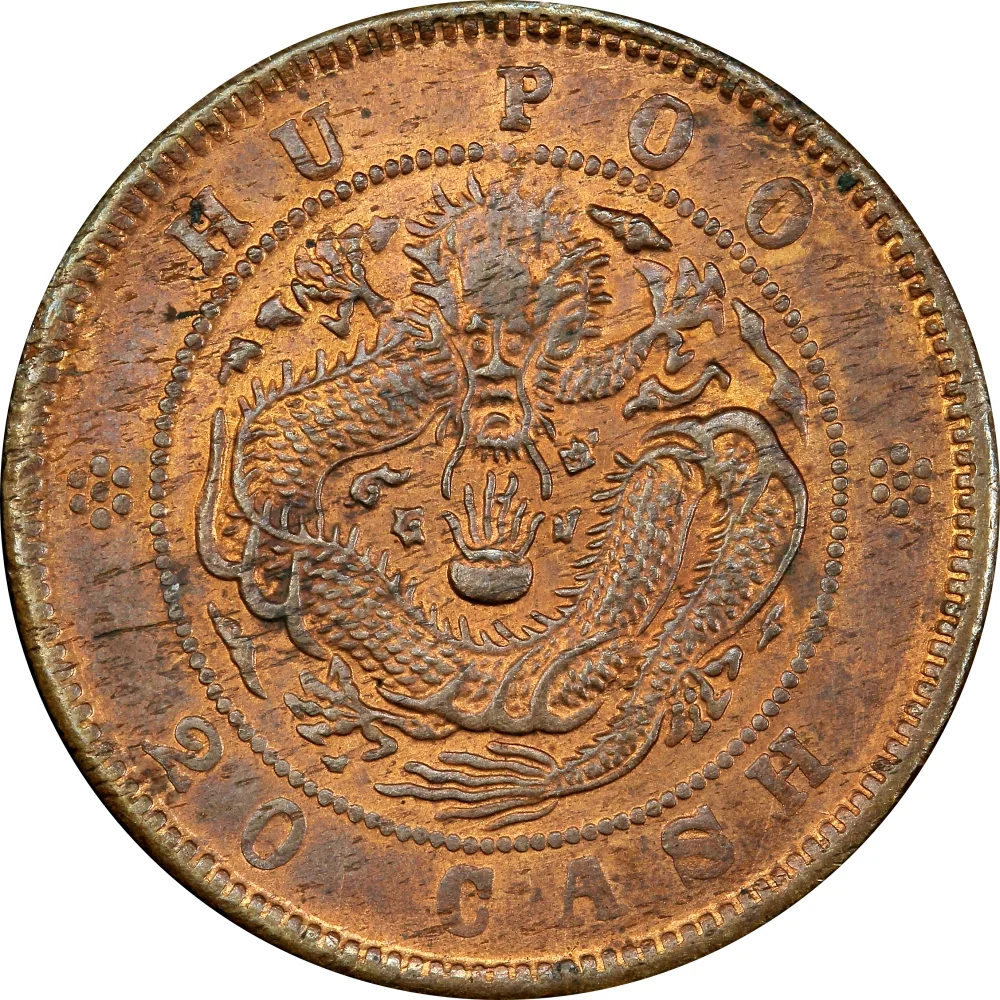
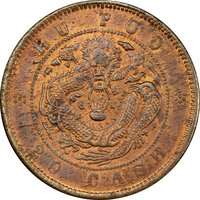
reverse
PCGS
Context
Years: 1903–1905
Country: China Country flag
Ruler: Guangxu
Currency:
(1903—1912)
Demonetized: Yes
Material
Diameter: 32 mm
Weight: 10.14 g
Shape: Round
Composition: Copper
Magnetic: No
Technique: Milled
Alignment: Medal alignment
Obverse
OBVERSE ↑
flip
Reverse
REVERSE ↑
References
Y: #Click to copy to clipboard5aa
Numista: #241370

Obverse

Description:
Four Chinese characters read vertically, right to left, with Manchu text above and additional characters around.
Inscription:
ᠪᠠᡩᠠᡵᠠᠩᡤᠠ ᡩᠣᡵᠣ ᡳ ᠶᡠᠸᠠᠨ ᠪᠣᠣ

部戶


寶 元


文十二錢制當
Translation:
BADARANGGA DORO I YUWAN BOO

Board of Revenue

Guangxu

Treasure Yuan

12 Cash, Equivalent to Coinage
Languages: Manchu, Chinese

Reverse

Description:
Dragon encircling a pearl, English legend above and below.
Inscription:
HU POO

20 CASH
Translation:
HU POO

20 CASH
Script: Latin
Language: English

Edge

Plain

Mintings

YearMint MarkMintageQualityCollection

Historical background

In 1903, the currency system of the Qing Empire was a chaotic and fragmented reflection of its waning imperial authority and economic distress. There was no unified national currency. The primary medium for large transactions and state finance remained the silver tael (liang), a unit of weight rather than a coin, leading to countless local variants and crippling complexity. Concurrently, a vast array of copper cash coins, often strung together, served as the everyday currency for the masses, but their exchange rate against silver fluctuated wildly, causing hardship for peasants and laborers. This bimetallic system, unstable and regionally inconsistent, severely hampered domestic trade and governance.

Compounding this internal disarray was the aggressive influx of foreign silver dollars, most notably the Mexican "Silver Eagle," which circulated widely due to its reliable weight and fineness. These foreign coins were often preferred in coastal trade hubs, undermining the Qing's monetary sovereignty. Furthermore, to finance indemnities from the Boxer Protocol (1901), the imperial government had to borrow heavily in foreign currency, increasing its financial dependence. Provincial mints also operated with little central oversight, producing silver and copper coins of varying quality, which further debased the currency and fueled inflation in some regions.

Recognizing this crisis as both an economic and symbolic failure, the Qing court had begun tentative reforms. In 1903, the newly established Imperial Mint in Tianjin was preparing to produce a standardized national silver coin, the "Yuan," in an attempt to displace the tael and foreign dollars. This was part of a broader, last-ditch effort at modernization under the post-Boxer "New Policies." However, in 1903, these reforms were still in their infancy, and the reality for most Chinese was a bewildering monetary landscape of old and new, native and foreign—a tangible symptom of an empire struggling to adapt to the modern world while its fiscal foundations crumbled.

Series: 1903 Empire of China circulation coins

5 Cash obverse
5 Cash reverse
5 Cash
1903-1905
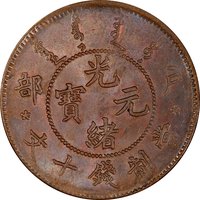
10 Cash obverse
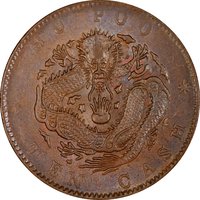
10 Cash reverse
10 Cash
1903-1905
20 Cash obverse
20 Cash reverse
20 Cash
1903-1917
20 Cash obverse
20 Cash reverse
20 Cash
1903-1905
💎 Very Rare