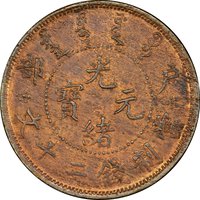
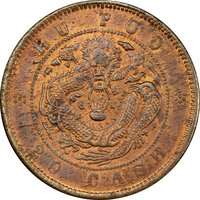
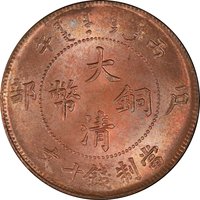
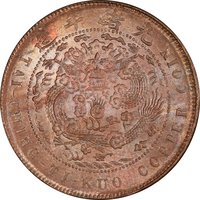
In 1904, the currency situation of the Qing Empire, often referred to internationally as the Empire of China, was one of profound complexity and instability, reflecting the dynasty's broader political and economic decay. The monetary system was not unified but a chaotic patchwork of traditional silver ingots (
sycee), which varied in weight and purity by region, and a multitude of copper-alloy
cash coins for daily small transactions. Crucially, there was no standard national silver coin; instead, a flood of foreign-minted silver dollars—most notably the Mexican "Eagle" dollar—circulated as the dominant medium for substantial trade, undermining monetary sovereignty. This fragmentation severely hampered interregional commerce and state revenue collection, exposing an economy unable to adapt to modern financial demands.
The imperial government, weakened by the Boxer Rebellion and the indemnity imposed by the Boxer Protocol (1901), faced immense pressure to reform. Efforts to create a unified currency were underway, led by the newly established Ministry of Finance and provincial mints. In 1904, the central authorities were actively planning a shift to a silver standard based on a new national yuan dollar, with regulations attempting to standardize weight and fineness. However, these reforms were inconsistently implemented. Provincial authorities and even powerful viceroys often issued their own coinage, while the continued circulation of old sycee and foreign coins created a multi-tiered system where exchange rates fluctuated constantly, fostering widespread confusion and opportunity for fraud.
Thus, in 1904, the Empire stood at a precarious monetary crossroads. The recognized necessity for a modern, uniform currency to stabilize the economy and centralize power was clear, and bureaucratic machinery was in motion. Yet, the reality on the ground remained one of disarray, with traditional, provincial, and foreign currencies all competing. This chaotic backdrop not only stifled economic development but also symbolized the Qing state's struggle to assert effective control, a financial weakness that would persist until the dynasty's fall just a few years later.