

50 centesimi – Italy
Add to wishlist
Italy
Context
Years: 1919–1935
Issuer: Italy
Ruler: Vittorio Emanuele III
Currency:
(1861—2001)
Demonetized: Yes
Total mintage: 75,483,200
Material
References
KM: #
Numista: #2395
Value
Exchange value: 0.50 ITL
Obverse
Description:
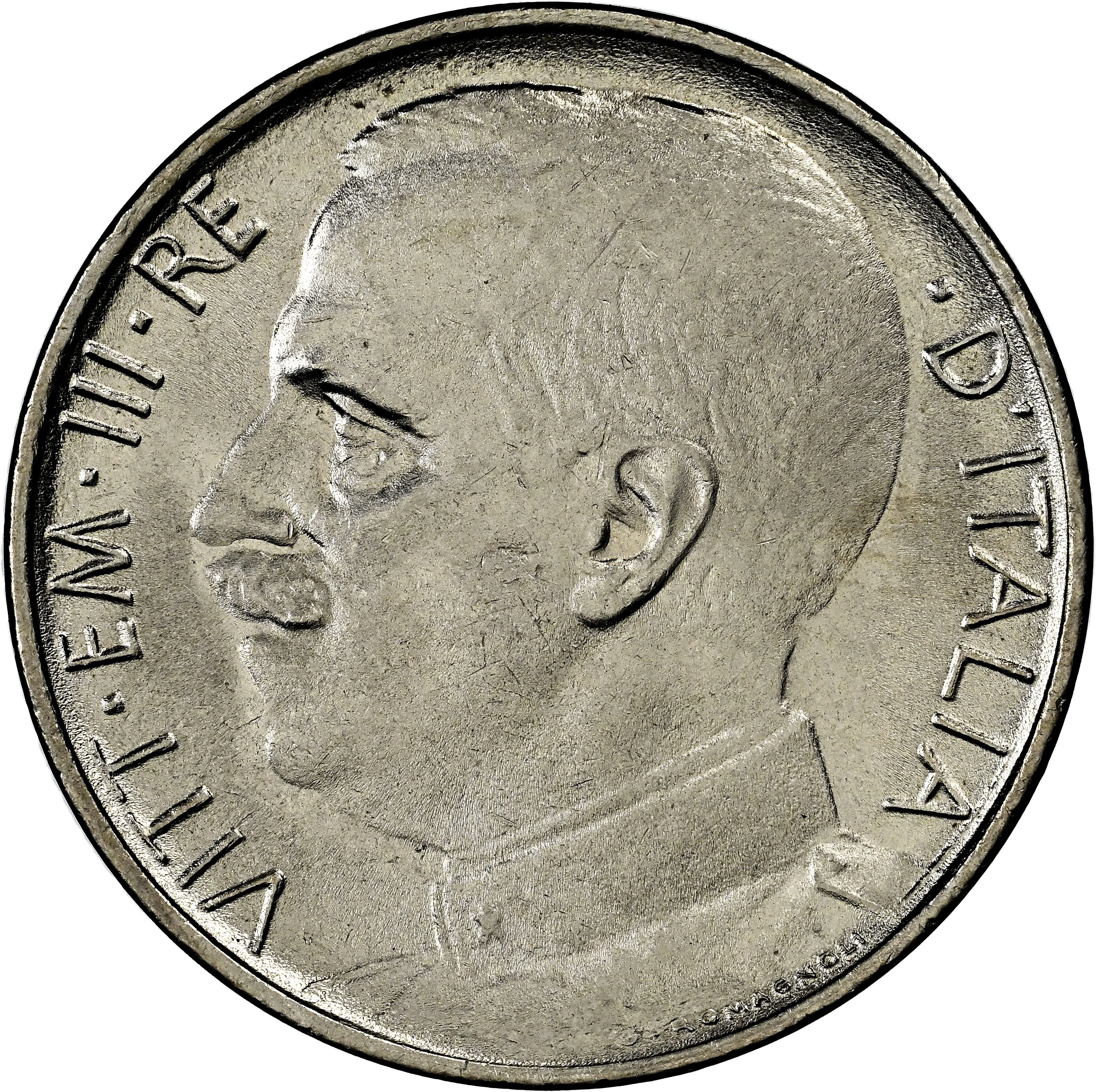
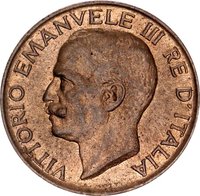
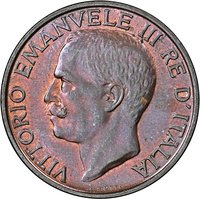
King Vittorio Emanuele III in left-facing uniform portrait. Engraver's name on uniform, lettering around edge.
Inscription:
VITT·EM·III·RE·D'ITALIA
G· ROMAGNOLI
G· ROMAGNOLI
Translation:
Victor Emmanuel III King of Italy
G. Romagnoli
G. Romagnoli
Script: Latin
Engraver: Giovanni Romagnoli
Reverse
Description:
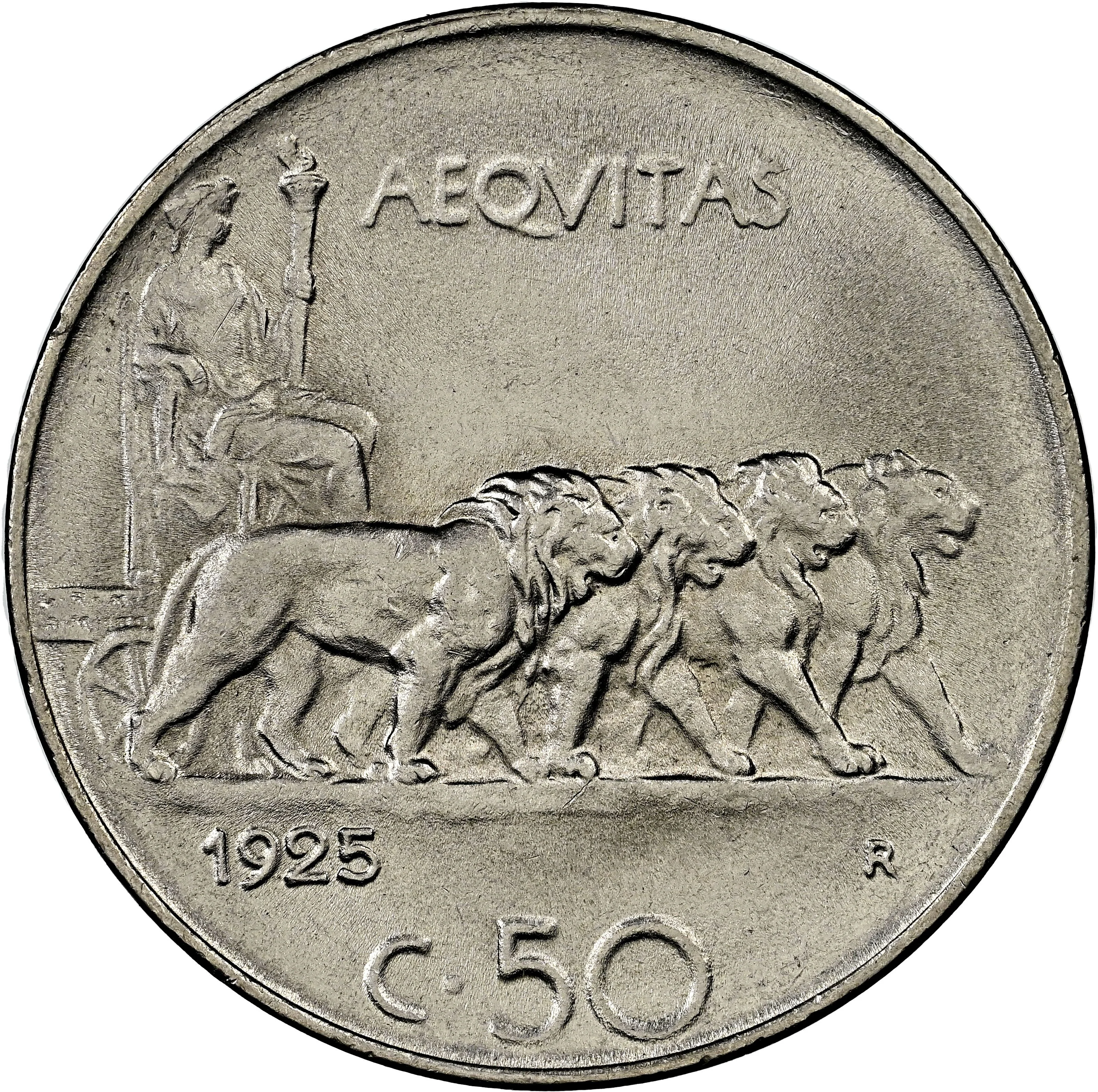
Justice as a torch-bearing figure in a chariot drawn right by four lions. Artist and engraver initials on chariot; legend above, date, mintmark, and value below.
Inscription:
AEQVITAS
G.R.M.
A. MOTTI
1925 R
C. 50
G.R.M.
A. MOTTI
1925 R
C. 50
Script: Latin
Engraver: Attilio Silvio Motti
Edge
Plain
Mints
| Name | Mark |
|---|---|
| Rome | R |
Mintings
Historical background
In the aftermath of the First World War, Italy faced a severe and multifaceted currency crisis rooted in the financial methods used to fund the conflict. The government had largely abandoned the gold standard and financed the war not through taxation but through massive borrowing from the Bank of Italy and from its own citizens via war bonds. This led to an enormous expansion of the money supply, with paper currency in circulation increasing more than sevenfold between 1914 and 1919. Consequently, the value of the Italian lira plummeted on foreign exchange markets, losing over half of its pre-war value against currencies like the US dollar and British pound, while domestic inflation soared, eroding purchasing power.
The situation was exacerbated by the structural weaknesses of the Italian economy and the political turmoil of the period. The country was deeply divided, burdened with heavy war debts, and contained a stark north-south economic divide. The post-war governments, fragile and short-lived, faced immense pressure to maintain social stability amidst rising unemployment and socialist agitation. Rather than imposing austerity, they continued deficit spending to subsidize essential goods and support industries, further fueling inflation. This created a vicious cycle where the falling external value of the lira increased the cost of vital imports like coal and grain, which in turn drove domestic prices higher and put more pressure on the currency.
By 1919, Italy was thus caught in a classic post-war inflationary spiral with a sharply depreciating currency. The crisis set the stage for the economic and social unrest that would characterize the Biennio Rosso (1919-1920) and ultimately contribute to the political conditions that brought Benito Mussolini and the Fascists to power in 1922. The lira's instability would remain a central economic problem throughout the 1920s, culminating in Mussolini's politically driven "Battle for the Lira" in 1927, which revalued the currency at great cost to the Italian economy.
The situation was exacerbated by the structural weaknesses of the Italian economy and the political turmoil of the period. The country was deeply divided, burdened with heavy war debts, and contained a stark north-south economic divide. The post-war governments, fragile and short-lived, faced immense pressure to maintain social stability amidst rising unemployment and socialist agitation. Rather than imposing austerity, they continued deficit spending to subsidize essential goods and support industries, further fueling inflation. This created a vicious cycle where the falling external value of the lira increased the cost of vital imports like coal and grain, which in turn drove domestic prices higher and put more pressure on the currency.
By 1919, Italy was thus caught in a classic post-war inflationary spiral with a sharply depreciating currency. The crisis set the stage for the economic and social unrest that would characterize the Biennio Rosso (1919-1920) and ultimately contribute to the political conditions that brought Benito Mussolini and the Fascists to power in 1922. The lira's instability would remain a central economic problem throughout the 1920s, culminating in Mussolini's politically driven "Battle for the Lira" in 1927, which revalued the currency at great cost to the Italian economy.
Series: 1919 Italy circulation coins
🌱 Very Common