

1 centesimo – Italy
Add to wishlist
Italy
Obverse
Description:
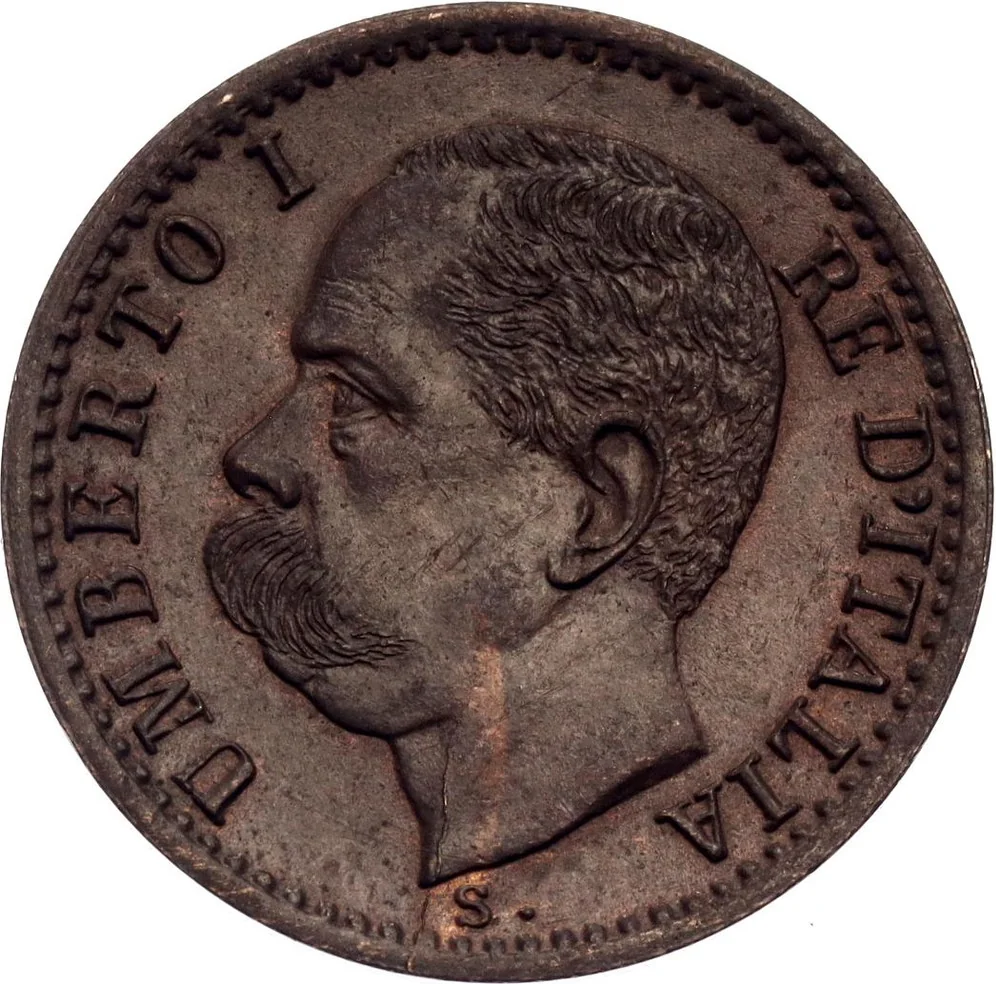
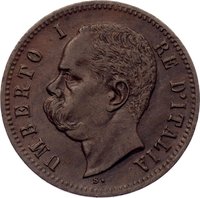
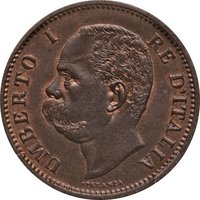
King Umberto I facing left, engraver's initial below.
Inscription:
UMBERTO I RE D'ITALIA
S•
S•
Translation:
Umberto I King of Italy
S
S
Script: Latin
Language: Italian
Engraver: Filippo Speranza
Reverse
Description:
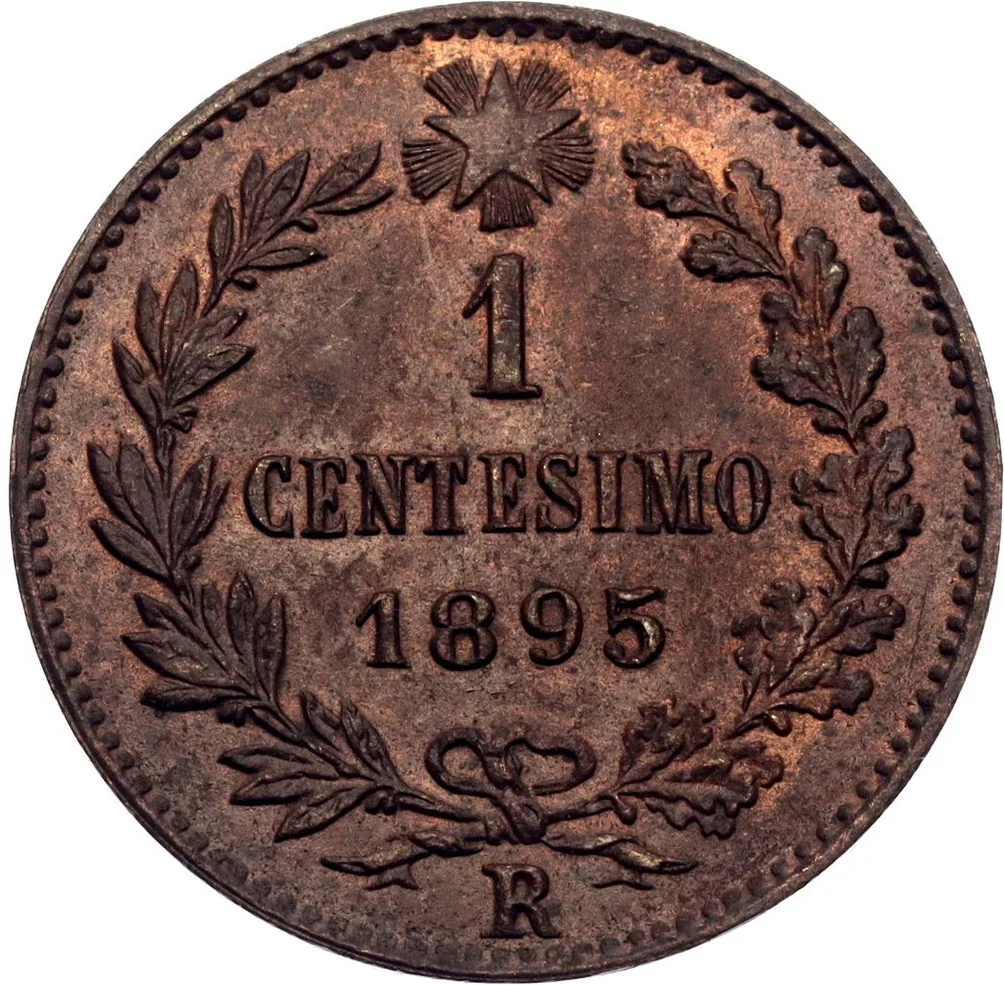
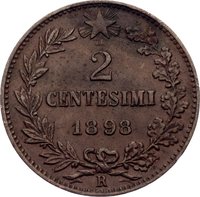
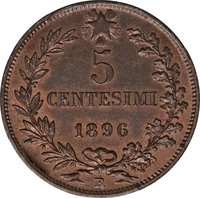
Value and date within laurel and oak branches, above the Star of Italy, below the mintmark.
Inscription:
1
CENTESIMO
1895
R
CENTESIMO
1895
R
Script: Latin
Engraver: Filippo Speranza
Edge
Plain
Mintings
| Year | Mint Mark | Mintage | Quality | Collection |
|---|---|---|---|---|
| 1895 | R | 13,860,000 | ||
| 1896 | R | 3,730,000 | ||
| 1897 | R | 1,844,500 | ||
| 1899 | R | 1,287,474 | ||
| 1900 | R | 10,000,000 |
Historical background
In 1895, Italy's currency situation was defined by its ongoing and troubled participation in the Latin Monetary Union (LMU). Having joined the LMU in 1865, Italy was obligated to maintain a bimetallic standard, pegging the lira to both gold and silver at a fixed ratio. However, decades of fiscal strain, driven by heavy government spending on unification and public works, led to chronic budget deficits. To finance these, the government had repeatedly authorized the over-issuance of paper money and silver coinage, which were legal tender but not fully convertible into gold. This resulted in a divergence between Italy's circulating currency and the Union's stricter standards.
Consequently, by 1895, Italy's currency was in a state of effective "forced circulation" (corso forzoso). While the lira remained nominally part of the LMU, its notes and silver coins were not freely convertible into gold, causing them to trade at a discount internationally. This placed Italy in a precarious position within the Union, as other member nations, particularly France, viewed the influx of undervalued Italian silver coins with suspicion. Domestically, the system created inflationary pressures and hindered foreign investment, as economic uncertainty persisted.
The year 1895 fell within a period of gradual stabilization under Finance Minister Sidney Sonnino, who was implementing austerity measures to restore fiscal order. The ultimate goal, achieved a few years later, was to return to full convertibility and mend relations within the LMU. Therefore, the currency situation in 1895 was one of a fragile and unsustainable limbo, caught between the obligations of an international monetary agreement and the harsh realities of the nation's strained public finances.
Consequently, by 1895, Italy's currency was in a state of effective "forced circulation" (corso forzoso). While the lira remained nominally part of the LMU, its notes and silver coins were not freely convertible into gold, causing them to trade at a discount internationally. This placed Italy in a precarious position within the Union, as other member nations, particularly France, viewed the influx of undervalued Italian silver coins with suspicion. Domestically, the system created inflationary pressures and hindered foreign investment, as economic uncertainty persisted.
The year 1895 fell within a period of gradual stabilization under Finance Minister Sidney Sonnino, who was implementing austerity measures to restore fiscal order. The ultimate goal, achieved a few years later, was to return to full convertibility and mend relations within the LMU. Therefore, the currency situation in 1895 was one of a fragile and unsustainable limbo, caught between the obligations of an international monetary agreement and the harsh realities of the nation's strained public finances.
Series: 1895 Italy circulation coins
🌱 Common