


Obverse
Description:
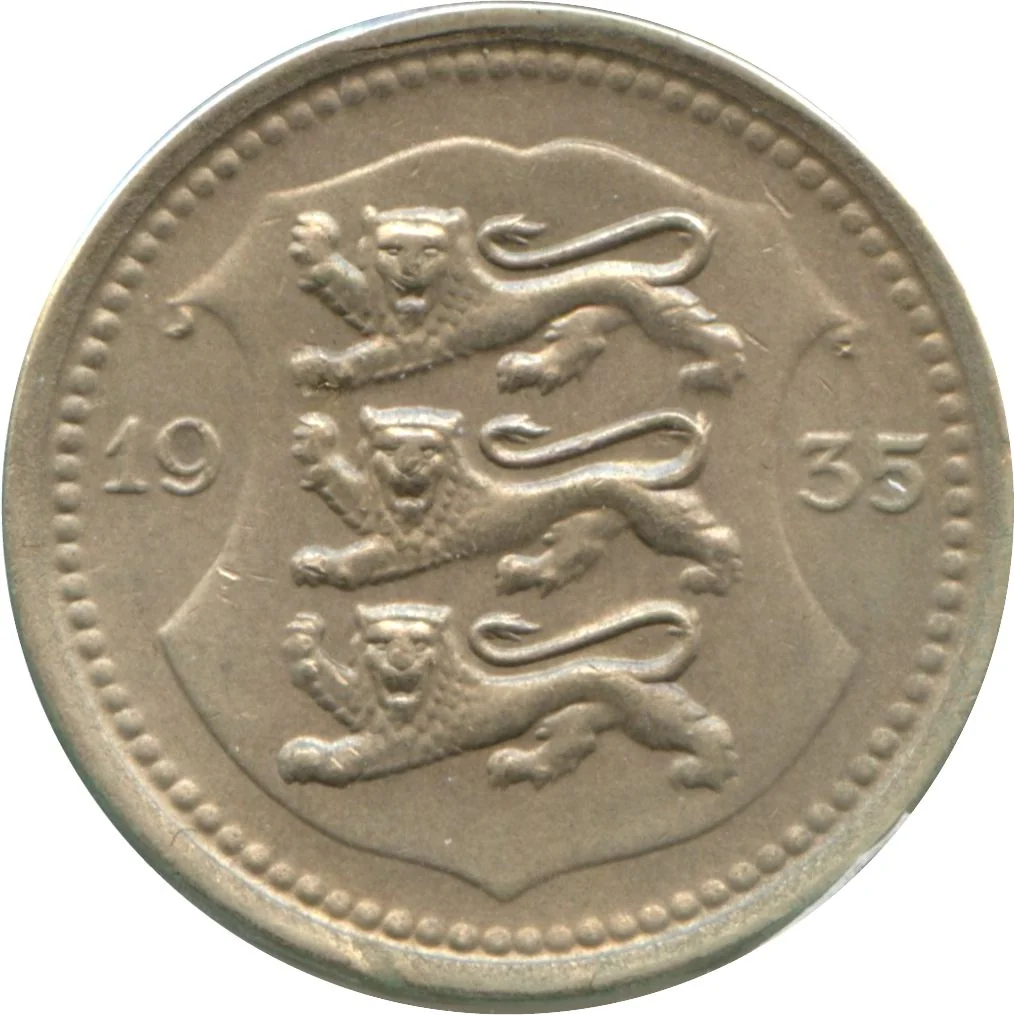
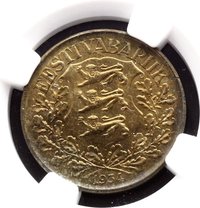
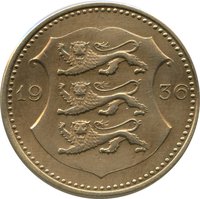
Three lions left in shield above date.
Inscription:
19 35
Script: Latin
Engraver: Georg Vestenberg
Reverse
Description:
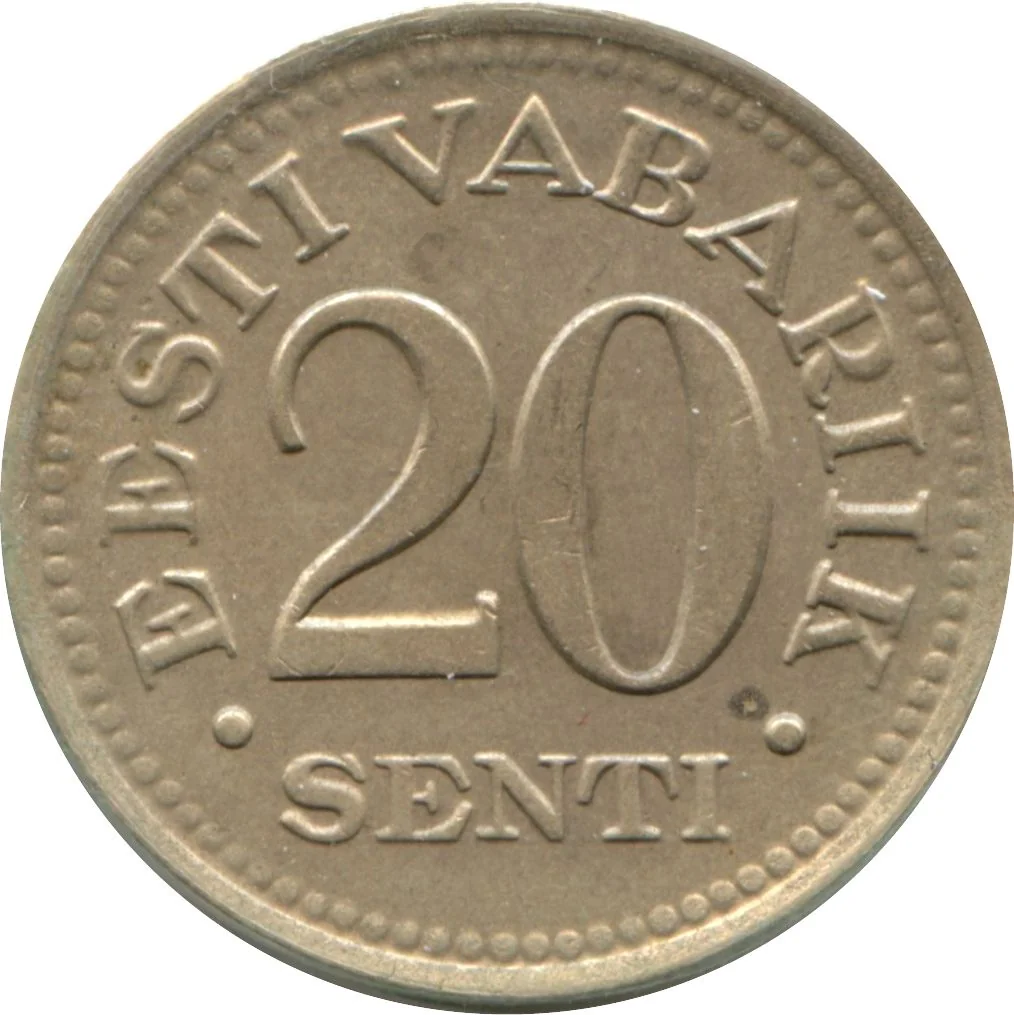
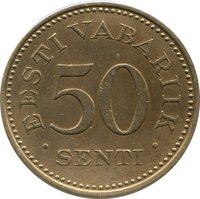
Denomination.
Inscription:
EESTI VABARIIK
20
SENTI
20
SENTI
Translation:
REPUBLIC OF ESTONIA
20
CENTS
20
CENTS
Script: Latin
Language: Estonian
Engraver: Georg Vestenberg
Edge
Plain
Mintings
| Year | Mint Mark | Mintage | Quality | Collection |
|---|---|---|---|---|
| 1935 | — | 5,605,000 |
Historical background
In 1935, Estonia's currency situation was defined by the stability of the kroon, which had been introduced in 1928 to replace the deeply devalued mark. This reform, overseen by the Bank of Estonia and backed by a currency board-like system with substantial gold and foreign exchange reserves, was a cornerstone of the nation's economic policy. The kroon was firmly pegged to the Swedish krona (at a rate of 1:1) and, by extension, to the gold standard, which provided strong credibility and facilitated international trade. This period represented a high point of monetary stability in the interwar republic, fostering confidence after the hyperinflation of the early 1920s.
However, this stability existed within a context of broader economic difficulty. The global Great Depression had severely impacted Estonia's agrarian and export-dependent economy, leading to falling prices, a decline in production, and social strain. While the strong kroon helped control inflation, it also made Estonian exports more expensive on the world market, potentially exacerbating trade imbalances. Consequently, the government complemented its orthodox monetary policy with interventionist measures, including debt relief for farmers and the establishment of centralized agricultural sales cooperatives to support key sectors.
Politically, the currency's stability was intertwined with the authoritarian shift of the era. In March 1934, Konstantin Päts had declared a state of emergency, and by 1935, his non-parliamentary "era of silence" was consolidating power. The maintenance of the strong kroon was a key achievement of this regime, symbolizing orderly governance and national sovereignty amidst regional uncertainty. Thus, in 1935, the Estonian kroon stood as a symbol of both successful financial reform and the complex trade-offs between monetary orthodoxy, economic recovery, and political authoritarianism.
However, this stability existed within a context of broader economic difficulty. The global Great Depression had severely impacted Estonia's agrarian and export-dependent economy, leading to falling prices, a decline in production, and social strain. While the strong kroon helped control inflation, it also made Estonian exports more expensive on the world market, potentially exacerbating trade imbalances. Consequently, the government complemented its orthodox monetary policy with interventionist measures, including debt relief for farmers and the establishment of centralized agricultural sales cooperatives to support key sectors.
Politically, the currency's stability was intertwined with the authoritarian shift of the era. In March 1934, Konstantin Päts had declared a state of emergency, and by 1935, his non-parliamentary "era of silence" was consolidating power. The maintenance of the strong kroon was a key achievement of this regime, symbolizing orderly governance and national sovereignty amidst regional uncertainty. Thus, in 1935, the Estonian kroon stood as a symbol of both successful financial reform and the complex trade-offs between monetary orthodoxy, economic recovery, and political authoritarianism.
🌱 Common