

1 Kroon – Estonia
Estonia
Context

Material
Diameter: 25.25 mm
Weight: 6 g
Thickness: 1.73 mm
Shape: Round
Composition: Aluminium bronze
Magnetic: No
Technique: Milled
Alignment: Medal alignment
flip
References
KM: #Click to copy to clipboard16
Numista: #10694
Obverse
Description:
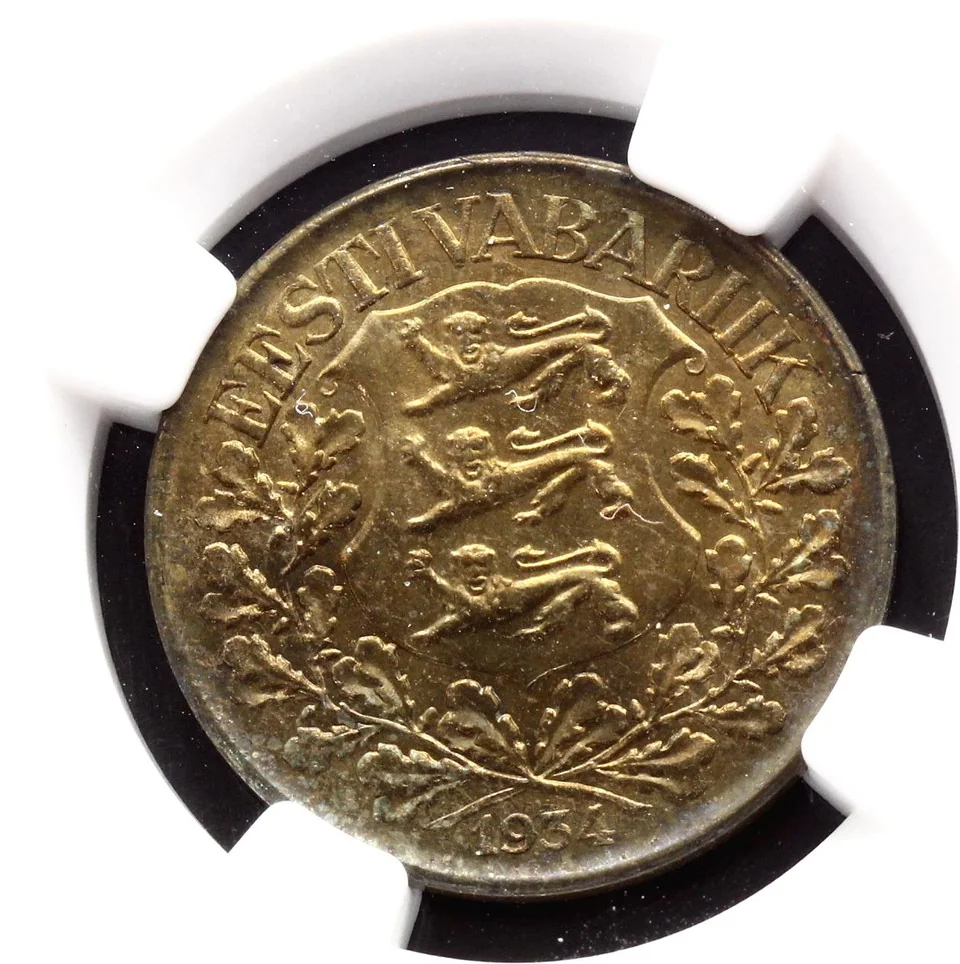
Coat of arms within a wreath, date beneath.
Inscription:
EESTI VABARIIK
1934
1934
Translation:
REPUBLIC OF ESTONIA
1934
1934
Script: Latin
Language: Estonian
Engraver: Günther Reindorff
Reverse
Description:
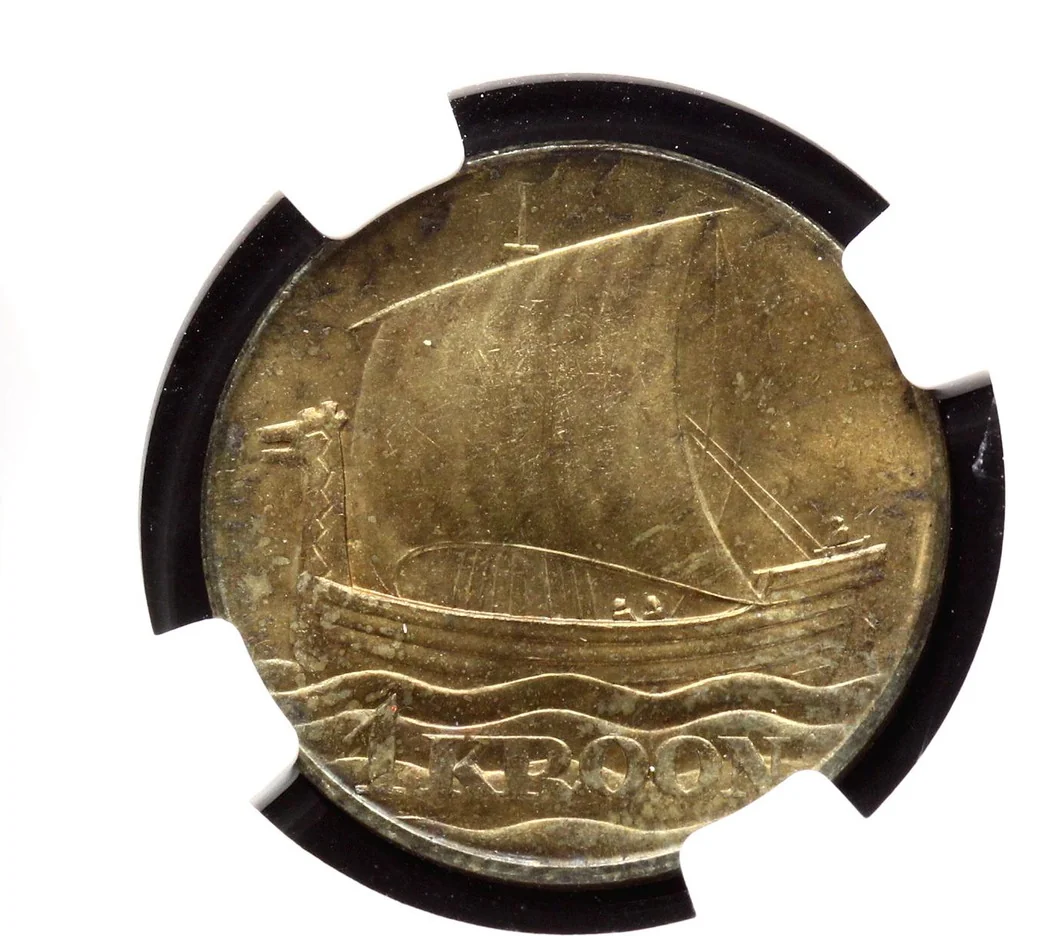
Viking ship sailing left, denomination below.
Inscription:
1 KROON
Script: Latin
Engraver: Günther Reindorff
Edge
Plain
Categories
| Symbols> Coat of Arms |
| Transportation> Watercraft |
Mintings
| Year | Mint Mark | Mintage | Quality | Collection |
|---|---|---|---|---|
| 1934 | — | 3,305,000 |
Historical background
In 1934, Estonia's currency situation was defined by the stability of the kroon, which had been introduced in 1928 to replace the heavily devalued mark. This reform, overseen by the Bank of Estonia and backed by a currency board-like system with gold and foreign exchange reserves, successfully halted hyperinflation and restored monetary credibility. The kroon was pegged to the Swedish krona at a fixed rate of 1:1, a choice reflecting close economic ties with Scandinavia, and this peg provided a crucial anchor for both domestic confidence and international trade during the early years of the Great Depression.
However, this stability existed within a context of significant economic strain and political upheaval. The global depression had severely impacted Estonia's export-oriented agricultural sector, leading to falling prices, widespread rural debt, and social unrest. Politically, the year 1934 began with the nation under the authoritarian rule of Konstantin Päts, who had just carried out a pre-emptive coup in March to forestall a feared takeover by the radical right-wing vapsid movement. Päts’s "Era of Silence" prioritized economic order and state control, which extended to monetary policy.
Consequently, while the technical currency regime remained stable and secure, its management became increasingly intertwined with the new authoritarian state's objectives. The government, seeking to manage the economic crisis, exercised tight control over the Bank of Estonia and implemented protectionist policies and debt relief measures. Thus, the kroon's stability in 1934 was not merely a product of its gold-backed peg, but also a result of deliberate political intervention aimed at ensuring national resilience during a period of both global economic crisis and profound domestic political change.
However, this stability existed within a context of significant economic strain and political upheaval. The global depression had severely impacted Estonia's export-oriented agricultural sector, leading to falling prices, widespread rural debt, and social unrest. Politically, the year 1934 began with the nation under the authoritarian rule of Konstantin Päts, who had just carried out a pre-emptive coup in March to forestall a feared takeover by the radical right-wing vapsid movement. Päts’s "Era of Silence" prioritized economic order and state control, which extended to monetary policy.
Consequently, while the technical currency regime remained stable and secure, its management became increasingly intertwined with the new authoritarian state's objectives. The government, seeking to manage the economic crisis, exercised tight control over the Bank of Estonia and implemented protectionist policies and debt relief measures. Thus, the kroon's stability in 1934 was not merely a product of its gold-backed peg, but also a result of deliberate political intervention aimed at ensuring national resilience during a period of both global economic crisis and profound domestic political change.
🌱 Common