

500 Tenge (Victory in the Great Patriotic War) – Kazakhstan
Non-circulating coins
Commemoration: 75th Anniversary of the Victory in the Great Patriotic War
Series: Outstanding events
Kazakhstan
Context

Material
References
Numista: #236392
Value
Exchange value: 500 KZT
Bullion value: $61.85
Obverse
Description:
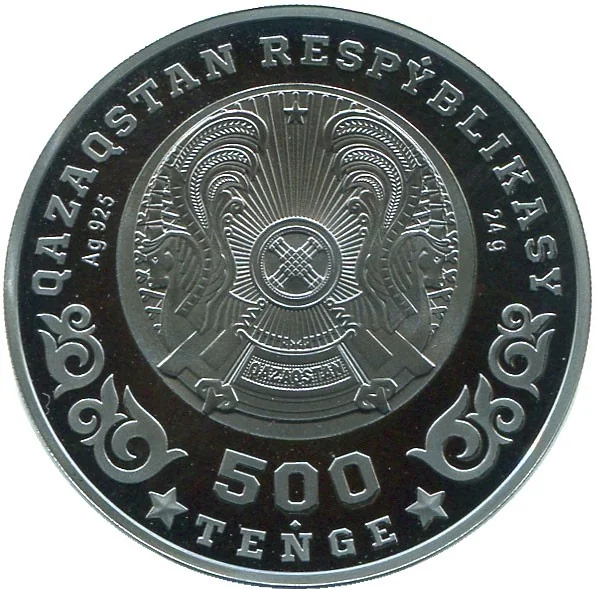
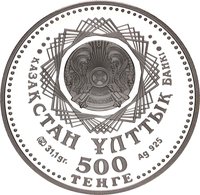
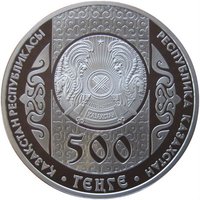
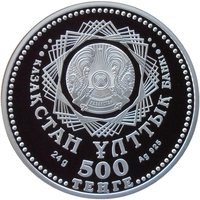
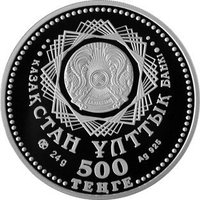
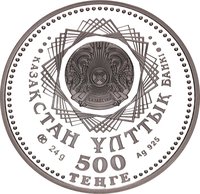
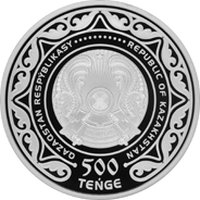
National Coat of Arms.
Inscription:
QAZAQSTAN RESPÝBLIKASY
QAZAQSTAN
500
★ TEŃGE ★
QAZAQSTAN
500
★ TEŃGE ★
Translation:
REPUBLIC OF KAZAKHSTAN
KAZAKHSTAN
500
★ TENGE ★
KAZAKHSTAN
500
★ TENGE ★
Language: Kazakh
Reverse
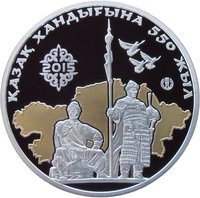
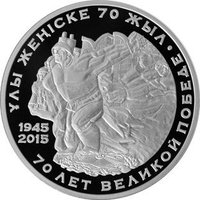
Inscription:
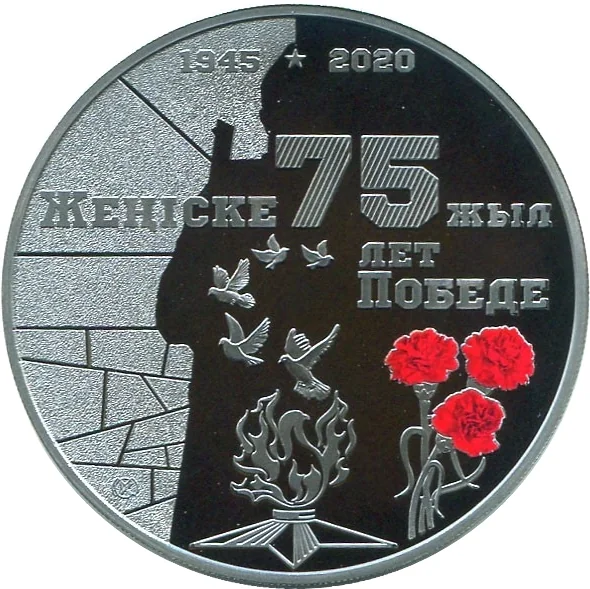
1945 ★ 2020
ЖЕНIСКЕ 75 ЖЫЛ
ЛЕТ
ПОБЕДЕ
KMC
ЖЕНIСКЕ 75 ЖЫЛ
ЛЕТ
ПОБЕДЕ
KMC
Translation:
WOMEN'S 75 YEARS
YEARS
OF VICTORY
KMC
YEARS
OF VICTORY
KMC
Languages: Russian, Belarusian
Edge
Reeded
Mints
| Name | Mark |
|---|---|
| Kazakhstan Mint | (KMC) |
Mintings
| Year | Mint Mark | Mintage | Quality | Collection |
|---|---|---|---|---|
| 2020 | KMC | 2,000 | Proof |
Historical background
In 2020, Kazakhstan's currency, the tenge (KZT), faced significant pressure primarily driven by the dual shocks of the COVID-19 pandemic and a historic collapse in global oil prices. As a major oil exporter, Kazakhstan's economy and currency are heavily correlated with crude prices, which plummeted in early 2020, even briefly turning negative. This external shock coincided with domestic lockdowns and economic slowdowns, severely impacting export revenues and foreign direct investment inflows. Consequently, the National Bank of Kazakhstan (NBK) was forced to expend substantial foreign currency reserves to defend the tenge, which nonetheless experienced considerable volatility and depreciation pressure throughout the year.
The monetary policy response was a shift towards greater flexibility. In March 2020, the NBK abandoned its previous policy of tightly managing the tenge within a narrow band against the US dollar-Russian ruble currency basket, opting instead for a free float with minimal intervention. This move, while leading to an initial sharp devaluation, was intended to act as a shock absorber, allowing the currency to adjust to external conditions and conserve precious foreign reserves. The NBK's focus pivoted to controlling inflation and ensuring financial stability through interest rate adjustments, rather than targeting a specific exchange rate.
By the end of 2020, the tenge had stabilized but at a significantly weaker level, losing about 10% of its value against the US dollar over the course of the year. The situation underscored the economy's ongoing vulnerability to commodity cycles and accelerated discussions about the need for deeper economic diversification. The year's currency turbulence also highlighted the challenges faced by households and businesses with foreign currency debt, prompting continued scrutiny from financial regulators to mitigate systemic risks in the banking sector.
The monetary policy response was a shift towards greater flexibility. In March 2020, the NBK abandoned its previous policy of tightly managing the tenge within a narrow band against the US dollar-Russian ruble currency basket, opting instead for a free float with minimal intervention. This move, while leading to an initial sharp devaluation, was intended to act as a shock absorber, allowing the currency to adjust to external conditions and conserve precious foreign reserves. The NBK's focus pivoted to controlling inflation and ensuring financial stability through interest rate adjustments, rather than targeting a specific exchange rate.
By the end of 2020, the tenge had stabilized but at a significantly weaker level, losing about 10% of its value against the US dollar over the course of the year. The situation underscored the economy's ongoing vulnerability to commodity cycles and accelerated discussions about the need for deeper economic diversification. The year's currency turbulence also highlighted the challenges faced by households and businesses with foreign currency debt, prompting continued scrutiny from financial regulators to mitigate systemic risks in the banking sector.
Series: Outstanding events



✨ Legendary