

25 cents – Curaçao
Add to wishlist
Netherlands
Context
Years: 1941–1943
Country: Netherlands
Issuer: Curaçao
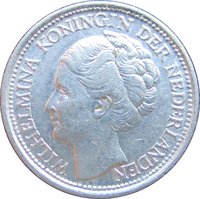
Ruler: Wilhelmina
Currency:
(since 1828)
Demonetized: Yes
Total mintage: 1,000,000
Material
References
KM: #
Numista: #168665
Value
Exchange value: 0.25 ANG
Bullion value: $5.58
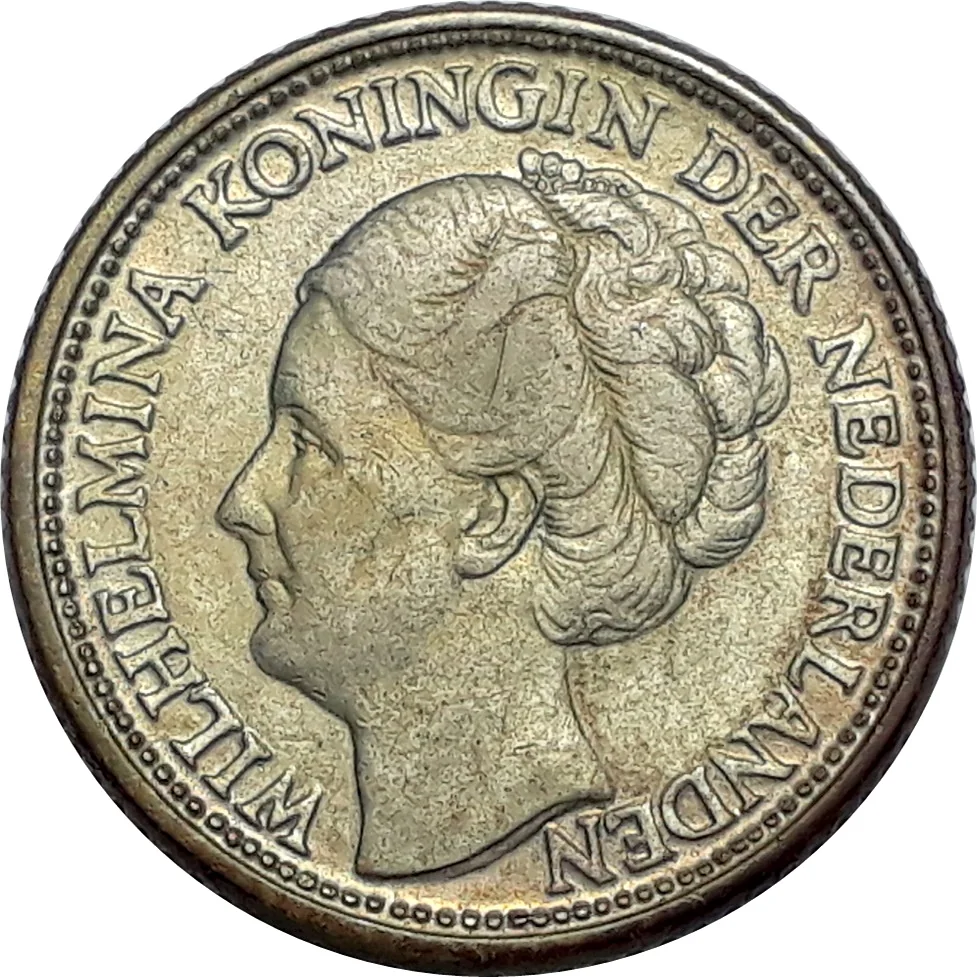
Obverse
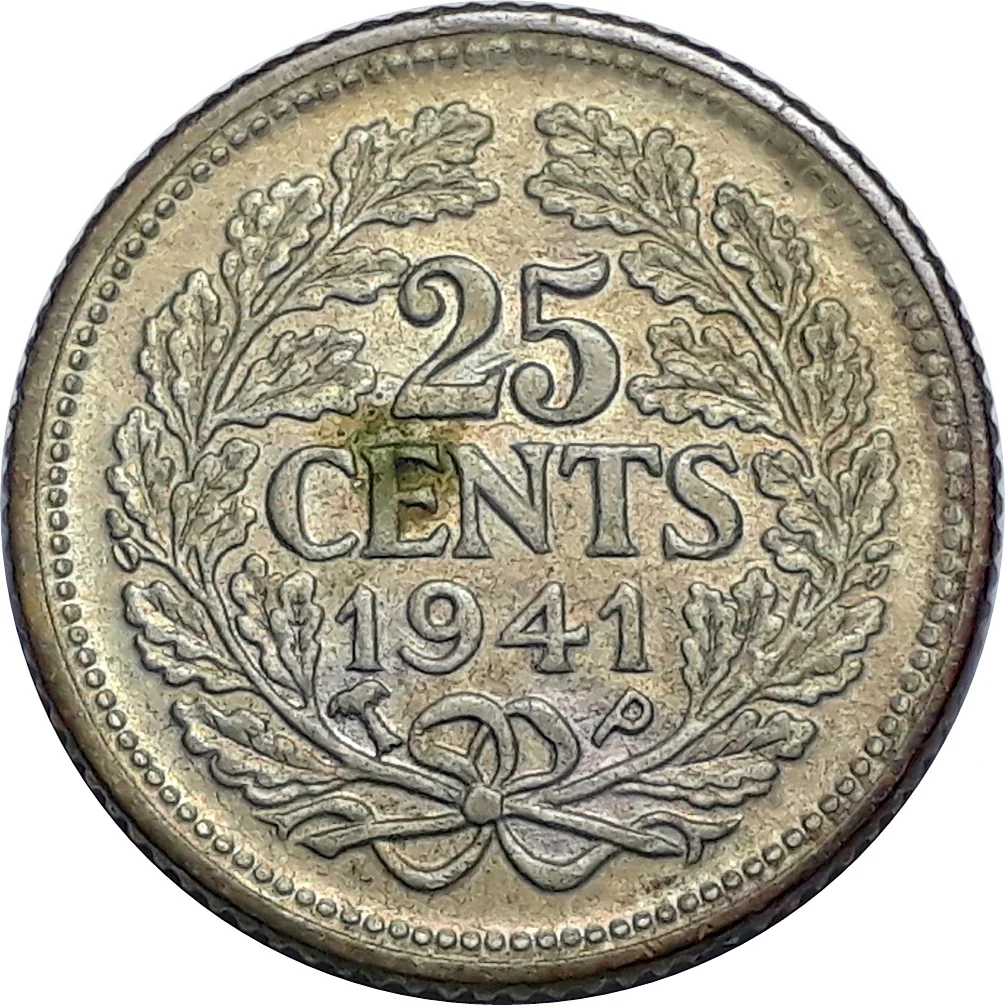
Reverse
Description:
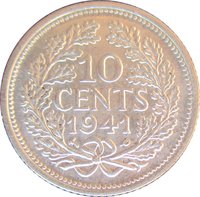
Value and date inside wreath. Palmtree and mintmark beneath date.
Inscription:
25
CENTS
1941
CENTS
1941
Script: Latin
Edge
Reeded
Mints
| Name | Mark |
|---|---|
| United States Mint of Philadelphia | P |
Historical background
In 1941, Curaçao, a Dutch colony in the Caribbean, found itself in a complex and unique currency situation shaped by the Second World War. Following the German occupation of the Netherlands in May 1940, the legitimate Dutch government fled into exile in London. This severed the direct administrative and financial ties between the colony and its mother country, creating an immediate monetary crisis. The island's existing currency, the Netherlands Antillean guilder, was pegged to and backed by the Dutch guilder, but with the homeland under occupation, this backing became uncertain and access to reserves was cut off.
To address this crisis, the local government, under the authority of the exiled Dutch government, took decisive action. In 1941, it established the Curaçao Currency Office (Curaçaosch Geldinstitut). This new institution was granted the sole right to issue currency for the colony, effectively creating a separate, locally managed monetary system for the duration of the war. The new banknotes, issued in guilders, were designed and printed locally and were backed not by Dutch reserves but primarily by short-term loans to the local government and by the island's strategic economic activity.
This wartime currency was fundamentally sustained by the island's critical role in the Allied war effort. The vast Royal Dutch Shell refinery at Schottegat, processing Venezuelan crude oil, became a vital fuel source for Allied forces. The significant U.S. and British military presence on the island, established to protect this asset, injected substantial funds into the local economy. Consequently, the currency's stability was underpinned by this influx of foreign exchange and the island's booming, war-driven economy, allowing Curaçao to maintain monetary order despite its severed connection to occupied Europe.
To address this crisis, the local government, under the authority of the exiled Dutch government, took decisive action. In 1941, it established the Curaçao Currency Office (Curaçaosch Geldinstitut). This new institution was granted the sole right to issue currency for the colony, effectively creating a separate, locally managed monetary system for the duration of the war. The new banknotes, issued in guilders, were designed and printed locally and were backed not by Dutch reserves but primarily by short-term loans to the local government and by the island's strategic economic activity.
This wartime currency was fundamentally sustained by the island's critical role in the Allied war effort. The vast Royal Dutch Shell refinery at Schottegat, processing Venezuelan crude oil, became a vital fuel source for Allied forces. The significant U.S. and British military presence on the island, established to protect this asset, injected substantial funds into the local economy. Consequently, the currency's stability was underpinned by this influx of foreign exchange and the island's booming, war-driven economy, allowing Curaçao to maintain monetary order despite its severed connection to occupied Europe.
🌱 Fairly Common