

12 Rigsdaler courant – Denmark
Circulating commemorative coins
Commemoration: Frederik VII Death and Accession of Christian IX
Denmark
Context
Year: 1863
Issuer: Denmark 
Ruler: Christian IX
Currency:
(1854—1873)
Subdivision: 12 Rigsdaler courant = 2 Rigsdaler
Demonetized: Yes
Total mintage: 101,000
Material
References
KM: #Click to copy to clipboard770
Numista: #23580
Value
Bullion value: $73.33
Obverse
Description:
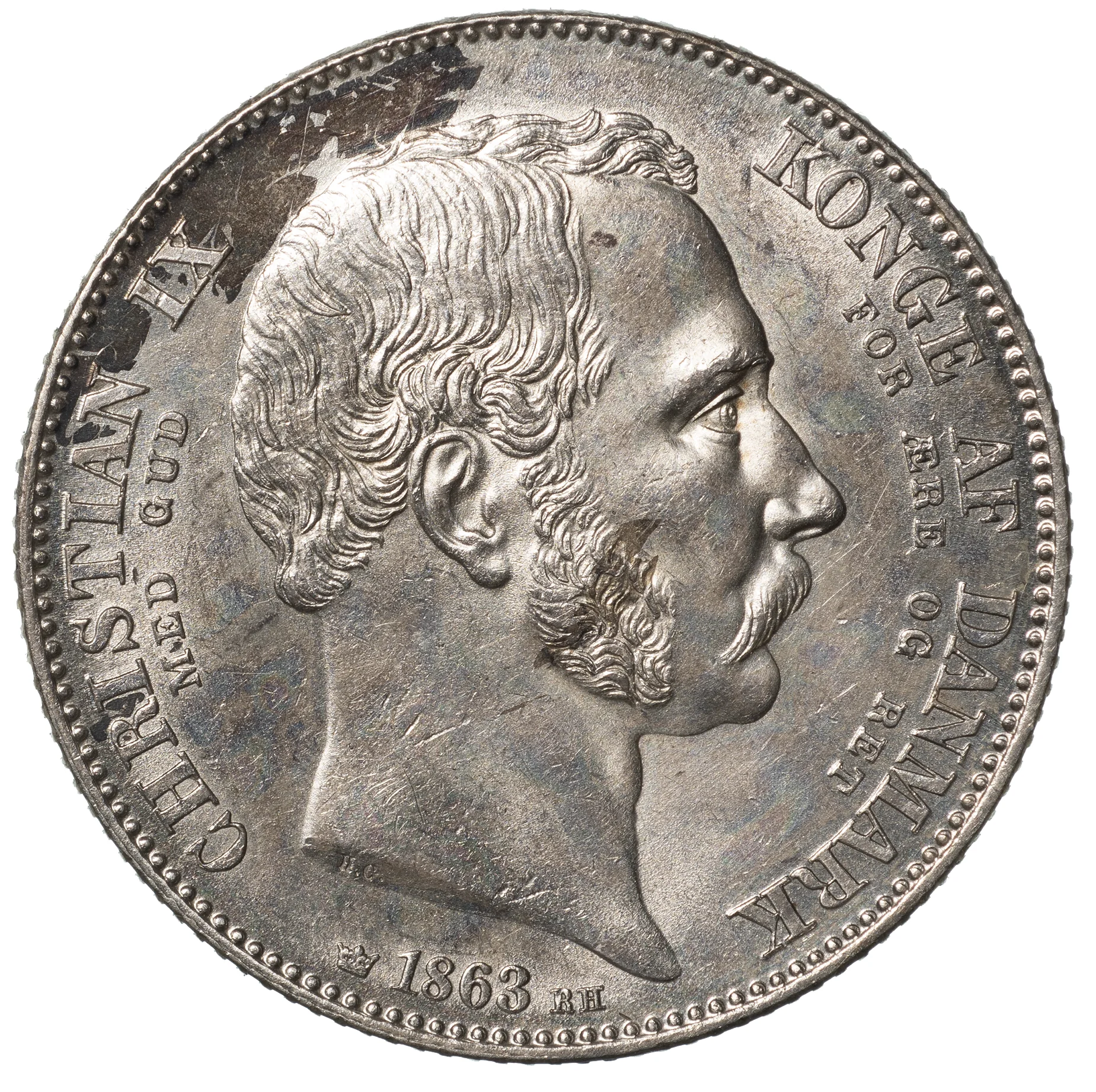
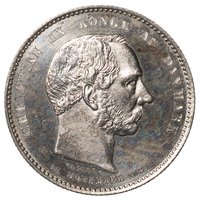
King Christian IX facing right, with flanking text along the rim. Below, the date with mintmark and Mint Master initials.
Inscription:
CHRISTIAN IX | KONGE AF DANMARK
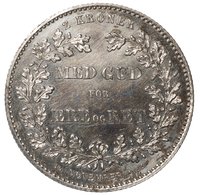
MED GUD | FOR ÆRE OG RET
H.C
♔ 1863 RH
MED GUD | FOR ÆRE OG RET
H.C
♔ 1863 RH
Translation:
CHRISTIAN IX | KING OF DENMARK
WITH GOD | FOR HONOR AND RIGHT
H.C
♔ 1863 RH
WITH GOD | FOR HONOR AND RIGHT
H.C
♔ 1863 RH
Script: Latin
Language: Danish
Reverse
Description:
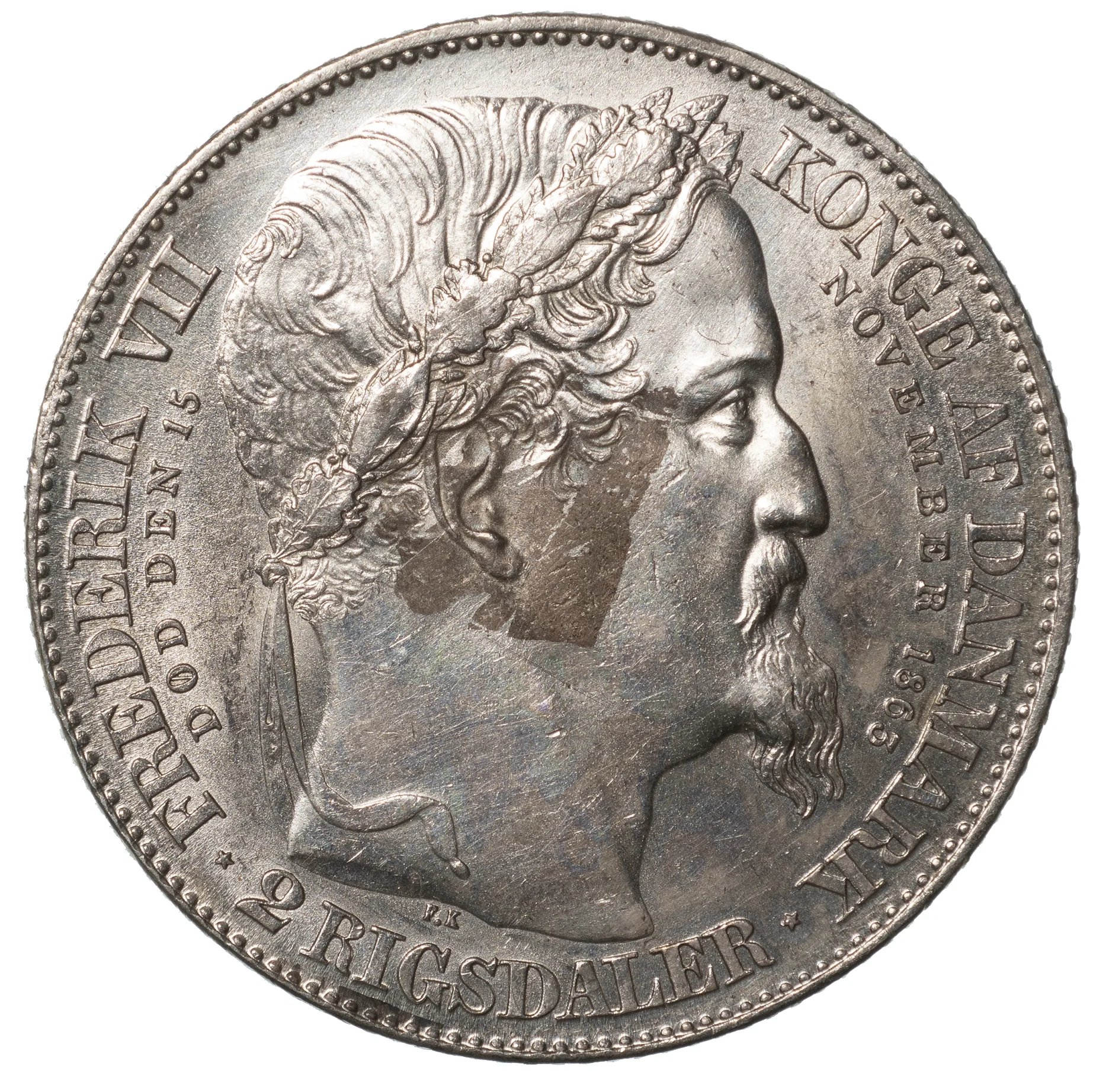
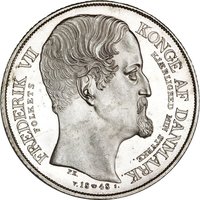
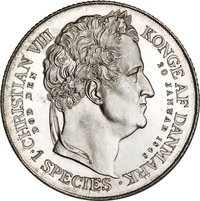
King Frederik VII facing right. Value below. Text along sides.
Inscription:
FREDERIK VII
DØD DEN 15 NOVEMBER 1863
F.K
* 2 RIGSDALER *
DØD DEN 15 NOVEMBER 1863
F.K
* 2 RIGSDALER *
Translation:
FREDERIK VII
DIED THE 15 NOVEMBER 1863
F.K
* 2 RIGSDALER *
DIED THE 15 NOVEMBER 1863
F.K
* 2 RIGSDALER *
Script: Latin
Languages: Danish Abbreviation, Danish
Edge
Reeded
Mints
| Name | Mark |
|---|---|
| Royal Danish Mint | ♔ |
Mintings
| Year | Mint Mark | Mintage | Quality | Collection |
|---|---|---|---|---|
| 1863 | ♔ | 101,000 |
Historical background
In 1863, Denmark’s currency system was in a state of transition, caught between tradition and the demands of a modernizing European economy. The nation was part of the Scandinavian Monetary Union (SMU), established in 1873 with Sweden, but a decade earlier, the groundwork was being laid. Denmark, like much of Europe, operated on a silver standard, with the rigsdaler as its primary unit. However, the system was complex and fragmented, with different standards for the rigsdaler courant (used for everyday transactions) and the rigsdaler specie (used for international trade and larger accounts), creating confusion and inefficiency.
This monetary landscape existed under the shadow of profound political and financial strain. The national treasury was deeply indebted from the First Schleswig War (1848-1851), and the government was grappling with the costly project of fortifying Copenhagen. Furthermore, the looming Schleswig-Holstein Question dominated politics, with tensions rising toward the November 1863 promulgation of the Danish constitution, which would soon trigger war with Prussia and Austria. This impending crisis created economic uncertainty, pressured state finances, and influenced monetary policy decisions, as the government had to balance the need for sound currency with the exigencies of national defense.
Consequently, 1863 represents a pivotal prelude to major reform. Discussions among Scandinavian economists and politicians about creating a uniform, stable currency based on the gold standard were gaining serious momentum. The inconveniences of the existing dual system, combined with the broader European shift toward gold (exemplified by the Latin Monetary Union), made the case for change compelling. Thus, the year was one of final struggle under an outdated system, immediately preceding the transformative agreements that would, within a decade, introduce the Danish krone and a new era of monetary integration with its Nordic neighbors.
This monetary landscape existed under the shadow of profound political and financial strain. The national treasury was deeply indebted from the First Schleswig War (1848-1851), and the government was grappling with the costly project of fortifying Copenhagen. Furthermore, the looming Schleswig-Holstein Question dominated politics, with tensions rising toward the November 1863 promulgation of the Danish constitution, which would soon trigger war with Prussia and Austria. This impending crisis created economic uncertainty, pressured state finances, and influenced monetary policy decisions, as the government had to balance the need for sound currency with the exigencies of national defense.
Consequently, 1863 represents a pivotal prelude to major reform. Discussions among Scandinavian economists and politicians about creating a uniform, stable currency based on the gold standard were gaining serious momentum. The inconveniences of the existing dual system, combined with the broader European shift toward gold (exemplified by the Latin Monetary Union), made the case for change compelling. Thus, the year was one of final struggle under an outdated system, immediately preceding the transformative agreements that would, within a decade, introduce the Danish krone and a new era of monetary integration with its Nordic neighbors.
💎 Very Rare