

½ rupee – Bhutan
Add to wishlist
Bhutan
Context
Material
References
KM: #
Numista: #235250
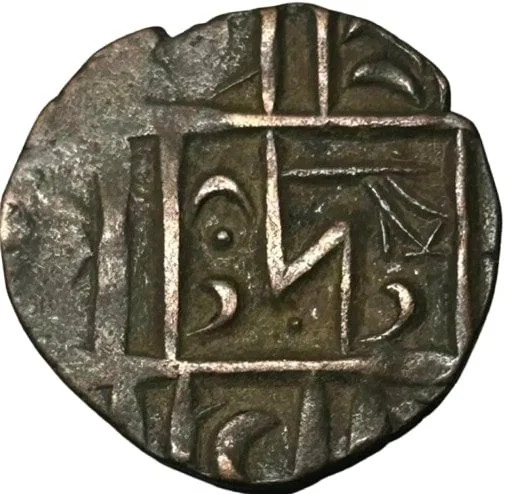
Obverse
Description:
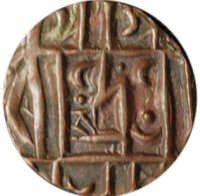
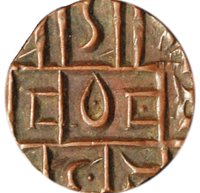
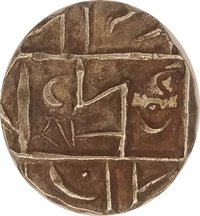
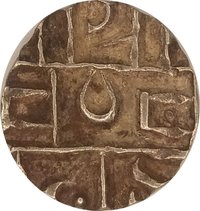
Spray-on leaves
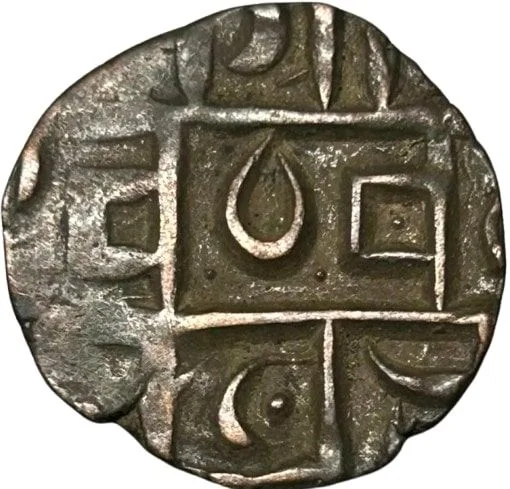
Reverse
Edge
Mintings
| Year | Mint Mark | Mintage | Quality | Collection |
|---|---|---|---|---|
| — | — | — |
Historical background
In 1820, Bhutan operated within a complex and fragmented monetary system, lacking a unified national currency. The primary medium of exchange remained barter, with rice, butter, and textiles serving as key units for local trade and tax payments. However, the region was not isolated from coined money. The most significant circulating currencies were silver tangka coins from Tibet (often called trangka in Bhutan) and silver rupees from British India, which entered through growing cross-border trade. These foreign coins were valued by weight and purity rather than by a fixed national exchange rate, leading to regional variations in their acceptance and worth.
The political landscape critically shaped this monetary environment. Bhutan was a theocratic dual system under the spiritual authority of the Je Khenpo and the temporal power of the Druk Desi, but it was fractured by intense regional competition among powerful penlops (governors). This decentralization meant there was no central authority to mint a standard Bhutanese coinage or regulate the money supply. Revenue collection for local lords and the central government was largely in kind, though some taxes and fines were stipulated in measures of silver, further cementing the role of Tibetan and Indian coins as units of account.
This reliance on foreign specie created economic vulnerabilities. The flow and value of these coins were subject to external political shifts, particularly the dynamics between Tibet, the declining Mughal Empire, and the expanding British East India Company in neighboring Assam and Bengal. While the 1820s were a period of relative calm before more direct British involvement later in the Duar Wars, the monetary system reflected a kingdom at a crossroads—deeply traditional in its local economies but increasingly connected to and dependent on the monetary systems of its powerful neighbors.
The political landscape critically shaped this monetary environment. Bhutan was a theocratic dual system under the spiritual authority of the Je Khenpo and the temporal power of the Druk Desi, but it was fractured by intense regional competition among powerful penlops (governors). This decentralization meant there was no central authority to mint a standard Bhutanese coinage or regulate the money supply. Revenue collection for local lords and the central government was largely in kind, though some taxes and fines were stipulated in measures of silver, further cementing the role of Tibetan and Indian coins as units of account.
This reliance on foreign specie created economic vulnerabilities. The flow and value of these coins were subject to external political shifts, particularly the dynamics between Tibet, the declining Mughal Empire, and the expanding British East India Company in neighboring Assam and Bengal. While the 1820s were a period of relative calm before more direct British involvement later in the Duar Wars, the monetary system reflected a kingdom at a crossroads—deeply traditional in its local economies but increasingly connected to and dependent on the monetary systems of its powerful neighbors.
Series: 1820 Bhutan circulation coins

💎 Extremely Rare