

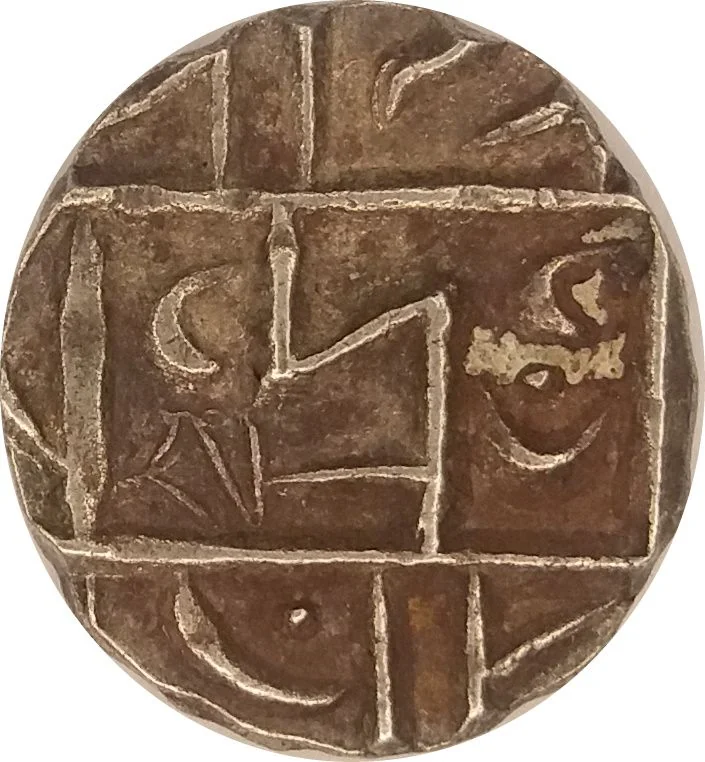
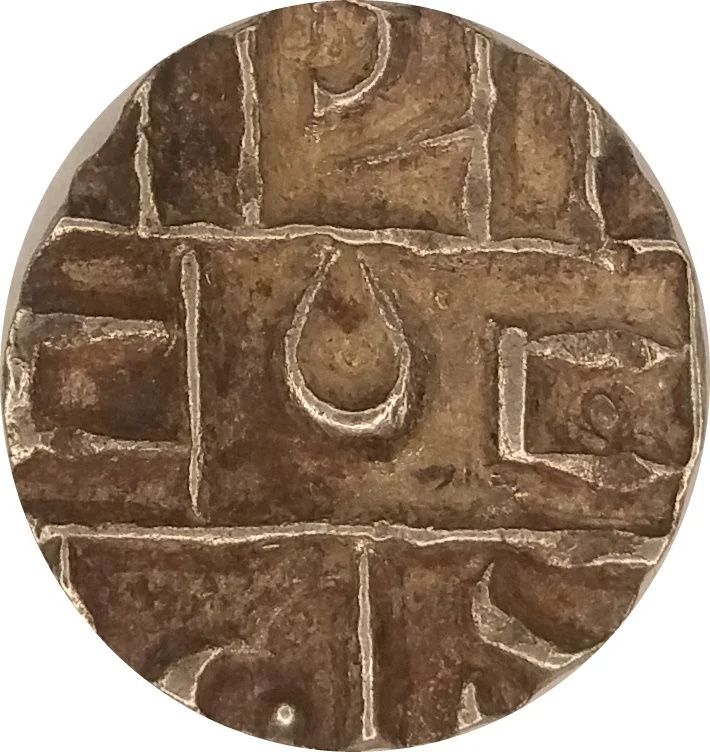
½ rupee – Bhutan
Add to wishlist
Bhutan
Context
Material
Diameter: 20.9 mm
Weight: 4.4 g
Silver Weight:: 4.40 g
Thickness: 2.7 mm
Shape: Irregular round
Composition: Silver
Magnetic: No
Technique: Hammered
References
KM: #
Numista: #316192
Value
Bullion value: $11.03
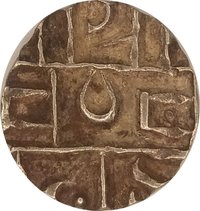
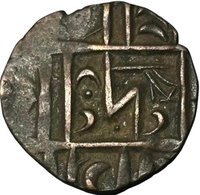
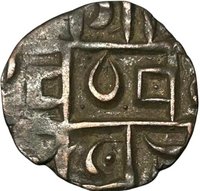
Obverse
Reverse
Edge
Plain
Mintings
| Year | Mint Mark | Mintage | Quality | Collection |
|---|---|---|---|---|
| — | — | — |
Historical background
In 1790, the currency situation in Bhutan was not one of a unified national monetary system but rather a complex tapestry of barter, commodity money, and foreign coinage circulating in a decentralized feudal economy. The country's rugged terrain and isolated valleys fostered largely self-sufficient communities where the exchange of goods like rice, butter, cloth, and dzo (a cattle hybrid) was the foundation of most transactions. The state collected taxes in kind, particularly in the form of agricultural produce, which underscored the limited need for a standardized coinage.
However, monetary exchange was not absent. The most significant circulating currency was the Mahendramalli Rupee, a silver coin minted in neighboring Cooch Behar (in modern-day India). These rupees entered Bhutan through robust cross-border trade with the plains of Bengal and Assam, as well as through political interactions. Bhutan also conducted trade with Tibet, where the primary medium was silver ingots measured by weight (srang), and Chinese sycee silver could be found. Locally, the government of the Druk Desi did not mint its own coins; instead, it occasionally counterstamped foreign coins, like the Mahendramalli rupees, with a "Druk*" (thunder dragon) seal to authenticate them for use and payment within Bhutan.
This reliance on external currencies created vulnerabilities. The value and supply of money were subject to the political and economic stability of neighboring regions, particularly during a period of frequent military and diplomatic friction with the British East India Company and the states of the frontier. The currency situation in 1790 thus reflected Bhutan’s broader geopolitical position: a traditional society with a subsistence-based economy, increasingly engaged in regional trade networks yet striving to maintain its autonomy by adapting foreign monetary instruments to its own needs.
However, monetary exchange was not absent. The most significant circulating currency was the Mahendramalli Rupee, a silver coin minted in neighboring Cooch Behar (in modern-day India). These rupees entered Bhutan through robust cross-border trade with the plains of Bengal and Assam, as well as through political interactions. Bhutan also conducted trade with Tibet, where the primary medium was silver ingots measured by weight (srang), and Chinese sycee silver could be found. Locally, the government of the Druk Desi did not mint its own coins; instead, it occasionally counterstamped foreign coins, like the Mahendramalli rupees, with a "Druk*" (thunder dragon) seal to authenticate them for use and payment within Bhutan.
This reliance on external currencies created vulnerabilities. The value and supply of money were subject to the political and economic stability of neighboring regions, particularly during a period of frequent military and diplomatic friction with the British East India Company and the states of the frontier. The currency situation in 1790 thus reflected Bhutan’s broader geopolitical position: a traditional society with a subsistence-based economy, increasingly engaged in regional trade networks yet striving to maintain its autonomy by adapting foreign monetary instruments to its own needs.

💎 Extremely Rare