

10 kroner (Norway University) – Norway
Add to wishlist
Circulating commemorative coins
Commemoration: 200th Anniversary of Norway University
Norway
Context
Material
References
KM: #
Numista: #23248
Value
Exchange value: 10 NOK
Inflation-adjusted value: 14.77 NOK
Obverse
Description:
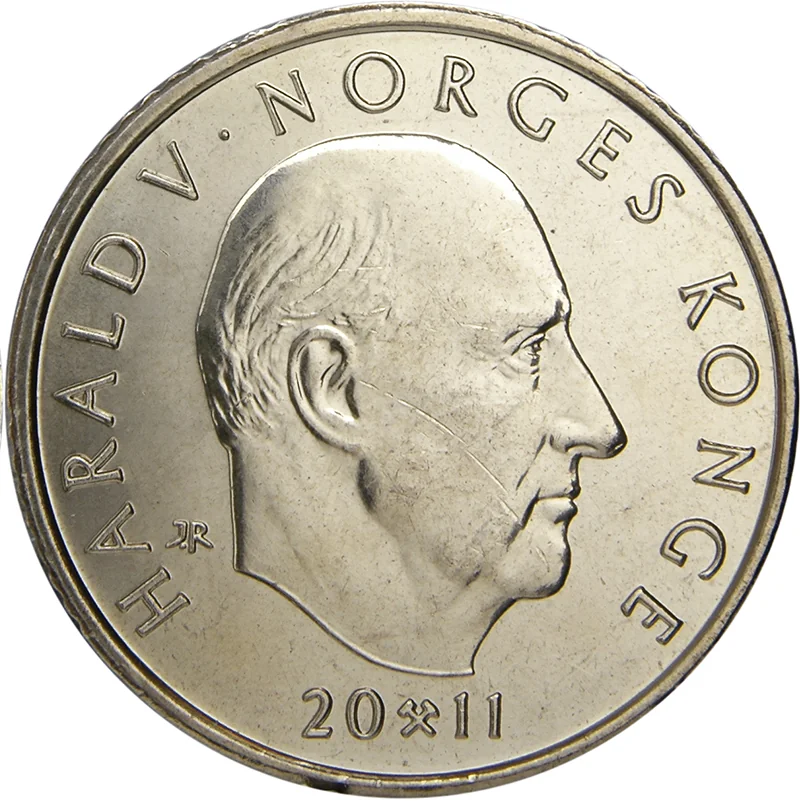
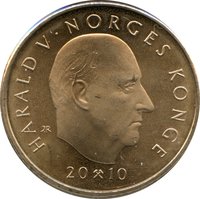
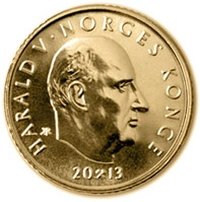
King Harald V bust facing right. Engraver's initials behind bust. Inscription surrounds. Date split by mintmark below. Solid rim ring.
Inscription:
HARALD V · NORGES KONGE
IAR
20 ⚒ 11
IAR
20 ⚒ 11
Translation:
Harald V, Norway's King
IAR
20 11
IAR
20 11
Script: Latin
Engraver: Ingrid Austlid Rise
Reverse
Description:
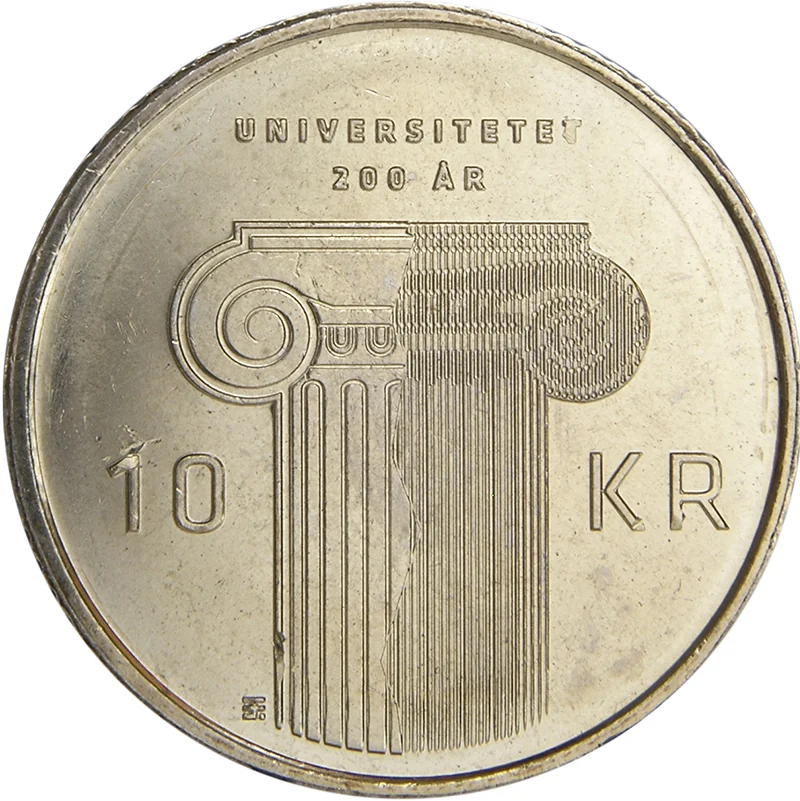
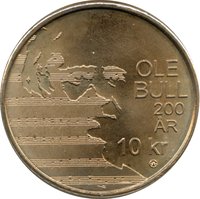
Ancient Greek column, central, splitting the value. Inscription above, designer's initials lower left. Solid ring on rim.
Inscription:
UNIVERSITETET
200 ÅR
10 | KR
EF.
200 ÅR
10 | KR
EF.
Translation:
The University
200 Years
10 | Crowns
EF
200 Years
10 | Crowns
EF
Script: Latin
Engraver: Ingrid Austlid Rise
Designer: Enzo Finger
Edge
Five alternating smooth and reeded segments.
Categories
| Education |
Mints
| Name | Mark |
|---|---|
| Norwegian Mint | — |
Mintings
| Year | Mint Mark | Mintage | Quality | Collection |
|---|---|---|---|---|
| 2011 | — | 2,979,110 | ||
| 2011 | — | 1,073 | BU | |
| 2011 | — | 3,642 | Proof |
Historical background
In 2011, Norway's currency situation was dominated by the remarkable strength of the Norwegian krone (NOK), which reached its highest levels in decades against both the euro and a trade-weighted index. This surge was fundamentally driven by high global oil and gas prices, as Norway is a major energy exporter. The resulting large trade surpluses and substantial foreign currency inflows created sustained upward pressure on the krone, a phenomenon often referred to as "petro-currency" strength.
This strong krone presented a significant policy challenge, creating a pronounced two-speed economy. While the booming offshore energy sector and related industries thrived, the traditional export-oriented and tourism sectors, such as manufacturing and seafood, faced severe competitive pressure in international markets. Domestic industries also struggled against cheaper imports. Consequently, Norges Bank, the country's central bank, faced a complex balancing act: it needed to raise interest rates to cool a overheating domestic housing market and contain inflation, but higher rates would further attract foreign capital and strengthen the krone, exacerbating the problems for non-oil exporters.
In response, Norges Bank adopted a cautious and gradual approach to monetary tightening throughout 2011, often signalling that future rate hikes would be slower than previously anticipated to temper krone appreciation. Furthermore, the government continued its strict adherence to the "fiscal rule," which mandates that only the expected real return from the massive Government Pension Fund Global (the oil fund) be spent in the state budget. This self-imposed fiscal discipline helped to sterilize a portion of the petroleum revenues from the domestic economy, mitigating inflationary pressures and moderating, though not eliminating, the krone's ascent.
This strong krone presented a significant policy challenge, creating a pronounced two-speed economy. While the booming offshore energy sector and related industries thrived, the traditional export-oriented and tourism sectors, such as manufacturing and seafood, faced severe competitive pressure in international markets. Domestic industries also struggled against cheaper imports. Consequently, Norges Bank, the country's central bank, faced a complex balancing act: it needed to raise interest rates to cool a overheating domestic housing market and contain inflation, but higher rates would further attract foreign capital and strengthen the krone, exacerbating the problems for non-oil exporters.
In response, Norges Bank adopted a cautious and gradual approach to monetary tightening throughout 2011, often signalling that future rate hikes would be slower than previously anticipated to temper krone appreciation. Furthermore, the government continued its strict adherence to the "fiscal rule," which mandates that only the expected real return from the massive Government Pension Fund Global (the oil fund) be spent in the state budget. This self-imposed fiscal discipline helped to sterilize a portion of the petroleum revenues from the domestic economy, mitigating inflationary pressures and moderating, though not eliminating, the krone's ascent.
🌱 Common