

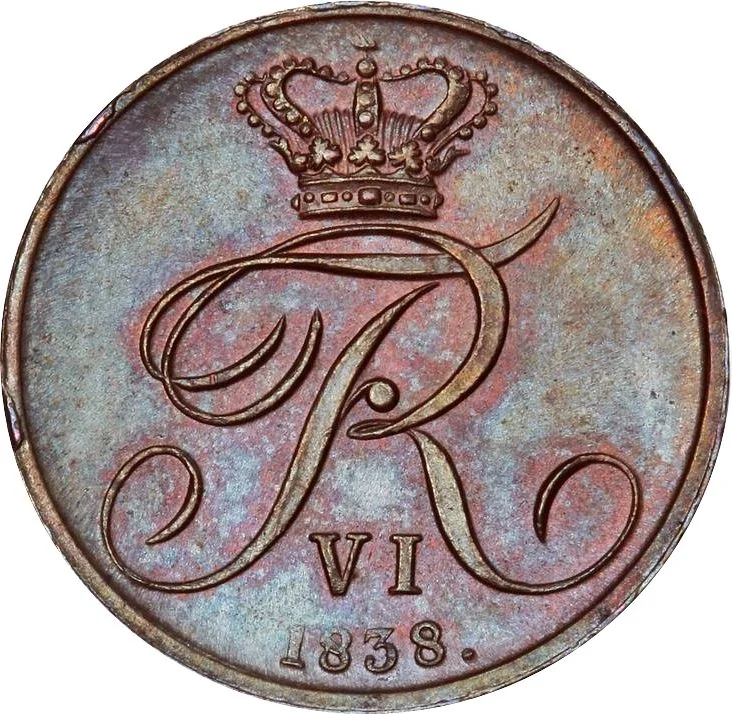
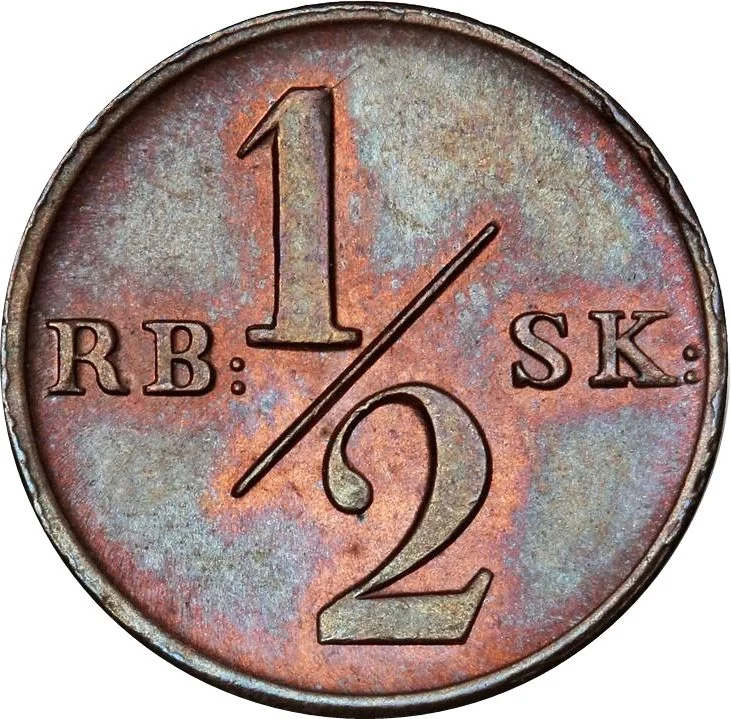
½ Rigsbankskilling – Denmark
Denmark
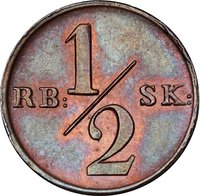
Obverse
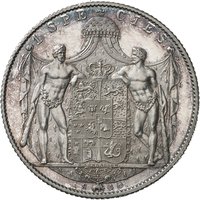
Reverse
Edge
Smooth with a notched line
Mintings
| Year | Mint Mark | Mintage | Quality | Collection |
|---|---|---|---|---|
| 1838 | — | — |
Historical background
In 1838, Denmark operated under a complex and fragmented monetary system, a legacy of its historical ties and economic struggles. The primary unit was the rigsdaler, but it existed in multiple, confusing forms: the rigsdaler courant (used for everyday domestic trade) and the rigsdaler specie (tied to silver for international trade). Their values fluctuated against each other, and alongside them circulated a vast array of foreign coins, particularly German and French, accepted at varying exchange rates. This lack of uniformity created significant inefficiencies for merchants, hampered national commerce, and reflected a kingdom still recovering from the state bankruptcy of 1813 and the loss of Norway in 1814.
The situation was ripe for reform, influenced by the broader Scandinavian Monetary Union discussions that would later crystallize. Danish economists and officials were increasingly advocating for a decimalized system based on a single silver standard to simplify transactions and modernize the economy. The goal was to replace the cumbersome system where a rigsdaler was divided into 96 skilling with a more logical decimal currency, aligning Denmark with progressive European financial trends.
Therefore, 1838 represents a pivotal moment just before major change. It was a year of mounting pressure and final deliberations within the existing chaotic framework. The decisive reform would come just two years later, in 1840, with the introduction of the new rigsdaler divided into 100 skilling rigsmønt, finally establishing a unified national decimal currency and setting the stage for Denmark's entry into the Scandinavian Monetary Union with Sweden in 1873.
The situation was ripe for reform, influenced by the broader Scandinavian Monetary Union discussions that would later crystallize. Danish economists and officials were increasingly advocating for a decimalized system based on a single silver standard to simplify transactions and modernize the economy. The goal was to replace the cumbersome system where a rigsdaler was divided into 96 skilling with a more logical decimal currency, aligning Denmark with progressive European financial trends.
Therefore, 1838 represents a pivotal moment just before major change. It was a year of mounting pressure and final deliberations within the existing chaotic framework. The decisive reform would come just two years later, in 1840, with the introduction of the new rigsdaler divided into 100 skilling rigsmønt, finally establishing a unified national decimal currency and setting the stage for Denmark's entry into the Scandinavian Monetary Union with Sweden in 1873.
🌟 Limited