

2 Frederiks d'Or – Denmark
Denmark
Context
Years: 1836–1839
Issuer: Denmark 
Ruler: Frederick VI
Currency:
(1813—1854)
Subdivision: 2 Frederiks d'Or = 10 Speciedaler
Demonetized: Yes
Material
References
KM: #Click to copy to clipboard713
Numista: #152485
Value
Bullion value: $1991.84
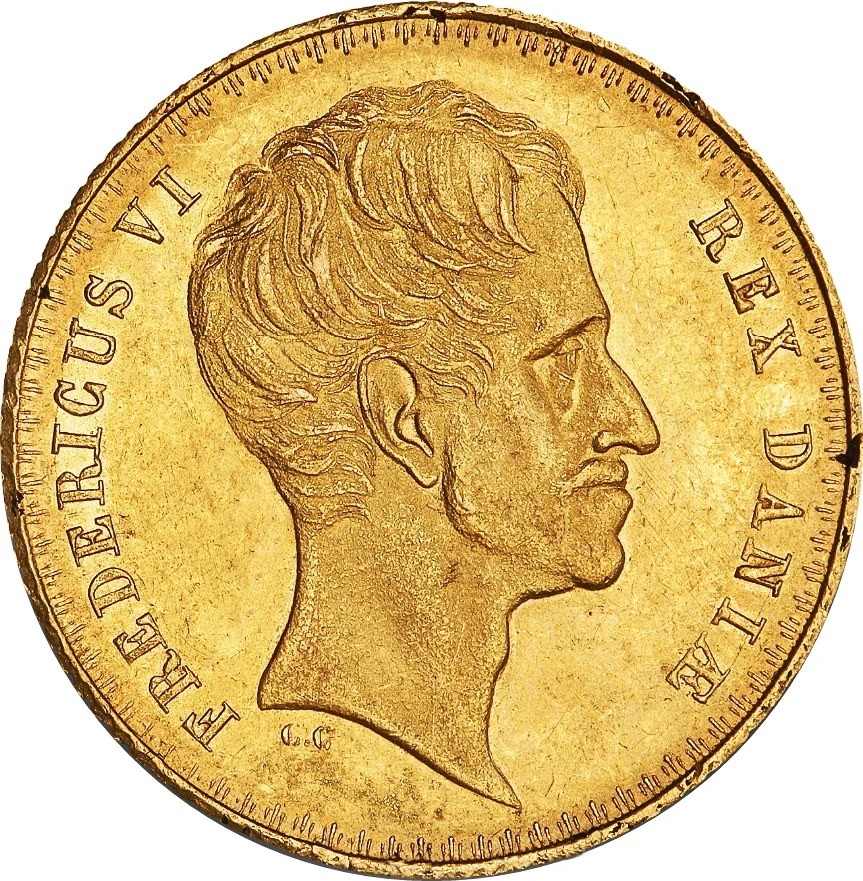
Obverse
Description:
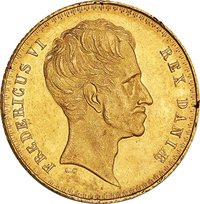
King Frederik VI, right profile. Engraver initials below.
Inscription:
FREDERICUS VI REX DANIÆ.
C.C.
C.C.
Translation:
Frederick VI, King of Denmark.
C.C.
C.C.
Script: Latin
Language: Latin
Engraver: Christen Christensen
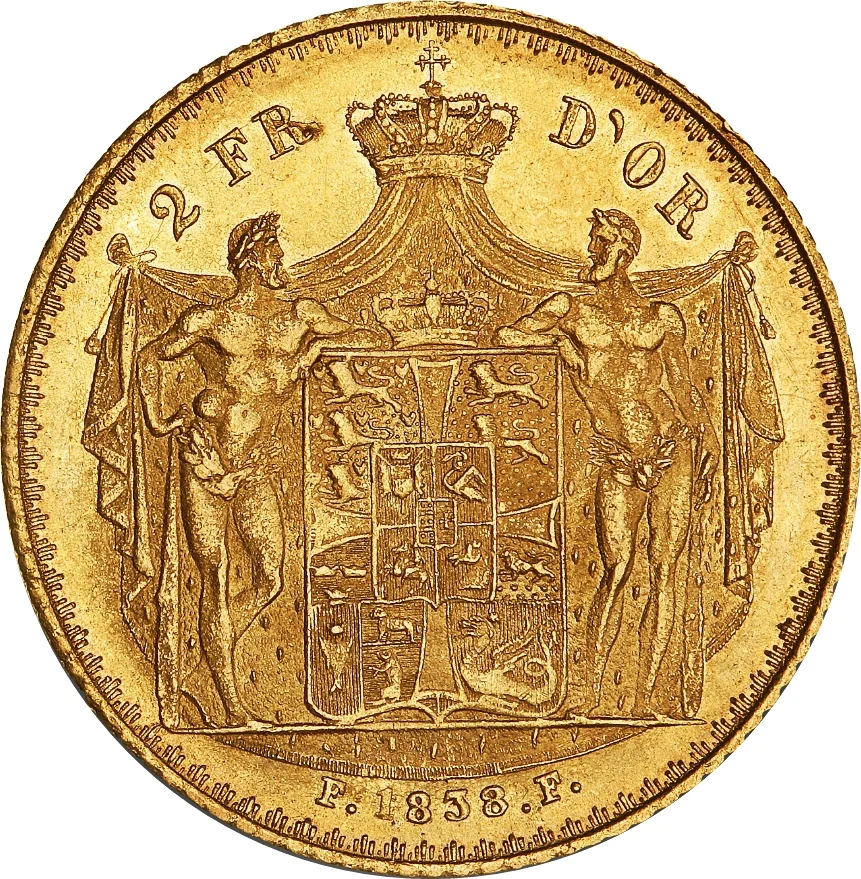
Reverse
Description:
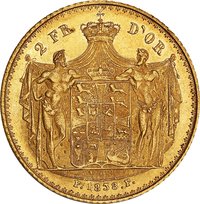
Crowned shield with Danish arms in an Order of the Elephant collar, flanked by club-armed wildmen. A large crowned mantle envelops the shield and supporters, divides the top value, and frames the date and mintmarks below.
Inscription:
2 FR D'OR
F. 1838 F.
F. 1838 F.
Script: Latin
Engraver: Christen Christensen
Edge
Mints
| Name | Mark |
|---|---|
| Altona, Schleswig-Holstein | FF |
| Royal Danish Mint | WS |
Mintings
| Year | Mint Mark | Mintage | Quality | Collection |
|---|---|---|---|---|
| 1836 | — | — | ||
| 1837 | — | — | ||
| 1838 | — | — | ||
| 1839 | — | — |
Historical background
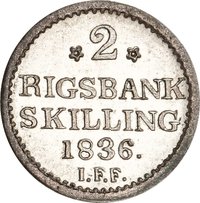
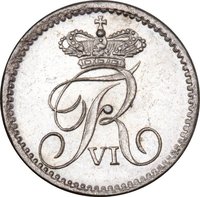
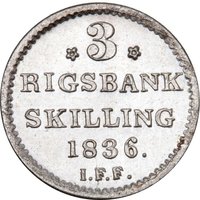
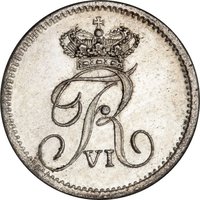
In 1836, Denmark operated under a complex and strained monetary system, a legacy of the state bankruptcy declared in 1813 following the Napoleonic Wars. The national bankruptcy had led to the creation of the Rigsbankdaler, a new paper currency intended to replace the debased older systems. However, public trust in paper money was low, and the Rigsbankdaler circulated alongside older silver-based coins like the riksdaler specie, creating a confusing dual system. The value of the paper rigsbankdaler fluctuated significantly against the silver-based rigsdaler specie, leading to practical difficulties in trade and everyday transactions.
The core economic problem was a severe shortage of stable, precious metal coinage. The government, led by the National Bank of Denmark (established in 1818), struggled to maintain sufficient silver reserves to back the currency and facilitate international commerce. This scarcity of "hard" money hampered economic growth and caused friction between different regions of the united monarchy, particularly with the Duchy of Schleswig, which had stronger economic ties to the German Confederation and its stable silver-based currencies.
Consequently, the year 1836 fell within a prolonged period of monetary uncertainty and debate. Reform was clearly needed, and discussions were underway regarding a fundamental restructuring of the currency to establish a single, stable, and universally accepted standard. This pressure would culminate a decade later in the major currency reform of 1848, which introduced the rigsdaler as a unified silver standard, finally resolving the instability that characterized the Danish economy in the 1830s.
The core economic problem was a severe shortage of stable, precious metal coinage. The government, led by the National Bank of Denmark (established in 1818), struggled to maintain sufficient silver reserves to back the currency and facilitate international commerce. This scarcity of "hard" money hampered economic growth and caused friction between different regions of the united monarchy, particularly with the Duchy of Schleswig, which had stronger economic ties to the German Confederation and its stable silver-based currencies.
Consequently, the year 1836 fell within a prolonged period of monetary uncertainty and debate. Reform was clearly needed, and discussions were underway regarding a fundamental restructuring of the currency to establish a single, stable, and universally accepted standard. This pressure would culminate a decade later in the major currency reform of 1848, which introduced the rigsdaler as a unified silver standard, finally resolving the instability that characterized the Danish economy in the 1830s.
Series: 1836 Denmark circulation coins
✨ Legendary