

1 speciedaler – Denmark
Add to wishlist
Denmark
Context
Years: 1840–1847
Issuer: Denmark
Ruler: Christian VIII
Currency:
(1813—1854)
Demonetized: Yes
Total mintage: 1
Material
References
KM: #
Numista: #22116
Value
Bullion value: $62.43
Obverse
Description:
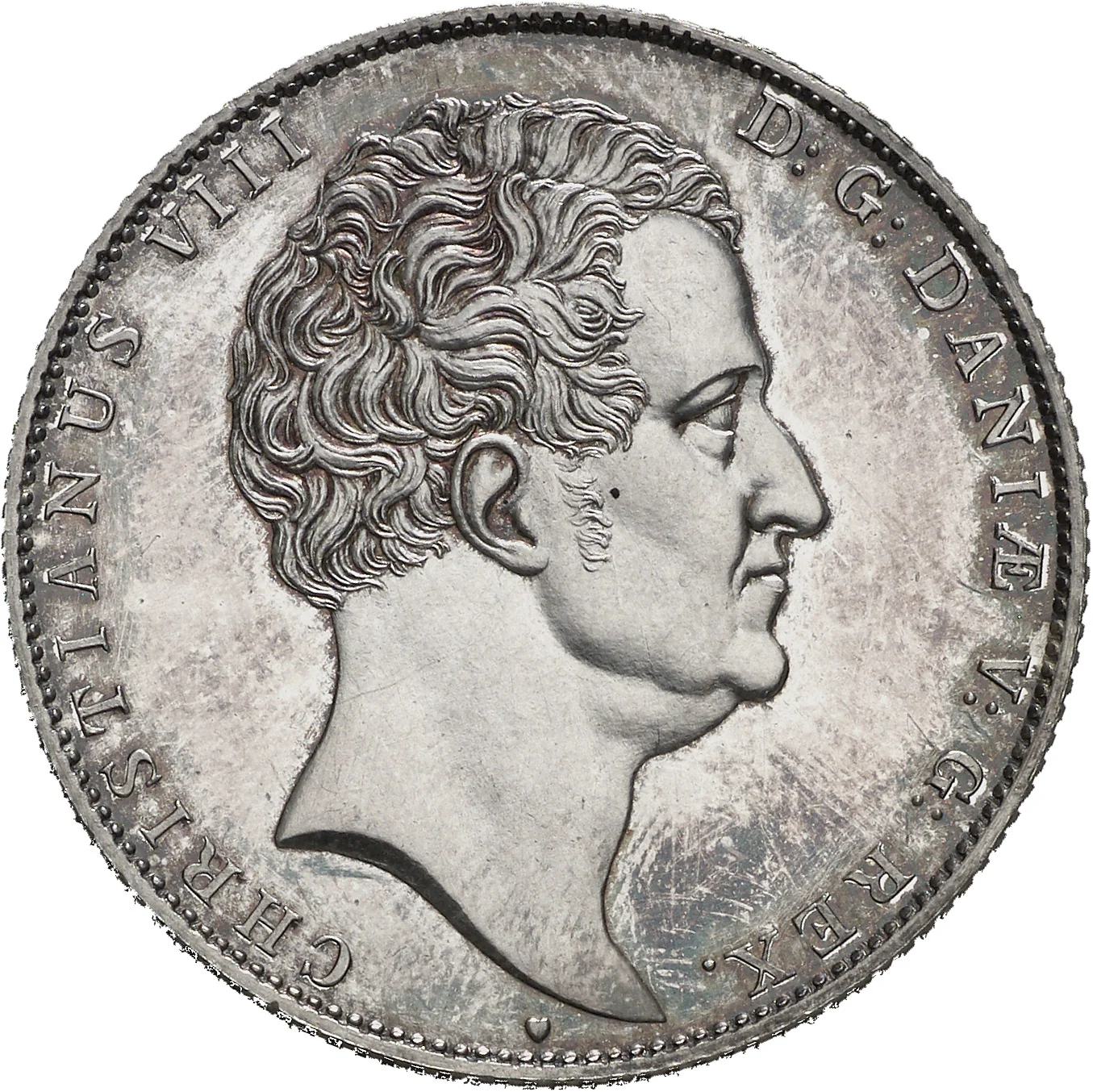
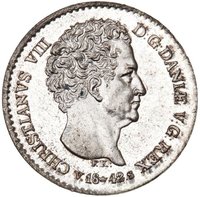
King Christian VIII facing right. Mintmark (small crown or heart) below head if present.
Inscription:
CHRISTIANVS VIII | D:G:DANIÆ V:G:REX
Translation:
Christian VIII, by the Grace of God, King of Denmark, the Vandals, and the Goths.
Script: Latin
Language: Latin
Engraver: Harald Conradsen
Reverse
Description:
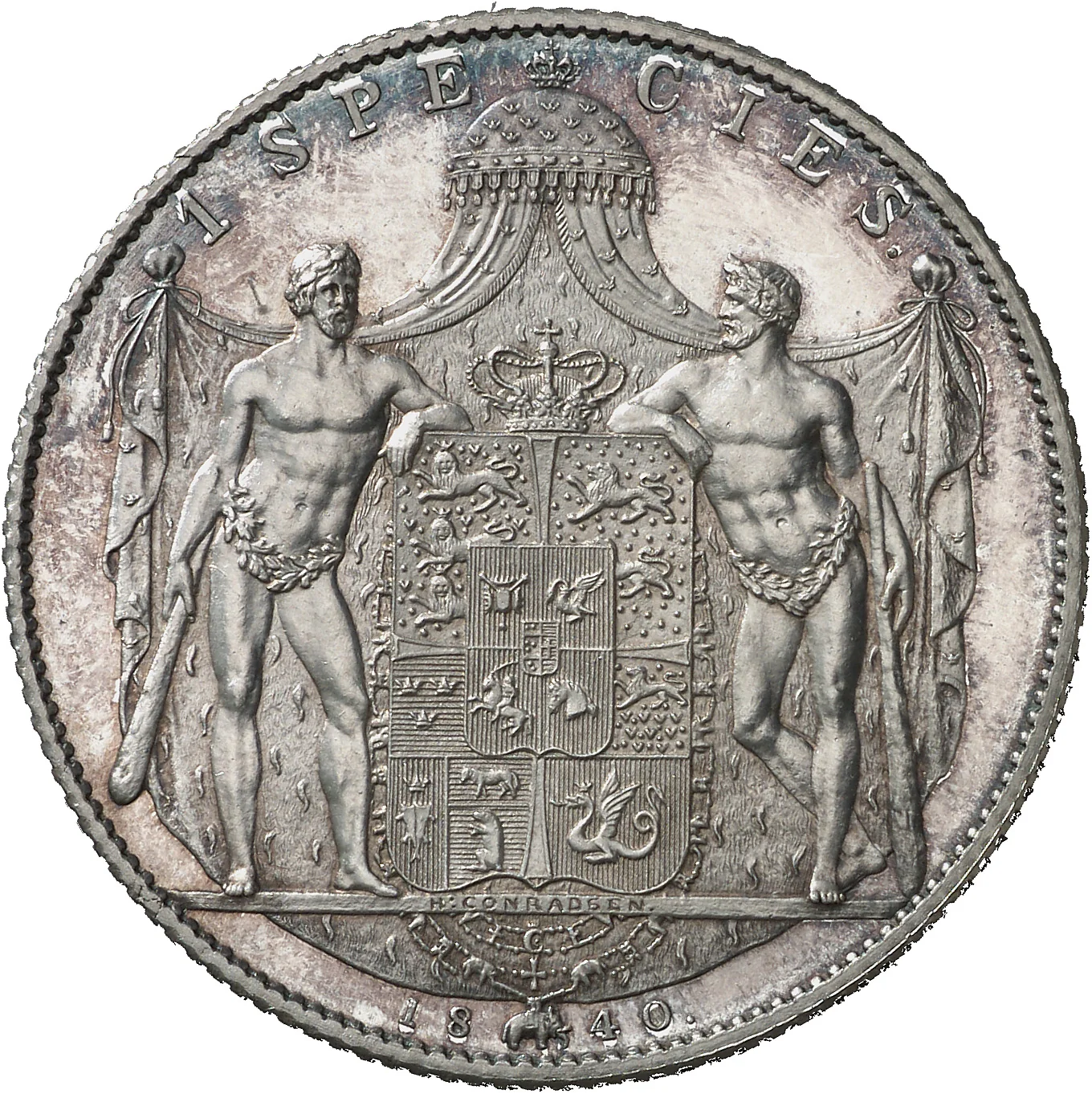
Crowned grater shield with Denmark’s arms (featuring the Elephant Order collar), supported by club‑armed wildmen. A wide crowned mantle envelops the design, dividing the value inscription above. Engraver’s name on a bar below the supporters’ feet, with date and mintmark below.
Inscription:
1 SPE | CIES
_____________
H.CONRADSEN
V. 18 | 45. S.
_____________
H.CONRADSEN
V. 18 | 45. S.
Script: Latin
Engraver: Harald Conradsen
Edge
Reeded
Mints
| Name | Mark |
|---|---|
| Altona, Schleswig-Holstein | ♁ |
| Royal Danish Mint | ♔ |
| Royal Danish Mint | ♥ |
Mintings
Historical background
In 1840, Denmark operated under a complex and strained monetary system, a legacy of the state bankruptcy declared in 1813. The financial devastation of the Napoleonic Wars had forced the creation of the Rigsbankdaler, a new paper currency intended to replace the debased older systems. However, public trust in this paper money was low from the outset, as it was not fully convertible to silver. Consequently, Denmark functioned with a dual-currency system: the official paper Rigsbankdaler for most domestic transactions and the more trusted specie Rigsbankdaler (redeemable in silver) for foreign trade and large contracts. This duality created confusion, exchange rate disparities, and hindered economic stability.
The situation was further complicated by the existence of older, physically minted coins that remained in circulation alongside the new paper notes. These included skilling and mark denominations, with 96 skilling to a Rigsbankdaler. The coexistence of multiple forms of money—some trusted, some not—led to practical difficulties in commerce and reflected the crown’s weakened fiscal authority. Economically, the period was one of agricultural predominance, but the unreliable currency posed challenges for trade, investment, and everyday transactions, fostering a desire for a unified and trustworthy system.
By 1840, pressure for monetary reform was building. The intellectual currents of the time, influenced by Scandinavianism and liberal economic ideas, increasingly viewed a secure, silver-backed currency as essential for national progress and integration into European markets. This mounting dissatisfaction set the stage for the significant currency reform of 1845, which would finally abolish the Rigsbankdaler and introduce the rigsdaler as a single, silver-based national currency, aiming to restore public confidence and simplify the Danish economy.
The situation was further complicated by the existence of older, physically minted coins that remained in circulation alongside the new paper notes. These included skilling and mark denominations, with 96 skilling to a Rigsbankdaler. The coexistence of multiple forms of money—some trusted, some not—led to practical difficulties in commerce and reflected the crown’s weakened fiscal authority. Economically, the period was one of agricultural predominance, but the unreliable currency posed challenges for trade, investment, and everyday transactions, fostering a desire for a unified and trustworthy system.
By 1840, pressure for monetary reform was building. The intellectual currents of the time, influenced by Scandinavianism and liberal economic ideas, increasingly viewed a secure, silver-backed currency as essential for national progress and integration into European markets. This mounting dissatisfaction set the stage for the significant currency reform of 1845, which would finally abolish the Rigsbankdaler and introduce the rigsdaler as a single, silver-based national currency, aiming to restore public confidence and simplify the Danish economy.
💎 Very Rare