

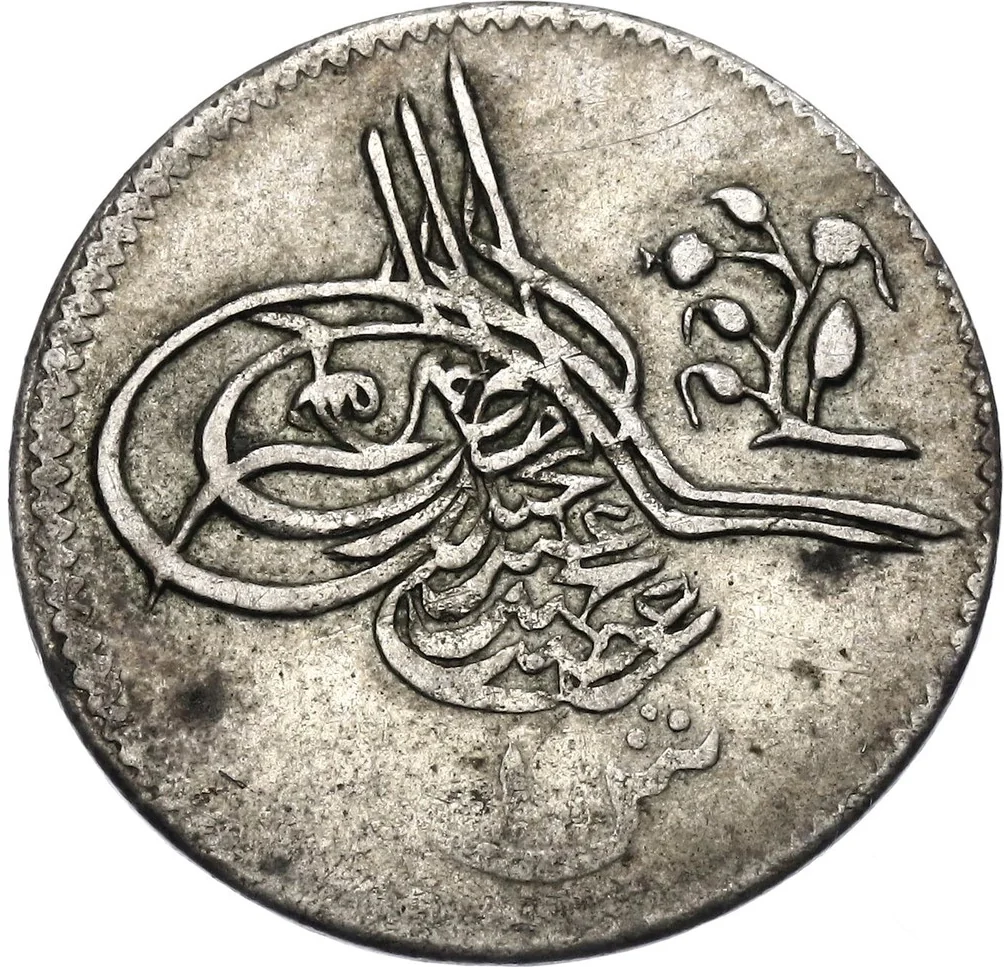
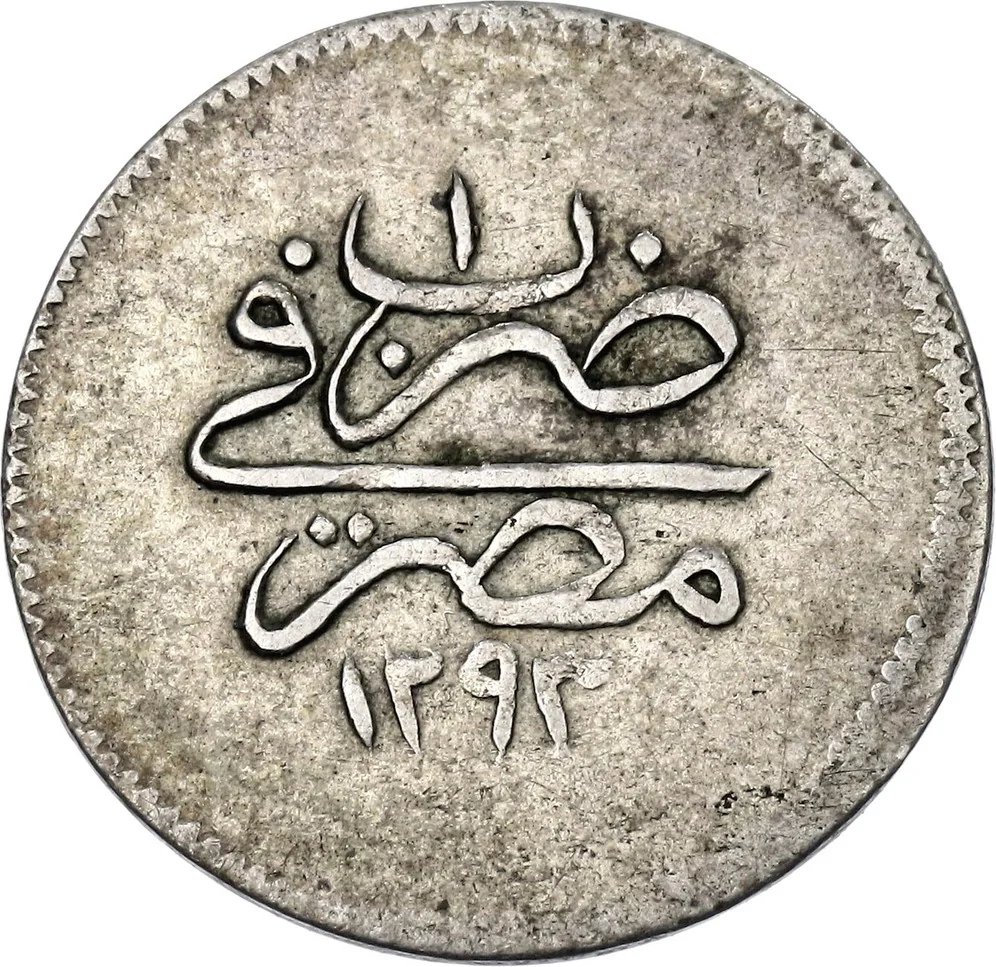
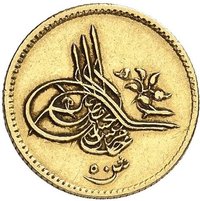
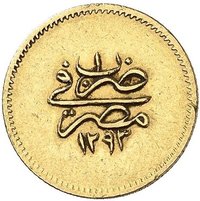
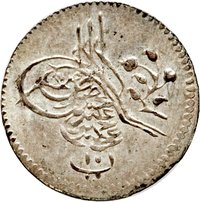
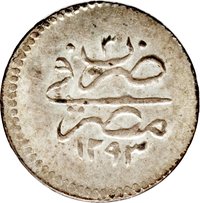
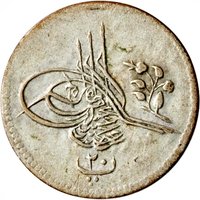
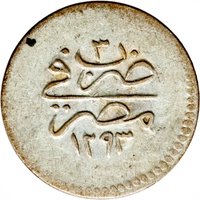
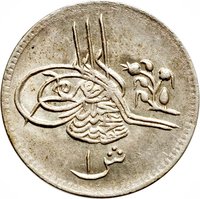
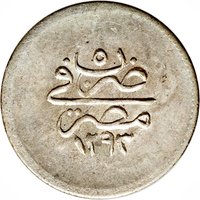
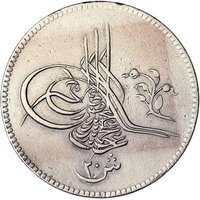
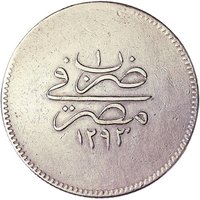
1 qirsh – Egypt
Add to wishlist
Egypt
Context
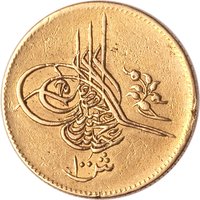
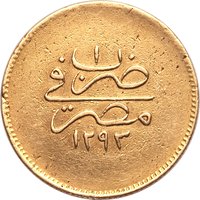
Year: 1876
Islamic (Hijri) Year:: 1293
Issuer: Egypt
Ruler: Murad V
Currency:
(1834—1916)
Demonetized: Yes
Material
References
KM: #
Numista: #23214
Value
Bullion value: $3.23
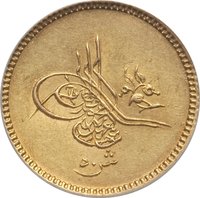
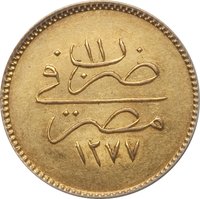
Obverse
Edge
Plain
Mintings
| Year | Mint Mark | Mintage | Quality | Collection |
|---|---|---|---|---|
| 1876 | — | — |
Historical background
By 1876, Egypt's currency situation was a direct reflection of the Khedivate’s profound fiscal crisis and its integration into the global financial system. The ambitious modernization projects of Khedive Ismail, particularly the Suez Canal, had been financed through massive foreign loans from European creditors at high interest rates. This borrowing spree, combined with a collapse in global cotton prices after the American Civil War, left Egypt bankrupt and unable to service its debt. The government’s response was to print vast quantities of irredeemable paper currency, known as khedivial decrees, leading to severe inflation and a dramatic loss of public confidence in the monetary system.
The crisis culminated in April 1876 with the establishment of the Caisse de la Dette Publique (Public Debt Commission), an institution controlled by British and French representatives to oversee Egyptian finances and ensure debt repayment. This marked the effective end of Egyptian financial sovereignty. The Commission immediately moved to stabilize the currency by consolidating the debt and attempting to manage the money supply, but the fundamental problem remained: the paper currency in circulation was not backed by sufficient specie (gold or silver), causing its value to fluctuate wildly and commerce to suffer.
Consequently, Egypt operated with a chaotic dual system. The official, but distrusted, paper currency coexisted with a variety of foreign gold and silver coins (especially British sovereigns and Maria Theresa thalers), which were preferred for significant transactions and savings. This period set the stage for the later imposition of the Gold Standard in 1885 under British occupation, which formally pegged the Egyptian pound to sterling and finally ended the era of monetary instability, but at the cost of cementing foreign control over Egypt’s economy for decades to come.
The crisis culminated in April 1876 with the establishment of the Caisse de la Dette Publique (Public Debt Commission), an institution controlled by British and French representatives to oversee Egyptian finances and ensure debt repayment. This marked the effective end of Egyptian financial sovereignty. The Commission immediately moved to stabilize the currency by consolidating the debt and attempting to manage the money supply, but the fundamental problem remained: the paper currency in circulation was not backed by sufficient specie (gold or silver), causing its value to fluctuate wildly and commerce to suffer.
Consequently, Egypt operated with a chaotic dual system. The official, but distrusted, paper currency coexisted with a variety of foreign gold and silver coins (especially British sovereigns and Maria Theresa thalers), which were preferred for significant transactions and savings. This period set the stage for the later imposition of the Gold Standard in 1885 under British occupation, which formally pegged the Egyptian pound to sterling and finally ended the era of monetary instability, but at the cost of cementing foreign control over Egypt’s economy for decades to come.
Series: 1876 Egypt circulation coins
💎 Very Rare