

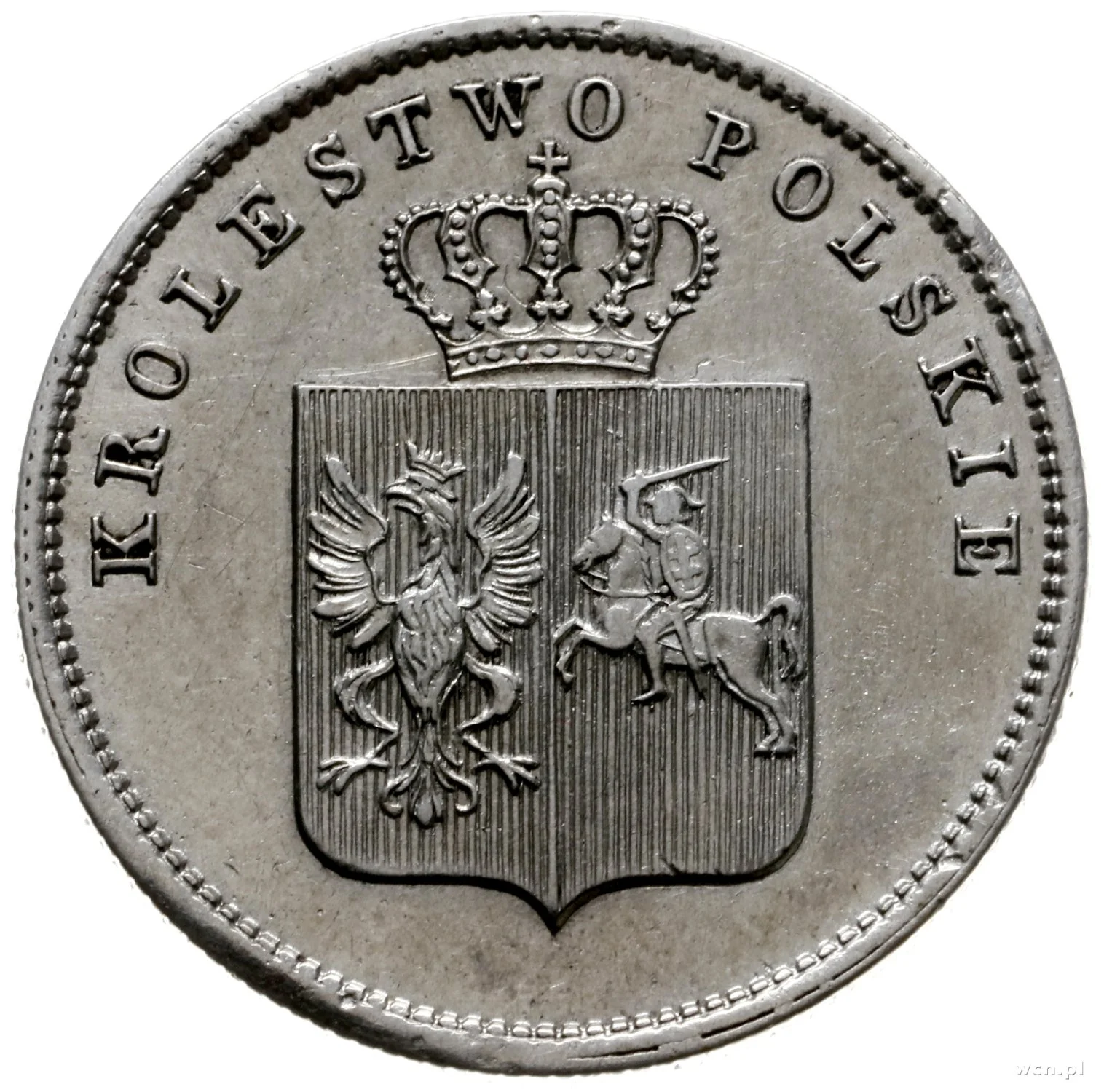
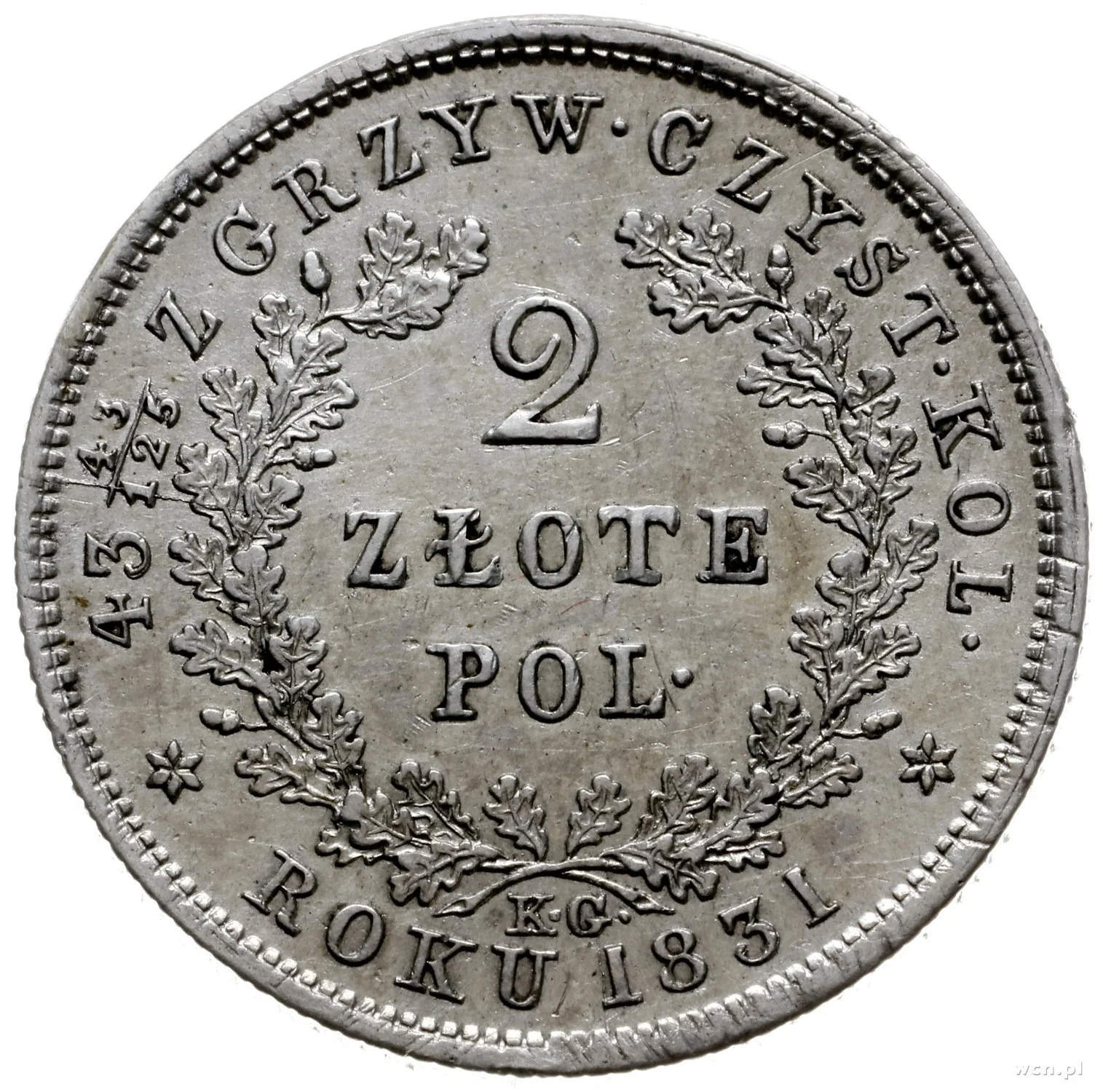
2 zlotys – Congress Kingdom of Poland
Add to wishlist
Poland
Context
Year: 1831
Country: Poland
Issuer: Congress Kingdom of Poland
Period:
(1830—1831)
Currency:
(1815—1841)
Demonetized: Yes
Total mintage: 170,990
Material
References
Numista: #23193
Value
Bullion value: $13.45
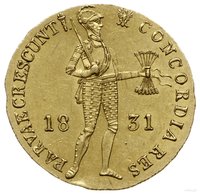
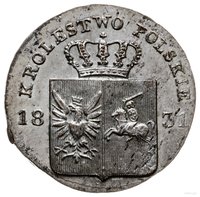
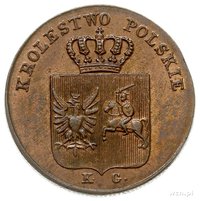
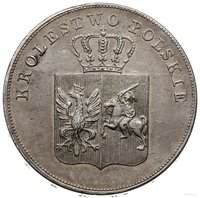
Obverse
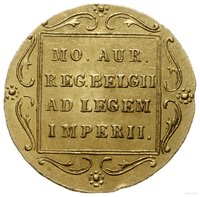
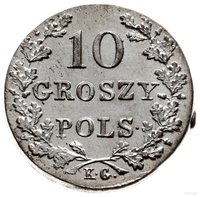
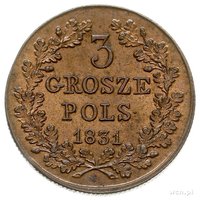
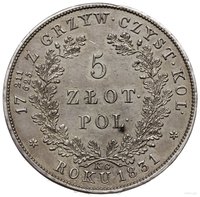
Reverse
Edge
Reeded
Mintings
| Year | Mint Mark | Mintage | Quality | Collection |
|---|---|---|---|---|
| 1831 | KG | 170,990 |
Historical background
The currency situation in the Congress Kingdom of Poland in 1831 was a direct consequence of the outbreak of the November Uprising against the Russian Empire. Prior to the insurrection, the Kingdom operated within the Russian monetary system, using the Polish złoty, which was fixed to and subsidiary to the Russian ruble. The establishment of the National Government in January 1831, however, created an urgent need for independent revenue to finance the war effort. The government, facing severe financial strain from military expenditures and a blockade by Russian forces, was compelled to issue its own paper money to cover deficits and pay soldiers, as traditional taxation and the state treasury were insufficient.
The insurgent authorities issued paper money in the form of treasury notes, denominated in złoty and grosze, which were essentially promissory notes of the state. These notes were not backed by sufficient specie reserves, leading to rapid depreciation almost immediately after issuance. Public confidence in this emergency currency was low, exacerbated by the uncertain political and military situation. Furthermore, the Russian government declared these notes illegal and void, meaning they would be worthless in the event of a Polish defeat, which further undermined their value and acceptance in daily transactions.
By the late summer of 1831, as the uprising neared its collapse, the financial system was in disarray. The paper money had lost most of its value, leading to severe inflation and a preference for metallic coinage, particularly Russian rubles or silver, in any remaining commerce. Following the suppression of the uprising, the Russian authorities systematically withdrew and destroyed the insurgent notes as part of the broader political and administrative integration of the Kingdom into the Empire, definitively ending this brief period of a separate Polish currency and fully reinstating the Russian monetary system.
The insurgent authorities issued paper money in the form of treasury notes, denominated in złoty and grosze, which were essentially promissory notes of the state. These notes were not backed by sufficient specie reserves, leading to rapid depreciation almost immediately after issuance. Public confidence in this emergency currency was low, exacerbated by the uncertain political and military situation. Furthermore, the Russian government declared these notes illegal and void, meaning they would be worthless in the event of a Polish defeat, which further undermined their value and acceptance in daily transactions.
By the late summer of 1831, as the uprising neared its collapse, the financial system was in disarray. The paper money had lost most of its value, leading to severe inflation and a preference for metallic coinage, particularly Russian rubles or silver, in any remaining commerce. Following the suppression of the uprising, the Russian authorities systematically withdrew and destroyed the insurgent notes as part of the broader political and administrative integration of the Kingdom into the Empire, definitively ending this brief period of a separate Polish currency and fully reinstating the Russian monetary system.
💎 Very Rare