

3 Rubles – Russian Empire
Russia
Context
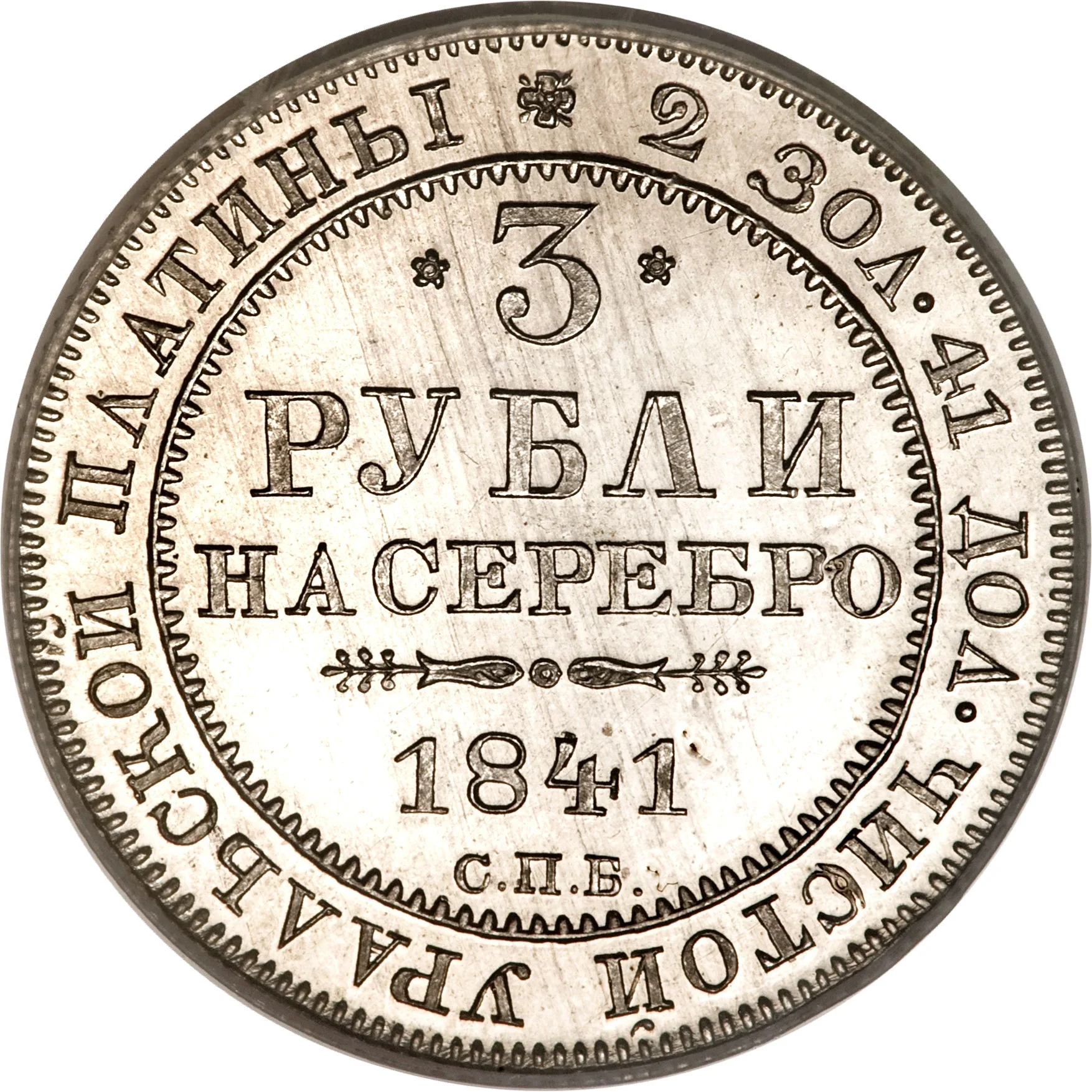
Years: 1828–1845
Country: Russia 
Issuer: Russian Empire
Ruler: Nicholas I
Currency:
(1700—1917)
Demonetized: Yes
Total mintage: 1,373,553
Material
References
Numista: #23166
Value
Bullion value: $0.00
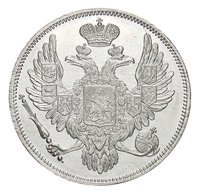
Obverse
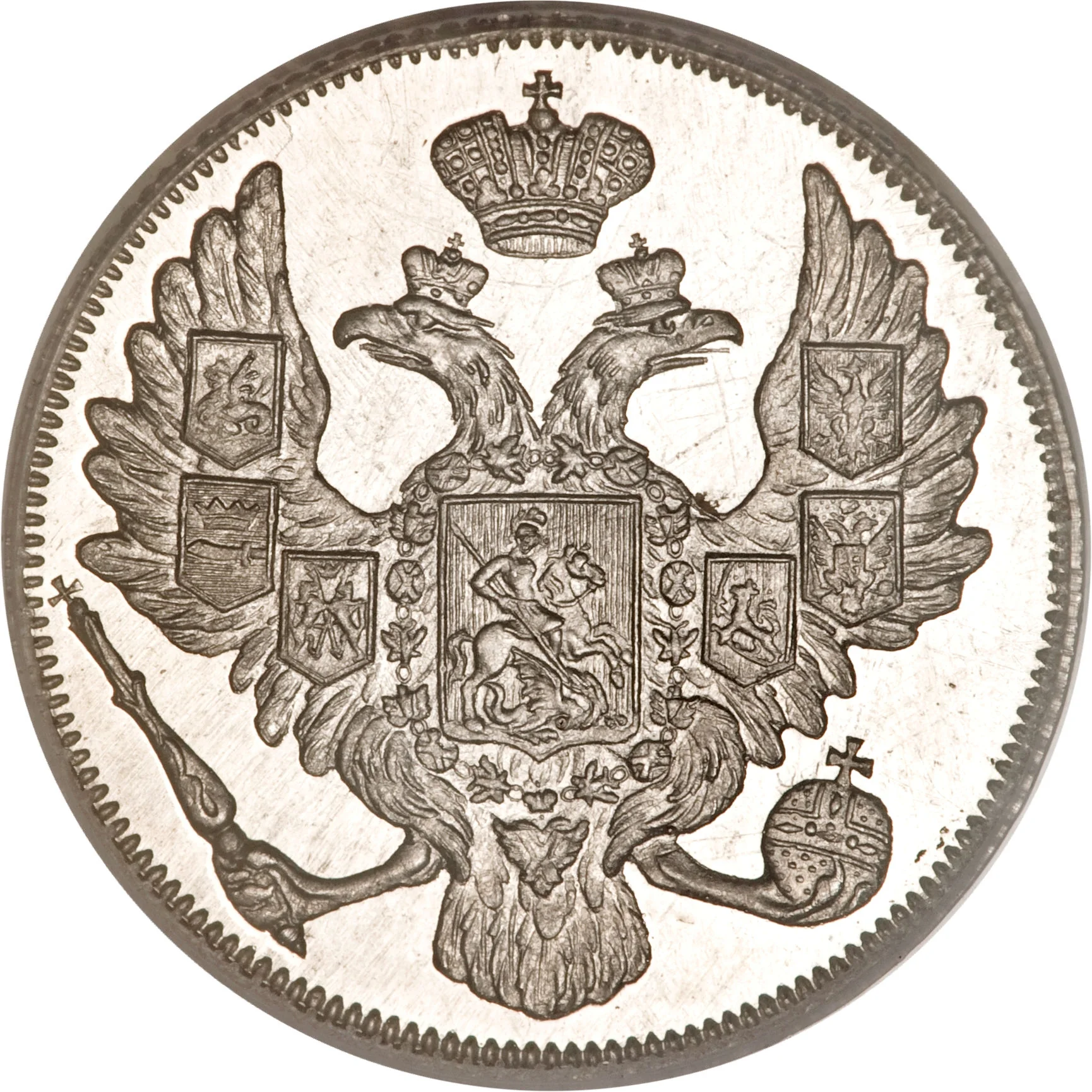
Description:
Crowned double-headed eagle.
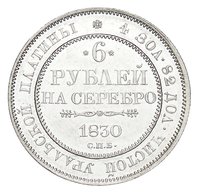
Reverse
Edge
Reeded
Mintings
| Year | Mint Mark | Mintage | Quality | Collection |
|---|---|---|---|---|
| 1828 | СПБ | 20,023 | BU | |
| 1828 | СПБ | — | Proof | |
| 1829 | СПБ | 43,449 | BU | |
| 1830 | СПБ | 106,026 | BU | |
| 1831 | СПБ | 86,500 | BU | |
| 1832 | СПБ | 65,746 | BU | |
| 1833 | СПБ | 84,540 | BU | |
| 1834 | СПБ | 90,972 | BU | |
| 1835 | СПБ | 138,504 | BU | |
| 1836 | СПБ | 43,752 | BU | |
| 1837 | СПБ | 46,303 | BU | |
| 1838 | СПБ | 48,512 | BU | |
| 1839 | СПБ | 2 | BU | |
| 1839 | СПБ | 2 | Proof | |
| 1840 | СПБ | 1 | BU | |
| 1840 | СПБ | 1 | Proof | |
| 1841 | СПБ | 16,921 | BU | |
| 1842 | СПБ | 145,458 | BU | |
| 1843 | СПБ | 172,335 | BU | |
| 1844 | СПБ | 214,504 | BU | |
| 1845 | СПБ | 50,002 | BU |
Historical background
In 1828, the currency system of the Russian Empire was defined by the silver standard, formally established by the monetary reform of Count Egor Kankrin in 1839-1843 but rooted in practices of the preceding decades. The primary unit of account was the silver ruble, but the monetary reality was complex and strained. The state circulated both silver coinage (full-valued rubles and smaller denominations) and paper money—assignatsii (assignats). These assignats, first introduced under Catherine the Great, had depreciated significantly due to over-issuance to finance wars, including the recent Napoleonic Wars. Consequently, a dual system existed where goods often had two prices: one in silver rubles and a higher one in paper assignats, with the exchange rate between them fluctuating.
The period following the 1812 Patriotic War saw persistent state budget deficits, exacerbated by the costs of the 1826-1828 war with Persia and the ongoing 1828-1829 war with the Ottoman Empire. These conflicts forced the government to rely heavily on printing assignats to cover military expenses, further undermining confidence in the paper currency. While the official aim was to maintain parity, the actual market rate for assignats was well below their face value in silver, creating economic instability and complicating both domestic trade and international commerce. The state treasury was burdened with a large external debt, much of it held in Dutch guilders, and servicing this debt required scarce hard currency.
Thus, the currency situation in 1828 was one of transition and mounting pressure. Kankrin, as Minister of Finance, was actively working to stabilize the finances, curtailing unnecessary expenditures and accumulating a silver reserve in preparation for a future reform. The system was fragile, propped up by strict exchange controls and the mandatory acceptance of assignats for state payments, but it was widely recognized that a fundamental monetary overhaul was necessary to restore public trust and establish a unified, stable currency for the empire's growing economy.
The period following the 1812 Patriotic War saw persistent state budget deficits, exacerbated by the costs of the 1826-1828 war with Persia and the ongoing 1828-1829 war with the Ottoman Empire. These conflicts forced the government to rely heavily on printing assignats to cover military expenses, further undermining confidence in the paper currency. While the official aim was to maintain parity, the actual market rate for assignats was well below their face value in silver, creating economic instability and complicating both domestic trade and international commerce. The state treasury was burdened with a large external debt, much of it held in Dutch guilders, and servicing this debt required scarce hard currency.
Thus, the currency situation in 1828 was one of transition and mounting pressure. Kankrin, as Minister of Finance, was actively working to stabilize the finances, curtailing unnecessary expenditures and accumulating a silver reserve in preparation for a future reform. The system was fragile, propped up by strict exchange controls and the mandatory acceptance of assignats for state payments, but it was widely recognized that a fundamental monetary overhaul was necessary to restore public trust and establish a unified, stable currency for the empire's growing economy.
💎 Extremely Rare