

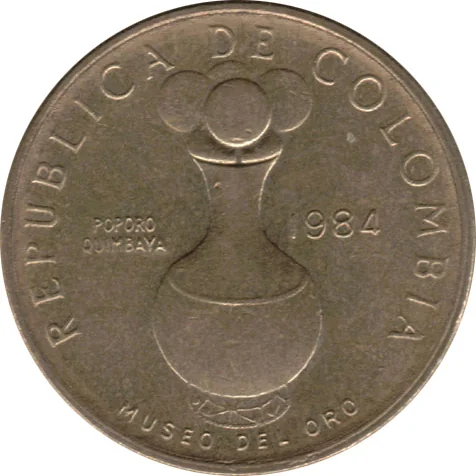
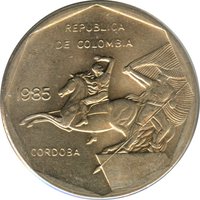
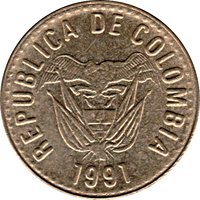
Obverse
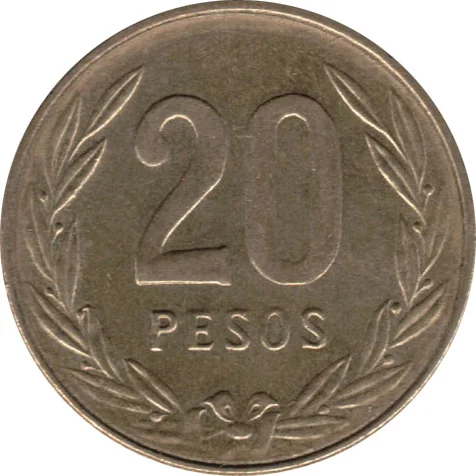
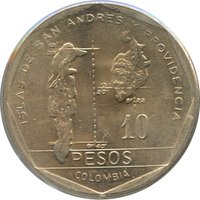
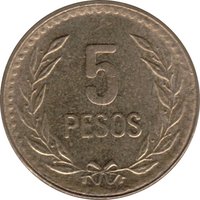
Reverse
Edge
Plain
Categories
| Object> Container or tableware |
| Symbol> Wreath |
Mints
| Name | Mark |
|---|---|
| Bogota Mint | — |
Mintings
| Year | Mint Mark | Mintage | Quality | Collection |
|---|---|---|---|---|
| — | — | — | ||
| 1982 | — | 18,300,000 | ||
| 1984 | — | 64,066,000 | ||
| 1985 | — | 100,690,000 | ||
| 1987 | — | 70,000,000 | ||
| 1988 | — | 72,002,490 | ||
| 1989 | — | 20,165,000 |
Historical background
In 1982, Colombia's currency situation was characterized by a managed exchange rate system under significant strain. The Colombian peso was pegged to the U.S. dollar within a crawling peg framework, known as the "mini-devaluations" system, which aimed to maintain export competitiveness through small, frequent adjustments. However, this system faced mounting pressure from a combination of external shocks, most notably the Latin American debt crisis that erupted that year and a sharp decline in global coffee prices—a key source of Colombia's foreign exchange earnings. This created a growing imbalance, with the official peso value increasingly overvalued relative to market forces.
The backdrop to this pressure was a period of economic overheating in the late 1970s, fueled by a coffee boom and external borrowing, which led to high inflation. By 1982, inflation was running at approximately 24%, significantly higher than that of Colombia's major trading partners. This inflation differential eroded the peso's real value and widened the gap between the official exchange rate and the black-market rate, encouraging capital flight as confidence waned. The administration of President Julio César Turbay Ayala (1978-1982) was concluding, leaving the looming currency and debt challenges to the incoming government of Belisario Betancur.
Consequently, 1982 marked a pivotal juncture where the existing currency regime became unsustainable. While a major devaluation was not immediately enacted, the year ended with severe pressure on foreign reserves and a loss of monetary control. The situation set the stage for the profound economic reforms and a deeper financial crisis that would unfold later in the decade, ultimately leading to a decisive shift toward a more liberalized exchange rate system in the 1990s.
The backdrop to this pressure was a period of economic overheating in the late 1970s, fueled by a coffee boom and external borrowing, which led to high inflation. By 1982, inflation was running at approximately 24%, significantly higher than that of Colombia's major trading partners. This inflation differential eroded the peso's real value and widened the gap between the official exchange rate and the black-market rate, encouraging capital flight as confidence waned. The administration of President Julio César Turbay Ayala (1978-1982) was concluding, leaving the looming currency and debt challenges to the incoming government of Belisario Betancur.
Consequently, 1982 marked a pivotal juncture where the existing currency regime became unsustainable. While a major devaluation was not immediately enacted, the year ended with severe pressure on foreign reserves and a loss of monetary control. The situation set the stage for the profound economic reforms and a deeper financial crisis that would unfold later in the decade, ultimately leading to a decisive shift toward a more liberalized exchange rate system in the 1990s.
🌱 Very Common