

1 dollar – Australia
Add to wishlist
Australia
Context
Material
References
KM: #
Numista: #2288
Value
Exchange value: 1 AUD
Inflation-adjusted value: 3.93 AUD
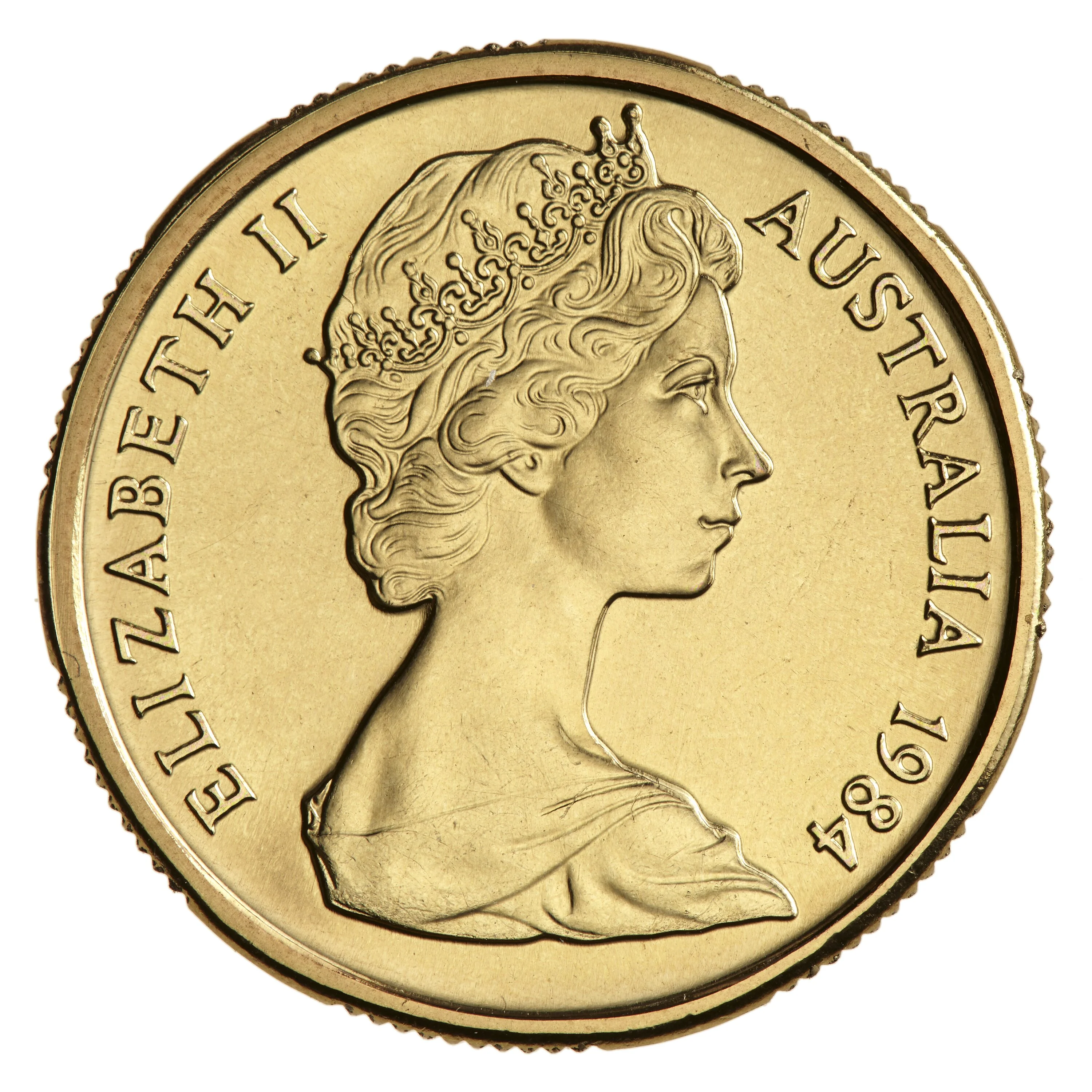
Obverse
Description:
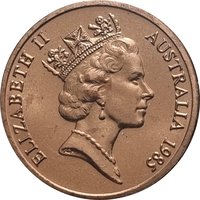
Queen Elizabeth II facing right in the Girls of Great Britain and Ireland Tiara.
Inscription:
ELIZABETH II
AUSTRALIA 1984
AUSTRALIA 1984
Script: Latin
Designer: Arnold Machin
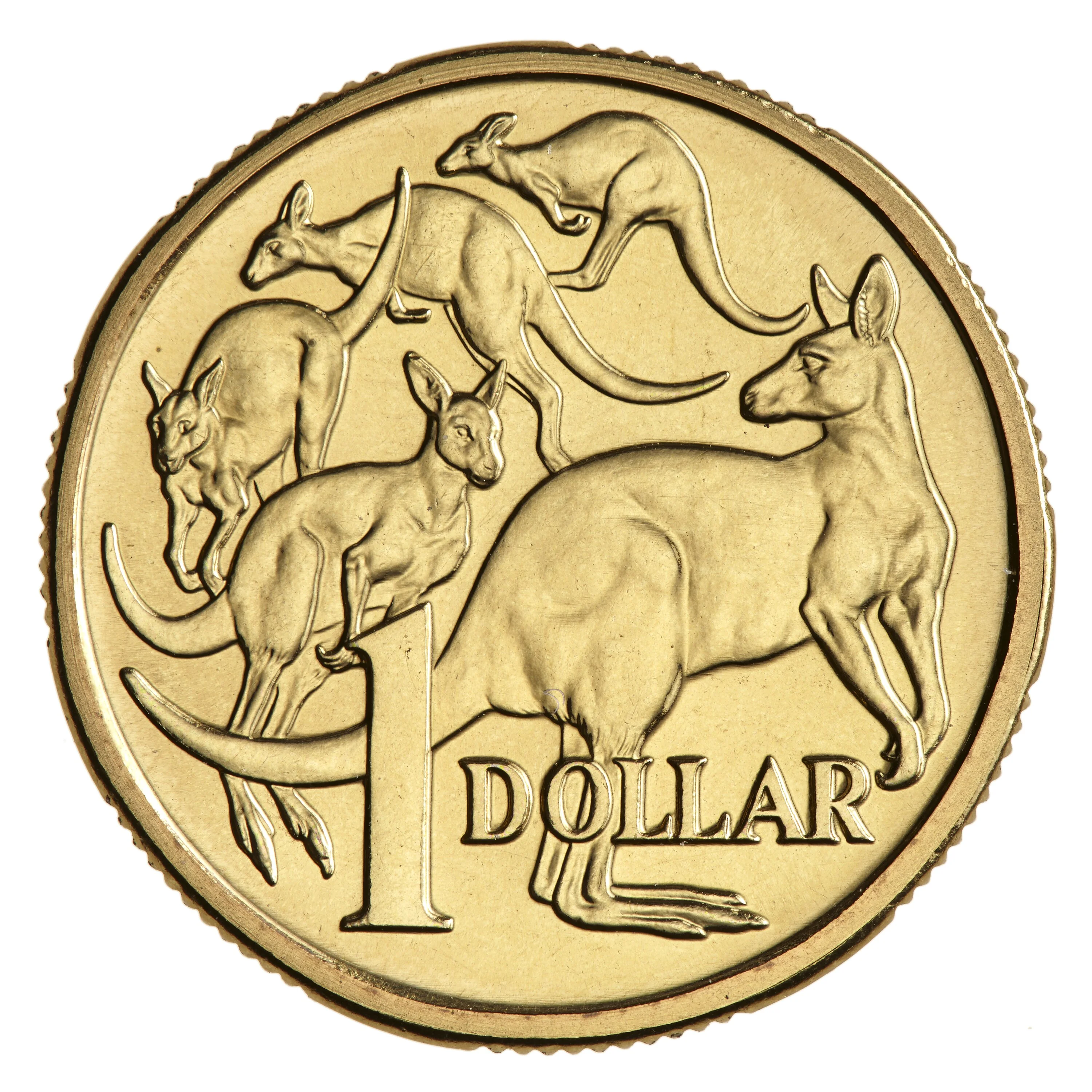
Reverse
Description:
"Mob of Roos" — five kangaroos.
Inscription:
1 DOLLAR
Script: Latin
Designer: Stuart Devlin
Edge
7 shorter smooth segments between 7 reeded segments (11 grooves each)
Mints
| Name | Mark |
|---|---|
| Royal Australian Mint | — |
Mintings
| Year | Mint Mark | Mintage | Quality | Collection |
|---|---|---|---|---|
| 1984 | — | — | BU | |
| 1984 | — | 185,985,000 | ||
| 1984 | — | 159,340 | Proof |
Historical background
In 1984, Australia's currency landscape was defined by the final stages of a significant transition: the move from a pound-based system to a fully decimal currency. The Australian dollar (AUD), introduced in 1966 to replace the Australian pound, had been successfully established. However, a notable relic remained in circulation—the one-dollar banknote. This paper note was still widely used alongside its newer, heavier counterpart, the one-dollar coin, which had been introduced just two years prior in 1982 to reduce the cost of replacing worn notes.
The year proved pivotal as the government, under Prime Minister Bob Hawke and Treasurer Paul Keating, made the decisive move to fully retire the one-dollar note. As of June 1984, the note was officially withdrawn from circulation, ceasing to be legal tender. This was a practical economic measure aimed at long-term cost-saving, as the coin's longer lifespan (estimated at 30 years versus a note's 8 months) promised substantial savings on production and replacement. The public was given a transition period to exchange their old notes, a process that was largely smooth but marked the end of an era for the familiar paper dollar.
This change occurred against a broader economic backdrop of financial deregulation and a floating exchange rate. Just the previous year, in December 1983, the Hawke-Keating government had dramatically floated the Australian dollar, removing its fixed value against a trade-weighted basket of currencies. By 1984, the AUD's value was therefore determined by market forces, a revolutionary shift that increased volatility but also integrated Australia more fully into the global financial system. Thus, the year symbolically closed the chapter on an old physical currency while firmly embracing a new, modern era of monetary policy.
The year proved pivotal as the government, under Prime Minister Bob Hawke and Treasurer Paul Keating, made the decisive move to fully retire the one-dollar note. As of June 1984, the note was officially withdrawn from circulation, ceasing to be legal tender. This was a practical economic measure aimed at long-term cost-saving, as the coin's longer lifespan (estimated at 30 years versus a note's 8 months) promised substantial savings on production and replacement. The public was given a transition period to exchange their old notes, a process that was largely smooth but marked the end of an era for the familiar paper dollar.
This change occurred against a broader economic backdrop of financial deregulation and a floating exchange rate. Just the previous year, in December 1983, the Hawke-Keating government had dramatically floated the Australian dollar, removing its fixed value against a trade-weighted basket of currencies. By 1984, the AUD's value was therefore determined by market forces, a revolutionary shift that increased volatility but also integrated Australia more fully into the global financial system. Thus, the year symbolically closed the chapter on an old physical currency while firmly embracing a new, modern era of monetary policy.
🌱 Very Common