

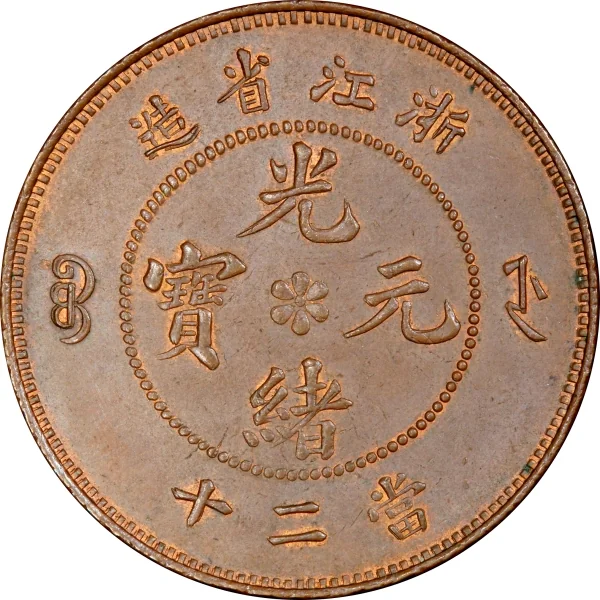
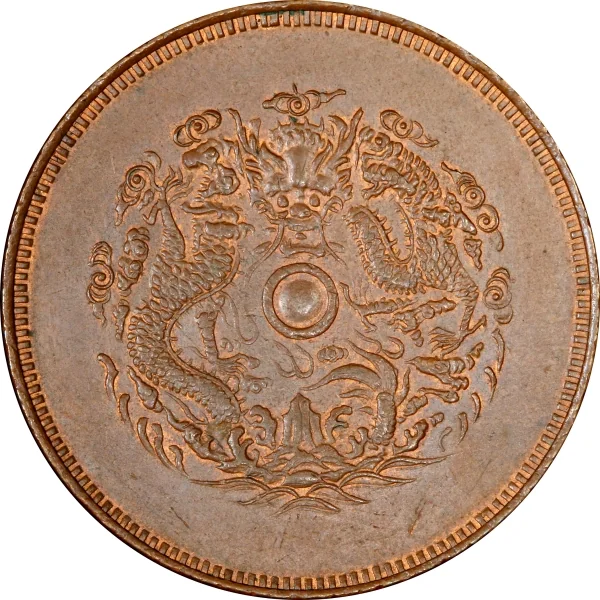
20 Cash – Chekiang Province
China
Context
Years: 1903–1904
Country: China 
Issuer: Chekiang Province
Ruler: Guangxu
Currency:
(1896—1940)
Demonetized: Yes
Material
References
Y: #Click to copy to clipboard50
Numista: #22753
Obverse
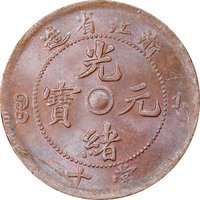
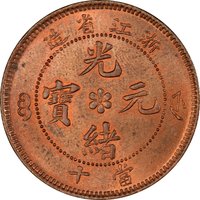
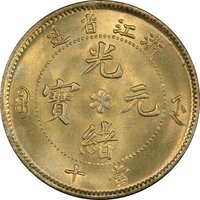
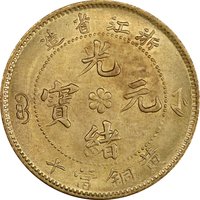
Description:
Four Chinese ideograms read vertically, flanking a central flower, all encircled by more ideograms.
Inscription:
造省江浙
ᠪᠣᠣ ᠵᡝ
光
寶元
绪
十二當
ᠪᠣᠣ ᠵᡝ
光
寶元
绪
十二當
Translation:
BOO JE
GUANG
BAO YUAN
XU
SHI ER DANG
GUANG
BAO YUAN
XU
SHI ER DANG
Languages: Manchu, Classical Chinese
Reverse
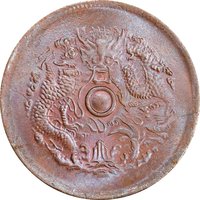
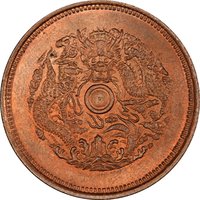
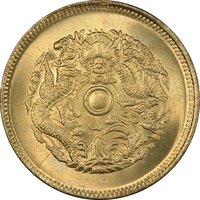
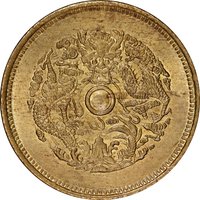
Description:
Dragon encircled.
Edge
Plain
Categories
| Mythology> Fantastic animal |
| Plants> Flower |
Mintings
| Year | Mint Mark | Mintage | Quality | Collection |
|---|---|---|---|---|
| — | — | — |
Historical background
In 1903, Chekiang (Zhejiang) Province, a wealthy coastal region centered on the port of Ningpo, operated within a complex and fragmented monetary system typical of late Qing China. The official currency was the silver tael (a unit of weight, not a coin), but transactions were conducted using a bewildering array of silver sycee (shoe-shaped ingots) and foreign-minted silver dollars, primarily Mexican "Eagle" dollars and British trade dollars, which circulated widely. Their value fluctuated daily based on weight and purity, creating significant friction for commerce. Concurrently, a vast quantity of copper cash coins (wen), strung together in diao, served as the everyday currency for the populace, but their exchange rate against silver was unstable and locally variable.
This monetary disarray was exacerbated by the proliferation of private banknotes. Native banks (qianzhuang) and larger Shansi banks issued their own silver tael and copper cash notes, which were only credible within specific local or regional networks. Furthermore, the newly established Imperial Bank of China (founded 1897) and foreign banks, like the Hongkong and Shanghai Banking Corporation (HSBC), also issued notes, adding another competing layer. This resulted in a landscape where a merchant in Hangchow (Hangzhou) had to navigate multiple, often distrustful, currencies, with constant risk of discount or default on private paper.
The situation reflected the broader crisis of Qing sovereignty and economic control. The imperial government lacked the central authority to standardize currency, while the province's integration into global trade through Shanghai and Ningpo flooded it with foreign silver. This monetary chaos increased transaction costs, hindered provincial revenue collection, and fueled public discontent. It set the stage for the monetary reforms attempted in the following years, which sought to introduce a standardized national silver yuan and, ultimately, the establishment of a central bank.
This monetary disarray was exacerbated by the proliferation of private banknotes. Native banks (qianzhuang) and larger Shansi banks issued their own silver tael and copper cash notes, which were only credible within specific local or regional networks. Furthermore, the newly established Imperial Bank of China (founded 1897) and foreign banks, like the Hongkong and Shanghai Banking Corporation (HSBC), also issued notes, adding another competing layer. This resulted in a landscape where a merchant in Hangchow (Hangzhou) had to navigate multiple, often distrustful, currencies, with constant risk of discount or default on private paper.
The situation reflected the broader crisis of Qing sovereignty and economic control. The imperial government lacked the central authority to standardize currency, while the province's integration into global trade through Shanghai and Ningpo flooded it with foreign silver. This monetary chaos increased transaction costs, hindered provincial revenue collection, and fueled public discontent. It set the stage for the monetary reforms attempted in the following years, which sought to introduce a standardized national silver yuan and, ultimately, the establishment of a central bank.

💎 Extremely Rare