

1 Jiao – Chekiang Province
China
Context
Year: 1924
Chinese republican Year: 13
Country: China 
Issuer: Chekiang Province
Period:
(1912—1955)
Currency:
(1896—1940)
Demonetized: Yes
Total mintage: 4,464,000
Material
References
Y: #Click to copy to clipboard371
Numista: #42346
Value
Bullion value: $4.85
Obverse
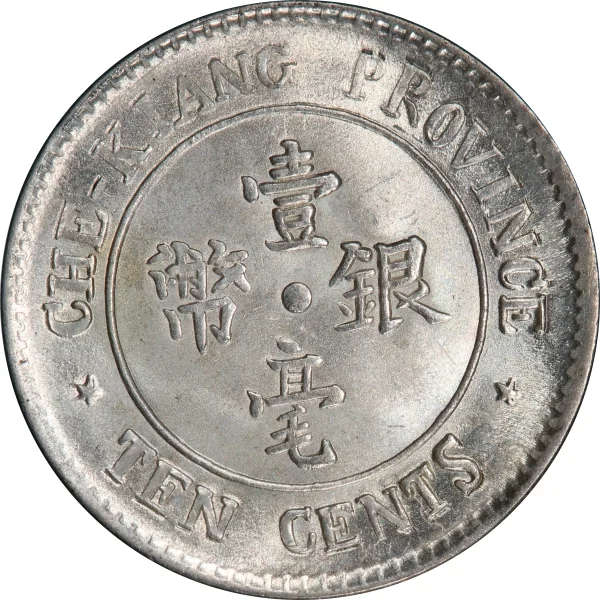
Reverse
Description:
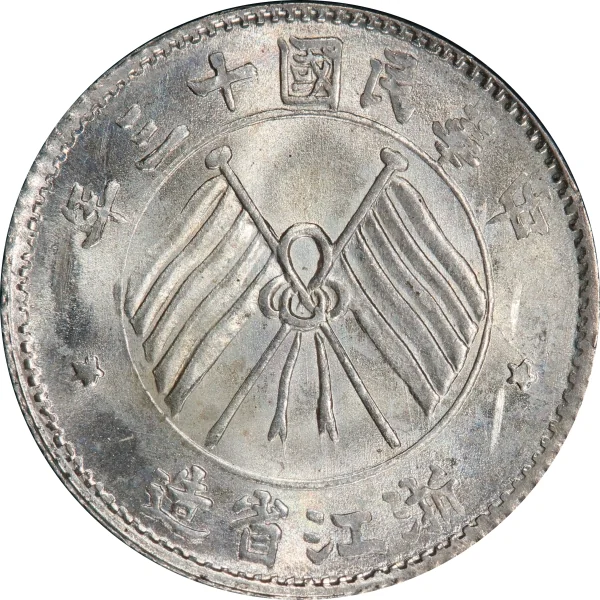
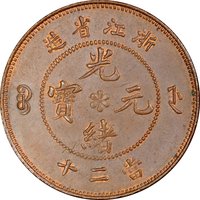
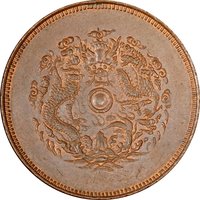
Crossed flags with Chinese characters.
Inscription:
年三十國民華中
造省江浙
造省江浙
Translation:
Made in Zhejiang Province, Year 30 of the Republic of China
Language: Chinese
Edge
Reeded.
Mintings
| Year | Mint Mark | Mintage | Quality | Collection |
|---|---|---|---|---|
| 1924 | — | 4,464,000 |
Historical background
In 1924, Chekiang (Zhejiang) Province, like much of China, was caught in a complex and destabilizing currency situation resulting from political fragmentation. Following the fall of the Qing Dynasty, the province was under the control of the Zhili military clique, but central authority from Beijing was weak. This allowed provincial authorities, local banks, and even military commanders to issue their own paper currency, known as tuchüan or "local notes." These notes were not backed by sufficient silver reserves and their value fluctuated wildly based on the issuer's credibility and distance from the provincial capital of Hangchow (Hangzhou).
The primary currency in circulation was a mixture of silver yuan coins (both foreign and domestic), copper cash, and this plethora of paper notes. A key problem was the severe shortage of standard silver coins, which were hoarded for their intrinsic value. This forced everyday transactions to rely on depreciating paper or bulky copper coins. Furthermore, older silver dollars, like the "Mexican Eagle" and "Dragon Dollars," traded at different values than newer republican issues, creating a chaotic exchange environment that hampered trade and facilitated exploitation by money changers.
This monetary disorder was a direct reflection of the wider "warlord era" and had severe economic consequences. Merchants faced significant uncertainty, inflation eroded purchasing power for peasants and urban workers, and inter-regional trade within the province became difficult. The situation in Chekiang was somewhat more stable than in war-torn provinces, but the lack of a unified, trustworthy currency still stifled economic development and fueled public resentment, highlighting the fundamental link between political unity and monetary stability.
The primary currency in circulation was a mixture of silver yuan coins (both foreign and domestic), copper cash, and this plethora of paper notes. A key problem was the severe shortage of standard silver coins, which were hoarded for their intrinsic value. This forced everyday transactions to rely on depreciating paper or bulky copper coins. Furthermore, older silver dollars, like the "Mexican Eagle" and "Dragon Dollars," traded at different values than newer republican issues, creating a chaotic exchange environment that hampered trade and facilitated exploitation by money changers.
This monetary disorder was a direct reflection of the wider "warlord era" and had severe economic consequences. Merchants faced significant uncertainty, inflation eroded purchasing power for peasants and urban workers, and inter-regional trade within the province became difficult. The situation in Chekiang was somewhat more stable than in war-torn provinces, but the lack of a unified, trustworthy currency still stifled economic development and fueled public resentment, highlighting the fundamental link between political unity and monetary stability.
💎 Extremely Rare