

¼ rupee – Mauritius
Add to wishlist
Mauritius
Context
Years: 1960–1978
Issuer: Mauritius
Ruler: Elizabeth II
Currency:
(since 1835)
Demonetized: Yes
Total mintage: 20,490,018
Material
Diameter: 19 mm
Weight: 2.95 g
Thickness: 1.3 mm
Shape: Round
Composition: Copper-nickel
Technique: Milled
Alignment: Medal alignment
flip
References
KM: #
Numista: #2271
Value
Exchange value: ¼ MUR
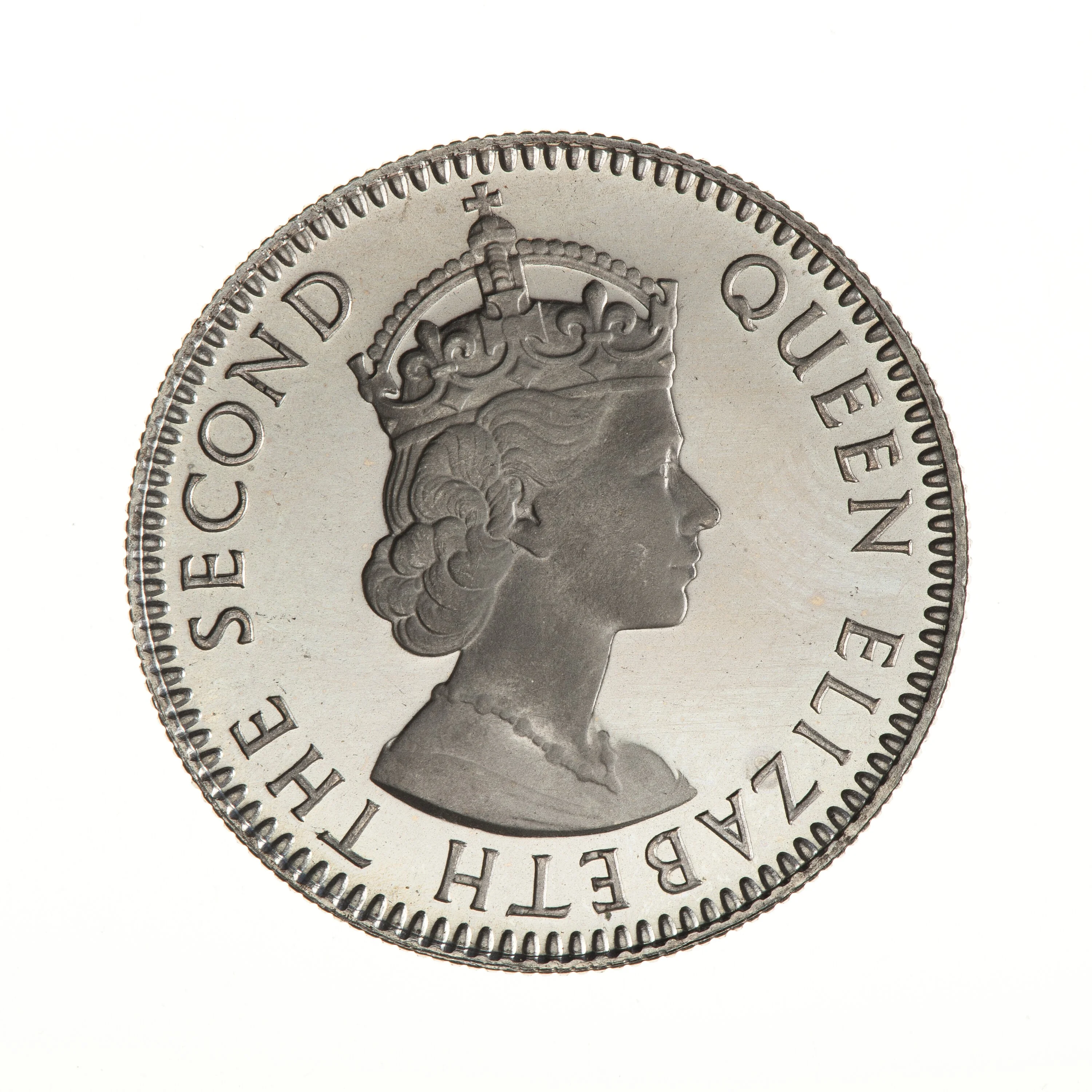
Obverse
Description:
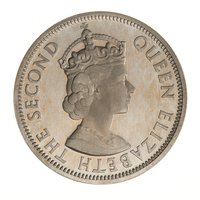
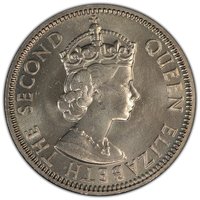
Crowned head facing right.
Inscription:
QUEEN ELIZABETH THE SECOND
CT
CT
Script: Latin
Engraver: Cecil Thomas
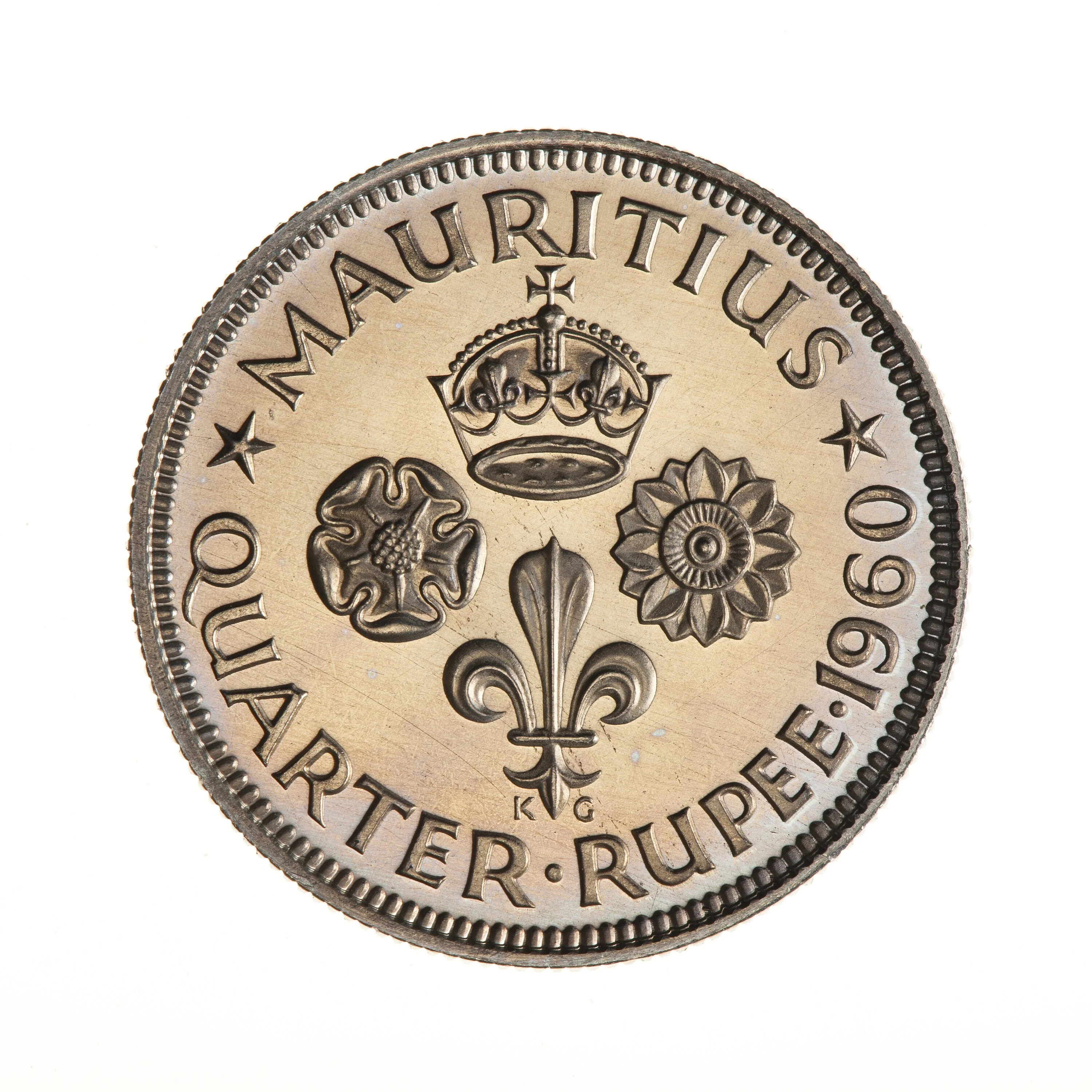
Reverse
Description:
Clockwise: Crown, Lotus, Fleur-de-lis, Tudor Rose.
Inscription:
* MAURITIUS *
K G
QUARTER·RUPEE·1971
K G
QUARTER·RUPEE·1971
Script: Latin
Engraver: George Kruger Gray
Edge
Reeded
Mints
| Name | Mark |
|---|---|
| Royal Mint (Tower Hill) | — |
| Royal Mint | — |
Mintings
| Year | Mint Mark | Mintage | Quality | Collection |
|---|---|---|---|---|
| 1960 | — | 1,000,000 | ||
| 1960 | — | — | Proof | |
| 1964 | — | 400,000 | ||
| 1964 | — | — | Proof | |
| 1965 | — | 400,000 | ||
| 1970 | — | 400,000 | ||
| 1971 | — | 540,000 | ||
| 1971 | — | 750 | Proof | |
| 1975 | — | 8,940,000 | ||
| 1978 | — | 8,800,000 | ||
| 1978 | — | 9,268 | Proof |
Historical background
In 1960, Mauritius was a British colony on the cusp of significant political change, and its currency system was a direct reflection of its colonial status. The official currency was the Mauritian Rupee (MUR), but it was not an independent monetary unit. Instead, it operated under the auspices of the Mauritius Currency Board, established in 1934. This board issued local rupees fully backed by sterling reserves held in London, adhering to a strict fixed exchange rate of 13.3333 Mauritian Rupees = 1 British Pound Sterling. This "currency board" system meant the money supply was entirely dependent on the island's balance of payments with Britain, leaving little room for domestic monetary policy.
The economy of Mauritius in this period was overwhelmingly dominated by the sugar industry, which accounted for the vast majority of its export earnings. Consequently, the currency's stability and its peg to sterling were crucial for the powerful sugar plantation owners, as it facilitated predictable trade and finance with the United Kingdom, the primary market for Mauritian sugar. However, this rigid system also meant that Mauritius imported Britain's inflation and had no mechanism to adjust its currency to suit local economic conditions, such as funding diversification or addressing unemployment.
By 1960, discussions about self-government and eventual independence were advancing. This impending political shift brought the colonial currency arrangement into question. There was a growing recognition among local leaders that upon independence, Mauritius would require a more flexible monetary institution to manage its own economic destiny. Therefore, the currency situation in 1960 was one of colonial rigidity, but it stood on the brink of transformation, setting the stage for the establishment of an independent central bank—the Bank of Mauritius—which would be founded in 1967, shortly before the country achieved independence in 1968.
The economy of Mauritius in this period was overwhelmingly dominated by the sugar industry, which accounted for the vast majority of its export earnings. Consequently, the currency's stability and its peg to sterling were crucial for the powerful sugar plantation owners, as it facilitated predictable trade and finance with the United Kingdom, the primary market for Mauritian sugar. However, this rigid system also meant that Mauritius imported Britain's inflation and had no mechanism to adjust its currency to suit local economic conditions, such as funding diversification or addressing unemployment.
By 1960, discussions about self-government and eventual independence were advancing. This impending political shift brought the colonial currency arrangement into question. There was a growing recognition among local leaders that upon independence, Mauritius would require a more flexible monetary institution to manage its own economic destiny. Therefore, the currency situation in 1960 was one of colonial rigidity, but it stood on the brink of transformation, setting the stage for the establishment of an independent central bank—the Bank of Mauritius—which would be founded in 1967, shortly before the country achieved independence in 1968.
🌱 Very Common