

½ rupee – Mauritius
Add to wishlist
Mauritius
Context
Years: 1965–1978
Issuer: Mauritius
Ruler: Elizabeth II
Currency:
(since 1835)
Demonetized: Yes
Total mintage: 5,179,286
Material
Diameter: 23.65 mm
Weight: 5.85 g
Thickness: 1.8 mm
Shape: Round
Composition: Copper-nickel
Technique: Milled
Alignment: Medal alignment
flip
References
KM: #
Numista: #2272
Value
Exchange value: ½ MUR
Obverse
Description:
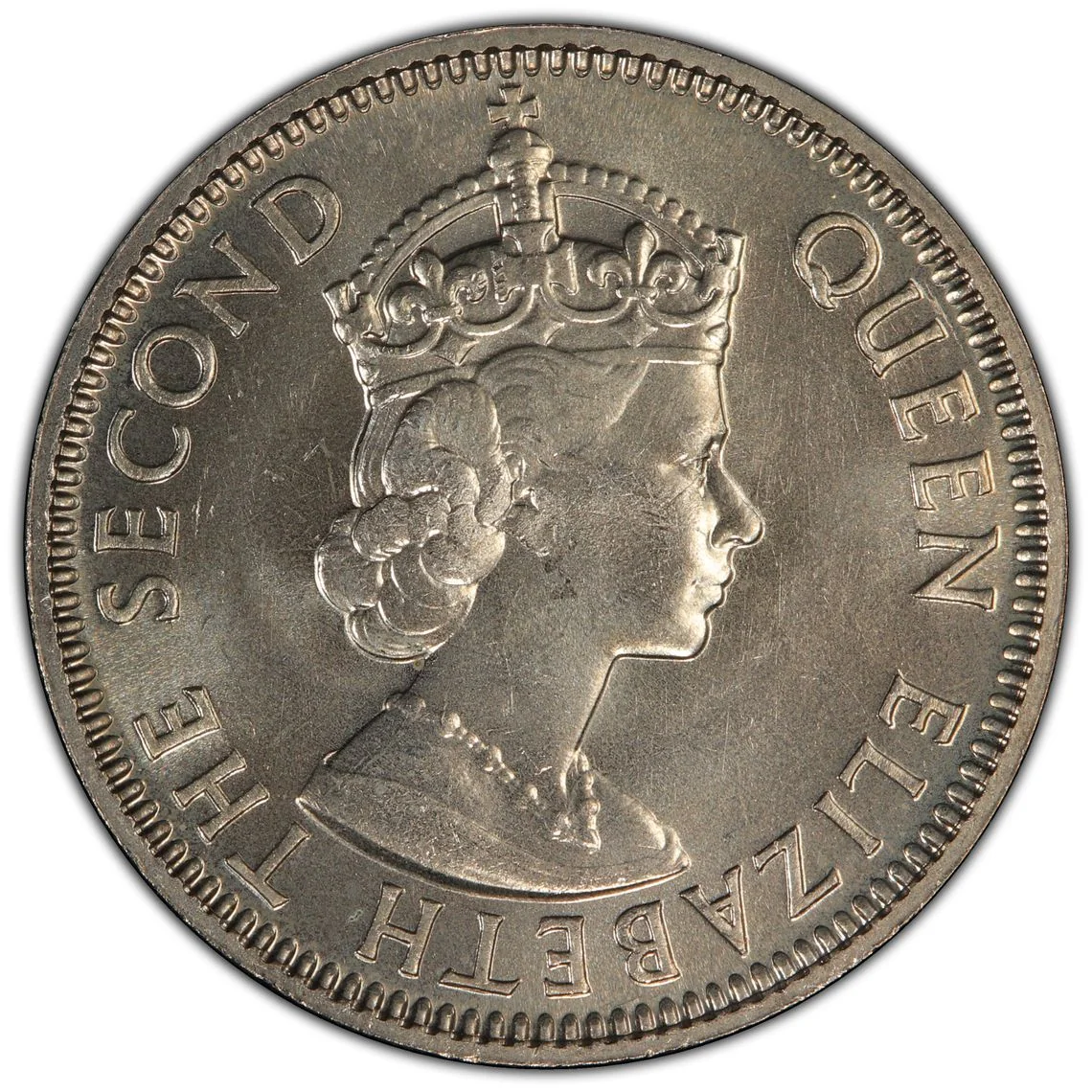
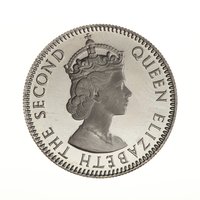
Queen Elizabeth II crowned, facing right.
Inscription:
QUEEN ELIZABETH THE SECOND
CT
CT
Script: Latin
Engraver: Cecil Thomas
Reverse
Description:
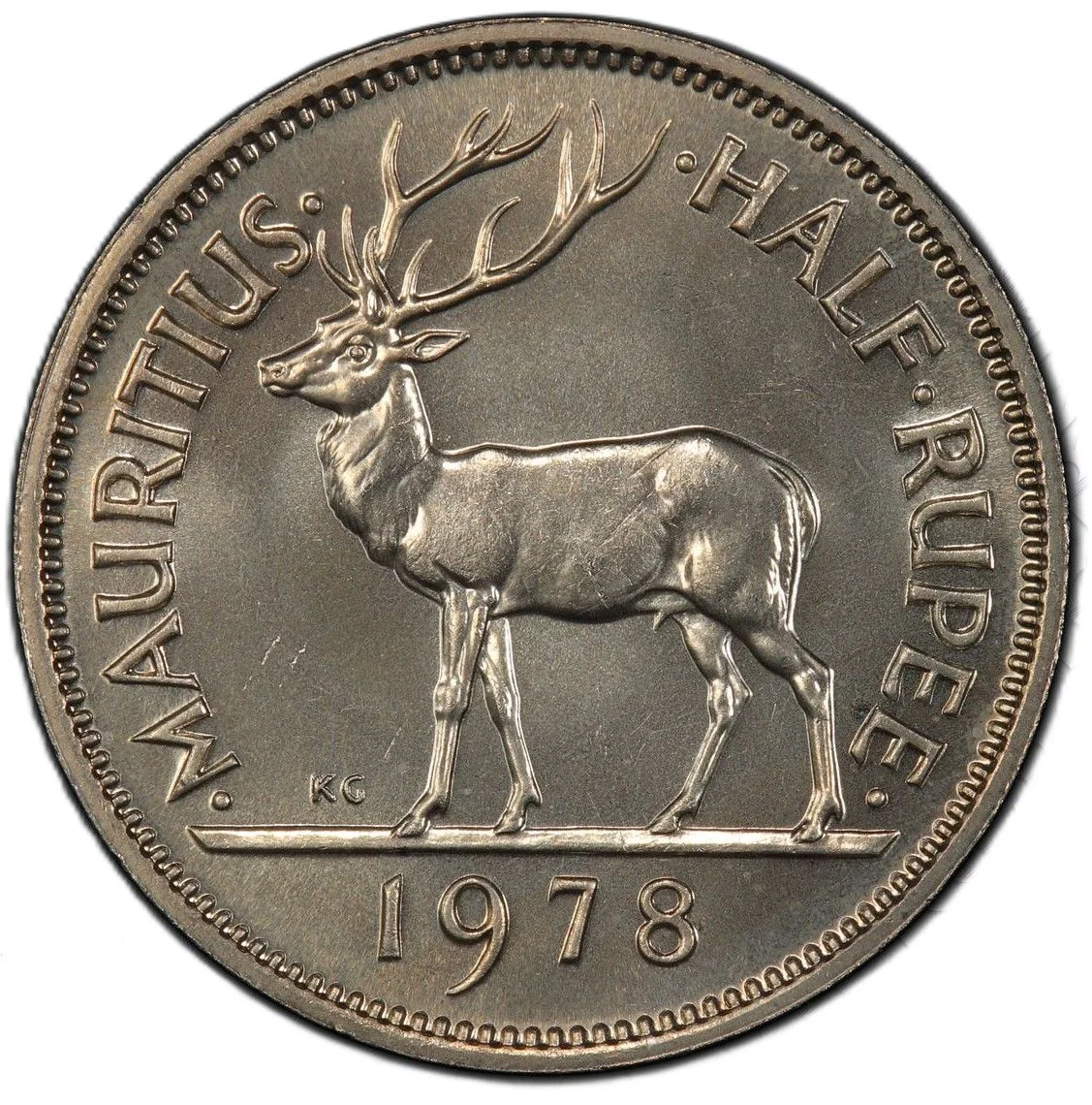
Stag (Swamp deer, Rucervus duvaucelii) facing left.
Inscription:
·MAURITIUS· ·HALF·RUPEE·
KG
1978
KG
1978
Script: Latin
Engraver: George Kruger Gray
Edge
Security edge
Mints
| Name | Mark |
|---|---|
| Royal Mint (Tower Hill) | — |
| Royal Mint | — |
Mintings
| Year | Mint Mark | Mintage | Quality | Collection |
|---|---|---|---|---|
| 1965 | — | 200,000 | ||
| 1971 | — | 400,000 | ||
| 1971 | — | 750 | Proof | |
| 1975 | — | 4,160,000 | ||
| 1978 | — | 409,268 | ||
| 1978 | — | 9,268 | Proof |
Historical background
In 1965, Mauritius was navigating a complex economic and political transition as it moved towards independence from British colonial rule, achieved in 1968. The currency situation was directly tied to this political evolution. At the time, the official currency was the Mauritian Rupee (MUR), which was pegged to and managed within the Sterling Area. The rupee itself was issued by a British colonial institution, the Board of Commissioners of Currency, and its value was fixed to the British Pound Sterling (£1 = MUR 13.33). This arrangement ensured monetary stability and facilitated trade with the United Kingdom, which was the island's dominant economic partner.
Economically, this peg existed within a vulnerable, monocrop economy heavily dependent on sugar exports. The stability provided by the Sterling link was crucial for the plantation-based sugar industry, which relied on predictable exchange rates for its export revenues and for importing necessary machinery and goods. However, this system also meant that Mauritius had little independent monetary control; its money supply and interest rates were largely influenced by British economic policy and the strength of Sterling, limiting the government's ability to respond to local economic conditions.
The year 1965 was particularly significant as it followed the Lancaster House constitutional conferences, which set the path for sovereignty. In this context, discussions began regarding the establishment of a central monetary authority to replace the colonial currency board. These talks culminated, post-independence, in the creation of the Bank of Mauritius in 1967, which took over currency issuance and began the process of formulating an independent monetary policy. Thus, the currency situation in 1965 represented the final phase of a colonial monetary system, poised for transformation as the nation prepared to take full control of its economic destiny.
Economically, this peg existed within a vulnerable, monocrop economy heavily dependent on sugar exports. The stability provided by the Sterling link was crucial for the plantation-based sugar industry, which relied on predictable exchange rates for its export revenues and for importing necessary machinery and goods. However, this system also meant that Mauritius had little independent monetary control; its money supply and interest rates were largely influenced by British economic policy and the strength of Sterling, limiting the government's ability to respond to local economic conditions.
The year 1965 was particularly significant as it followed the Lancaster House constitutional conferences, which set the path for sovereignty. In this context, discussions began regarding the establishment of a central monetary authority to replace the colonial currency board. These talks culminated, post-independence, in the creation of the Bank of Mauritius in 1967, which took over currency issuance and began the process of formulating an independent monetary policy. Thus, the currency situation in 1965 represented the final phase of a colonial monetary system, poised for transformation as the nation prepared to take full control of its economic destiny.
🌱 Very Common