

1⁄32 birr / thaler – Ethiopian Empire
Add to wishlist
Ethiopia
Context
Year: 1903
Ethiopian Year:: 1889
Country: Ethiopia
Issuer: Ethiopian Empire
Ruler: Menelik II
Currency:
(1893—1931)
Demonetized: Yes
Material
References
KM: #
Numista: #22665
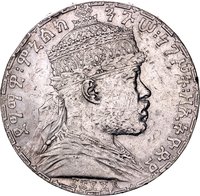
Obverse
Description:
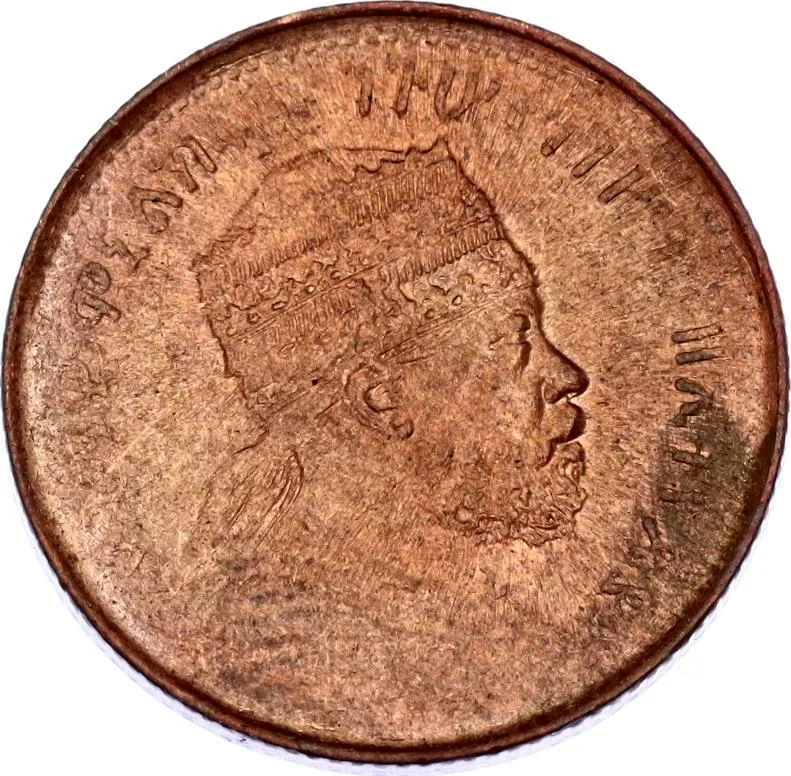
Right-facing head encircled by Ethiopian script.
Inscription:
ዳግማዊ፡ምኒልክ፡ ንጉሠ ፡ ነገሥት ፡ ዘኢትዮጵያ።
Translation:
Menelik II, King of Kings of Ethiopia.
Script: Ge'ez
Language: Amharic
Engraver: Jean Lagrange
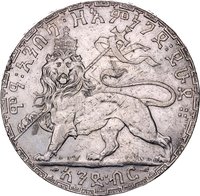
Reverse
Description:
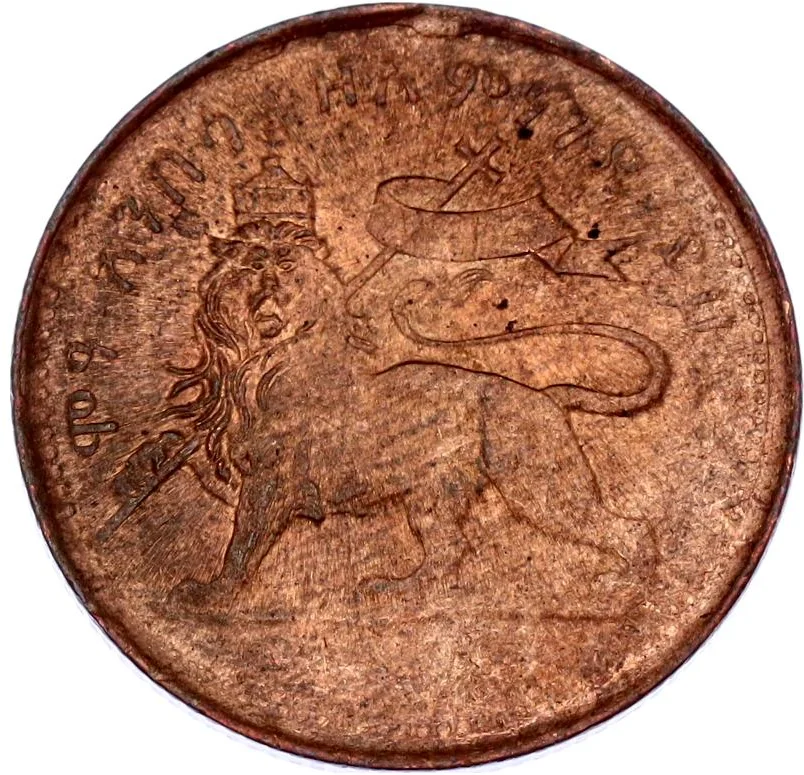
Crowned lion left, holding ribboned cross.
Inscription:
ሞዓ ፡ አንበሳ ፡ ዘእምነገደ ፡ ይሁዳ
Translation:
Moa of the Lion, from the tribe of Judah.
Script: Ge'ez
Language: Ge'ez
Engraver: Jean Lagrange
Edge
Plain or reeded
Mints
| Name | Mark |
|---|---|
| Addis Ababa | — |
Mintings
| Year | Mint Mark | Mintage | Quality | Collection |
|---|---|---|---|---|
| 1903 | — | — |
Historical background
In 1903, the Ethiopian Empire under Emperor Menelik II operated with a complex and multi-layered currency system, reflecting both its ancient economic traditions and its increasing engagement with the global economy. The primary medium of exchange for the vast majority of the population remained the Maria Theresa thaler (MT$). This large silver coin, minted in Austria but circulating throughout the Horn of Africa and the Middle East, was the de facto standard for major transactions, trade, and state finance. Its high silver content and consistent design made it a trusted and stable store of value, but its scarcity and high denomination made it impractical for everyday small-scale commerce.
Alongside the thaler, a vibrant local system of commodity money persisted. The most important of these was the salt bar (amole), a standardized block of rock salt mined in the Afar depression, which served as small change and a unit of account in markets across the empire. Other commodities like cloth, iron bars, and cartridges also circulated as money. This system created a multi-tiered economy: international trade and state affairs were conducted in thalers, while regional and local trade relied on amole and barter, with fluctuating exchange rates between them.
This period was one of transition, however. Menelik II, modernizing the state and seeking monetary sovereignty, had already taken the first steps toward a national currency. In 1894, he established the Bank of Abyssinia in partnership with the British-owned National Bank of Egypt, and in 1897, the first Ethiopian coins—copper gersh and silver birr (equal to the thaler)—were minted at the Paris Mint. By 1903, these new coins were in circulation but had not yet displaced the deeply entrenched Maria Theresa thaler and the amole system. Thus, the monetary landscape was a hybrid one, caught between a centuries-old, multi-currency past and a planned, centralized future.
Alongside the thaler, a vibrant local system of commodity money persisted. The most important of these was the salt bar (amole), a standardized block of rock salt mined in the Afar depression, which served as small change and a unit of account in markets across the empire. Other commodities like cloth, iron bars, and cartridges also circulated as money. This system created a multi-tiered economy: international trade and state affairs were conducted in thalers, while regional and local trade relied on amole and barter, with fluctuating exchange rates between them.
This period was one of transition, however. Menelik II, modernizing the state and seeking monetary sovereignty, had already taken the first steps toward a national currency. In 1894, he established the Bank of Abyssinia in partnership with the British-owned National Bank of Egypt, and in 1897, the first Ethiopian coins—copper gersh and silver birr (equal to the thaler)—were minted at the Paris Mint. By 1903, these new coins were in circulation but had not yet displaced the deeply entrenched Maria Theresa thaler and the amole system. Thus, the monetary landscape was a hybrid one, caught between a centuries-old, multi-currency past and a planned, centralized future.

🌟 Uncommon