

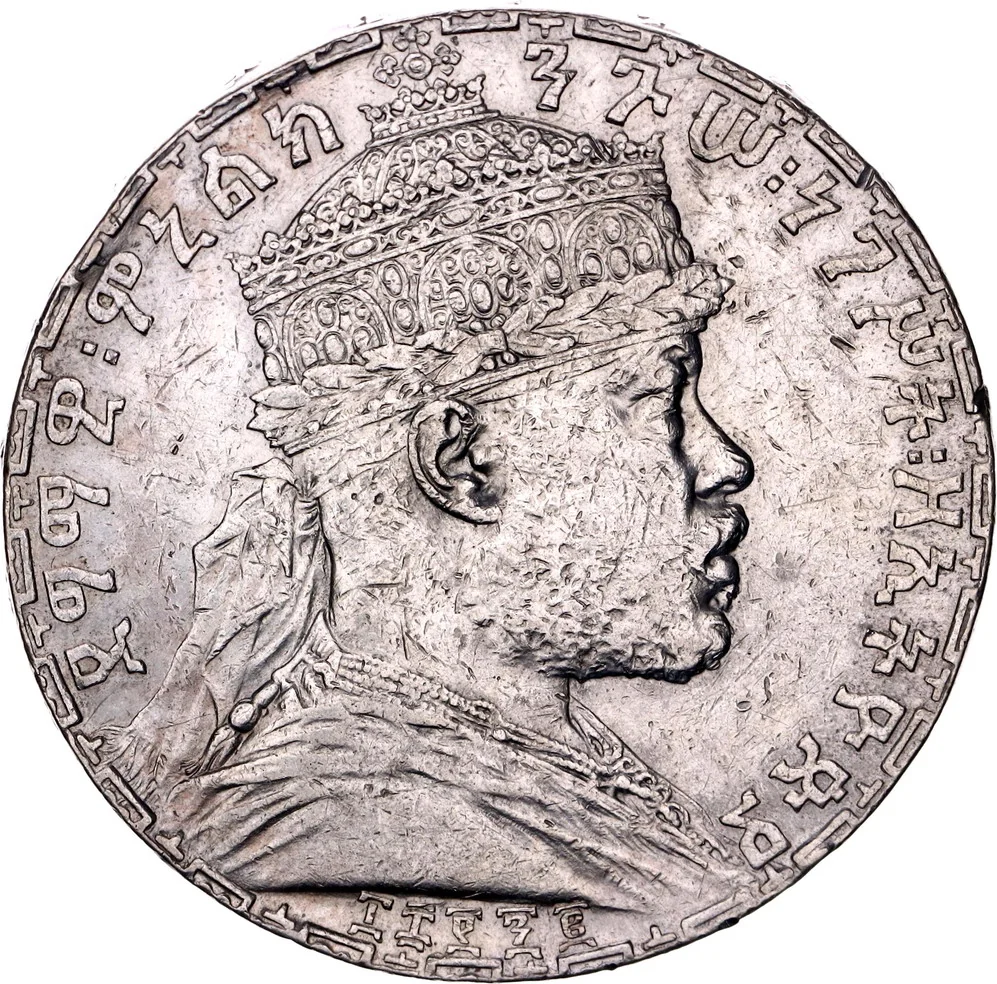
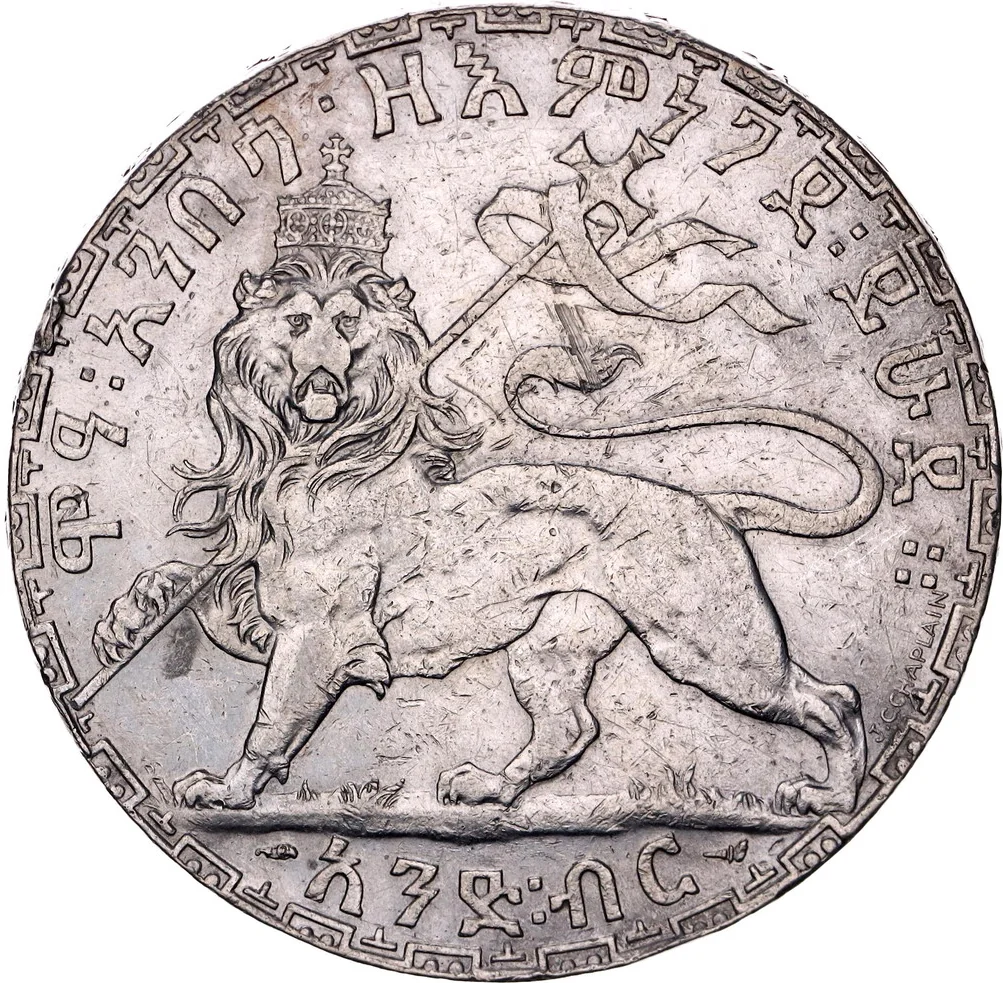
1 birr / thaler – Ethiopian Empire
Add to wishlist
Ethiopia
Context
Years: 1900–1903
Country: Ethiopia
Issuer: Ethiopian Empire
Ruler: Menelik II
Currency:
(1893—1931)
Demonetized: Yes
Total mintage: 860,000
Material
References
KM: #
Numista: #17175
Value
Bullion value: $58.86
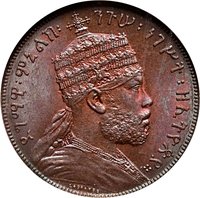
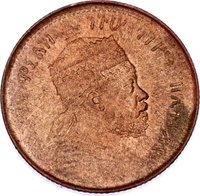
Obverse
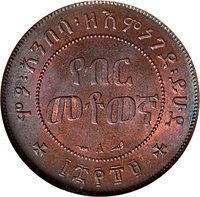
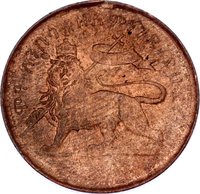
Reverse
Description:
Lion of Judah.
Inscription:
ሞዓ:አንበሳ·ዘእምነገደ:ይሁዳ::
ነሐሴ:ብር
ነሐሴ:ብር
Translation:
Lion of the Tribe of Judah;
Month of Nähase, Silver
Month of Nähase, Silver
Script: Ge'ez
Language: Ge'ez
Engraver: Jules-Clément Chaplain
Edge
Smooth with embossed inscriptions
Mints
| Name | Mark |
|---|---|
| Monnaie de Paris | — |
Mintings
| Year | Mint Mark | Mintage | Quality | Collection |
|---|---|---|---|---|
| 1900 | — | — | Matte | |
| 1900 | — | 401,000 | ||
| 1900 | — | — | Proof | |
| 1903 | — | — | Proof | |
| 1903 | — | 459,000 |
Historical background
At the dawn of the 20th century, the Ethiopian Empire under Emperor Menelik II operated with a complex and fragmented monetary system, a reflection of its economic sovereignty and its strategic engagement with foreign powers. The primary domestic currency was the Ethiopian birr (or talari), a silver coin first minted in 1894 at the Addis Ababa mint, established with French technical assistance. This move was a deliberate assertion of independence, creating a national currency to rival the widespread circulation of the Austrian Maria Theresa thaler (MT$). The thaler, a large silver coin minted in Europe but valued for its consistent weight and purity, had been the dominant medium for large transactions and foreign trade in the Horn of Africa for over a century.
Alongside these major silver coins, a localized and often chaotic system of barter and commodity money persisted in daily rural economies. The most notable of these was the salt bar (amole), harvested from the Afar depression, which served as a standardized unit of exchange for small purchases. Additionally, copper and brass rods, cloth, and even cartridges were used in place of coined money in many regions. The state also collected taxes in kind, such as grain and livestock, further illustrating the limited penetration of a unified monetary economy beyond major trade routes and urban centers like Addis Ababa and Harar.
This multi-currency environment created significant challenges. Exchange rates between the birr, the thaler, and the various commodity monies were unstable and varied by region, complicating trade and state administration. Menelik’s government actively promoted the birr to foster national unity and economic control, setting its value at par with the thaler. However, the older European coin remained deeply trusted in international commerce. Thus, Ethiopia in 1900 was at a monetary crossroads, simultaneously employing a modern minted currency to project state power while grappling with the practical realities of an ancient, diverse, and uneven economy.
Alongside these major silver coins, a localized and often chaotic system of barter and commodity money persisted in daily rural economies. The most notable of these was the salt bar (amole), harvested from the Afar depression, which served as a standardized unit of exchange for small purchases. Additionally, copper and brass rods, cloth, and even cartridges were used in place of coined money in many regions. The state also collected taxes in kind, such as grain and livestock, further illustrating the limited penetration of a unified monetary economy beyond major trade routes and urban centers like Addis Ababa and Harar.
This multi-currency environment created significant challenges. Exchange rates between the birr, the thaler, and the various commodity monies were unstable and varied by region, complicating trade and state administration. Menelik’s government actively promoted the birr to foster national unity and economic control, setting its value at par with the thaler. However, the older European coin remained deeply trusted in international commerce. Thus, Ethiopia in 1900 was at a monetary crossroads, simultaneously employing a modern minted currency to project state power while grappling with the practical realities of an ancient, diverse, and uneven economy.
🌟 Uncommon