

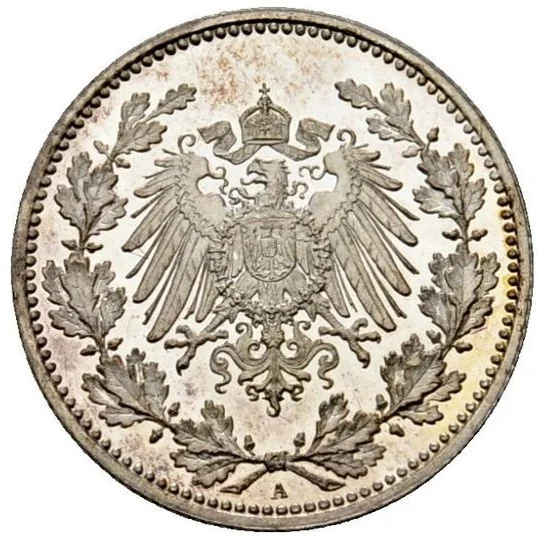
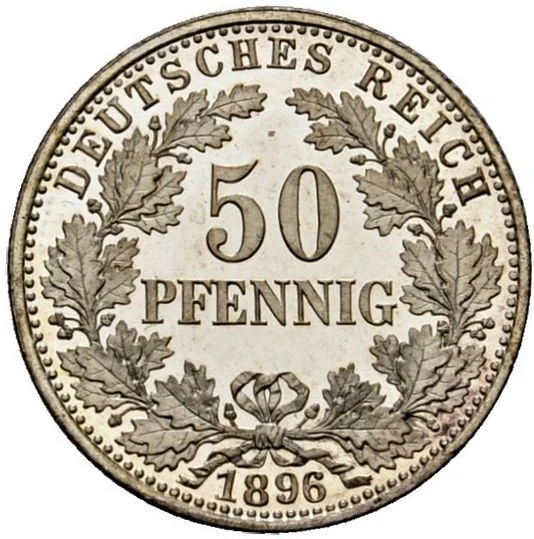
50 Pfennigs – Germany
Germany
Context
Years: 1896–1903
Issuer: Germany 
Ruler: William II
Currency:
(1873—1923)
Demonetization: 1 October 1908
Total mintage: 1,641,000
Material
References
KM: #Click to copy to clipboard15
Numista: #22640
Value
Bullion value: $7.10
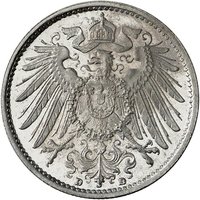
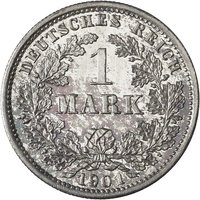
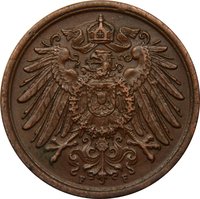
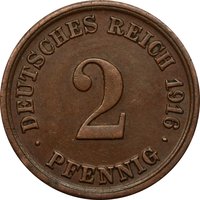
Obverse
Reverse
Edge
Mints
| Name | Mark |
|---|---|
| Berlin | A |
| Staatliche Münze Baden-Württemberg | F |
| Hamburgische Münze | J |
Mintings
Historical background
In 1896, the German Empire operated under the gold standard, established by the Coinage Act of 1873 following unification. This system made the gold mark (Mark) the sole legal tender, replacing the myriad of silver and regional currencies that had previously circulated. The Reichsbank, founded in 1876, held the exclusive right to issue banknotes, which were fully convertible to gold. This monetary framework provided stability, fostered international trade, and mirrored the financial systems of other major powers like Britain, underpinning Germany's rapid industrial expansion.
However, this stability was not without its social and political tensions. The shift to gold, known as the "Great Deflation," had sharply increased the value of money, benefiting creditors and the industrial elite but heavily burdening agrarian debtors and small farmers. The 1890s saw a severe agricultural depression, and groups like the Junkers and peasant farmers blamed the "hard money" gold standard for falling prices and rising real debt burdens. This discontent fueled populist movements and criticism of the financial establishment, creating a persistent undercurrent of debate about the monetary system's fairness.
By the mid-1890s, the German economy was recovering, entering a period of sustained growth. Yet, the currency question remained a live issue. Advocates for bimetallism (adding silver back as a monetary base) continued their campaign, though with diminishing influence. Internationally, Germany's gold reserves were substantial, solidifying the mark's strength. The system of 1896 was thus one of entrenched metallic stability, but it rested atop enduring agrarian discontent and simmering debates about the relationship between currency, debt, and economic power that would persist into the new century.
However, this stability was not without its social and political tensions. The shift to gold, known as the "Great Deflation," had sharply increased the value of money, benefiting creditors and the industrial elite but heavily burdening agrarian debtors and small farmers. The 1890s saw a severe agricultural depression, and groups like the Junkers and peasant farmers blamed the "hard money" gold standard for falling prices and rising real debt burdens. This discontent fueled populist movements and criticism of the financial establishment, creating a persistent undercurrent of debate about the monetary system's fairness.
By the mid-1890s, the German economy was recovering, entering a period of sustained growth. Yet, the currency question remained a live issue. Advocates for bimetallism (adding silver back as a monetary base) continued their campaign, though with diminishing influence. Internationally, Germany's gold reserves were substantial, solidifying the mark's strength. The system of 1896 was thus one of entrenched metallic stability, but it rested atop enduring agrarian discontent and simmering debates about the relationship between currency, debt, and economic power that would persist into the new century.
⭐ Rare