

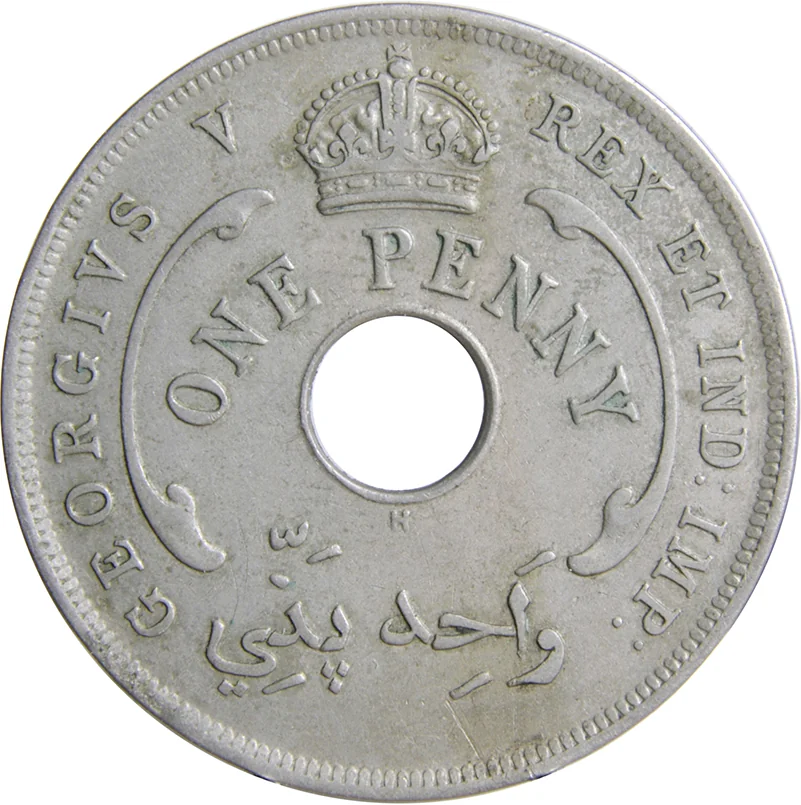
1 penny – British West Africa
Add to wishlist
Context
Year: 1911
Country: Western African States
Issuer: British West Africa
Ruler: George V
Currency:
(1907—1968)
Demonetized: Yes
Total mintage: 1,920,000
Material
Diameter: 30.5 mm
Weight: 9.45 g
Shape: Round with a round hole
Composition: Copper-nickel
Technique: Milled
References
KM: #
Numista: #22486
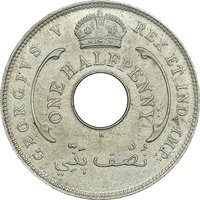
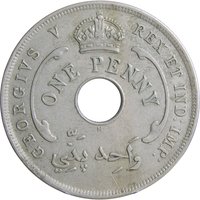
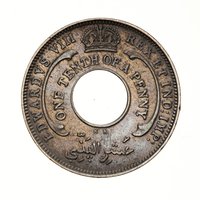
Obverse
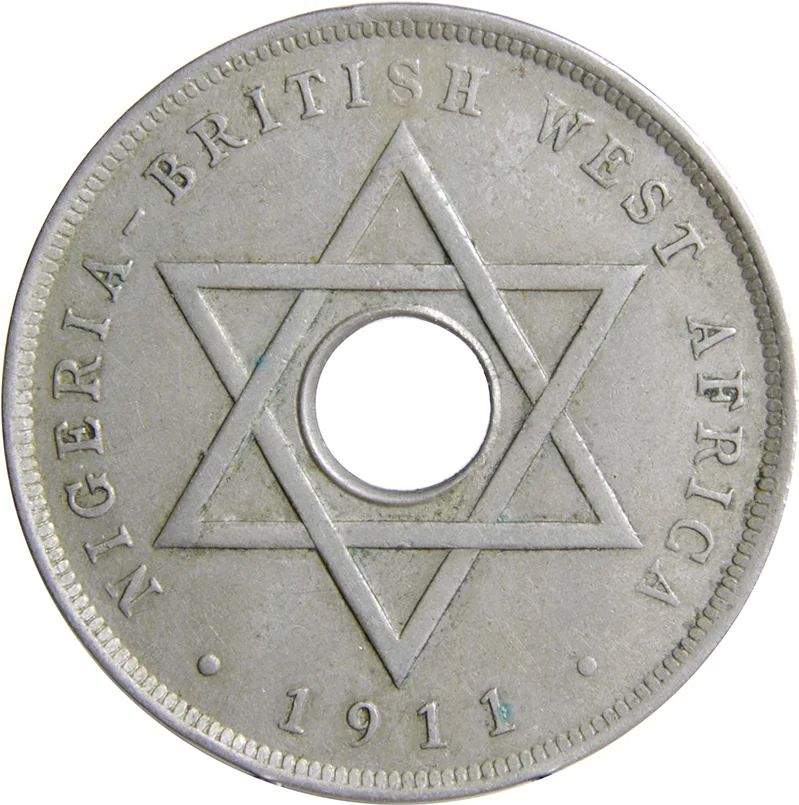
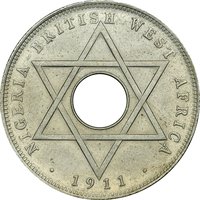
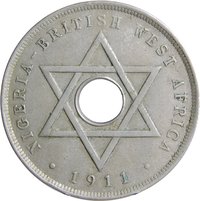
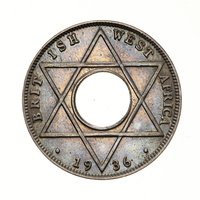
Reverse
Description:
Star formed by two triangles.
Inscription:
NIGERIA - BRITISH WEST AFRICA
1911
1911
Script: Latin
Edge
Mints
| Name | Mark |
|---|---|
| Heaton and Sons / The Mint Birmingham | H |
Mintings
| Year | Mint Mark | Mintage | Quality | Collection |
|---|---|---|---|---|
| 1911 | H | 1,920,000 |
Historical background
In 1911, the currency situation in British West Africa was defined by a state of transition and competing systems. The British authorities had introduced the West African Currency Board (WACC) system in 1912, meaning that in 1911, the region was on the cusp of a major monetary reform. Prior to this, the primary circulating medium was the British silver coinage (shillings, pence), but these were chronically scarce and unsuited to local trade, leading to widespread use of alternative currencies. These included French 5-franc pieces, gold sovereigns, and various forms of traditional "commodity money" such as manillas (brass rings) and cowrie shells, particularly in Nigeria.
The driving force for change was the economic inefficiency of this patchwork system. The export boom in commodities like palm oil, cocoa, and groundnuts demanded a stable, uniform currency to facilitate trade and tax collection. The existing British silver coins were often hoarded or exported due to their intrinsic metal value, creating constant shortages. Furthermore, the use of disparate currencies complicated administration and banking. The British government sought to assert greater monetary control, reduce reliance on imported silver, and create a currency that would remain circulating within the colonies.
Consequently, 1911 was a year of final preparation for the introduction of a distinct, colonial currency. The West African Currency Board, established in 1912, would issue new silver coins specifically for West Africa, with lower silver content to discourage melting and export. These coins, denominated in shillings and pence but clearly marked for use in British West Africa, were designed to replace the hybrid system. Thus, the currency situation in 1911 was one of lingering traditional practices and ad-hoc solutions, immediately awaiting the imposition of a centralized, managed currency system that would firmly integrate the region's economy into the British imperial framework.
The driving force for change was the economic inefficiency of this patchwork system. The export boom in commodities like palm oil, cocoa, and groundnuts demanded a stable, uniform currency to facilitate trade and tax collection. The existing British silver coins were often hoarded or exported due to their intrinsic metal value, creating constant shortages. Furthermore, the use of disparate currencies complicated administration and banking. The British government sought to assert greater monetary control, reduce reliance on imported silver, and create a currency that would remain circulating within the colonies.
Consequently, 1911 was a year of final preparation for the introduction of a distinct, colonial currency. The West African Currency Board, established in 1912, would issue new silver coins specifically for West Africa, with lower silver content to discourage melting and export. These coins, denominated in shillings and pence but clearly marked for use in British West Africa, were designed to replace the hybrid system. Thus, the currency situation in 1911 was one of lingering traditional practices and ad-hoc solutions, immediately awaiting the imposition of a centralized, managed currency system that would firmly integrate the region's economy into the British imperial framework.
⭐ Rare