

⅒ penny – British West Africa
Add to wishlist
Context
Years: 1912–1936
Country: Western African States
Issuer: British West Africa
Ruler: George V
Currency:
(1907—1968)
Demonetized: Yes
Total mintage: 211,128,000
Material
Diameter: 20.5 mm
Weight: 1.94 g
Thickness: 0.9 mm
Shape: Round with a round hole
Technique: Milled
Alignment: Medal alignment
flip
References
KM: #
Numista: #10697
Obverse
Description:
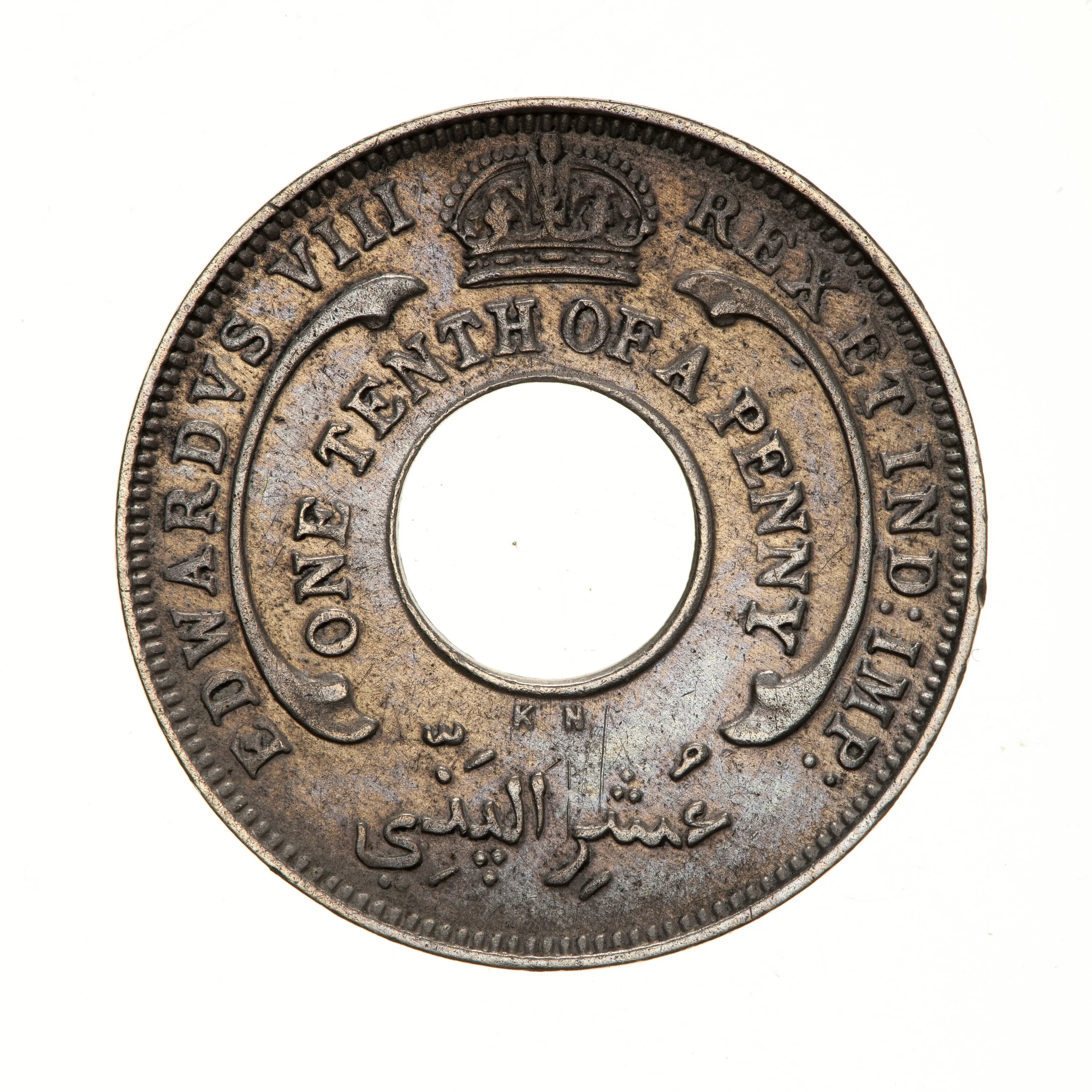
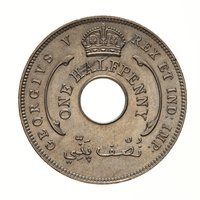
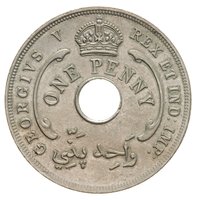
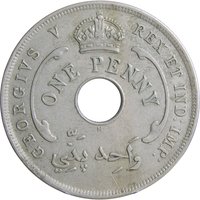
Crown above hole, denomination around hole in English and Arabic. Mintmark, if present, below hole.
Inscription:
GEORGIVS V REX ET IND: IMP:
ONE TENTH OF A PENNY
عُشِر الپَنّي
KN
ONE TENTH OF A PENNY
عُشِر الپَنّي
KN
Translation:
George V King and Emperor of India
One Tenth of a Penny
One Tenth of a Penny
One Tenth of a Penny
One Tenth of a Penny
Reverse
Description:
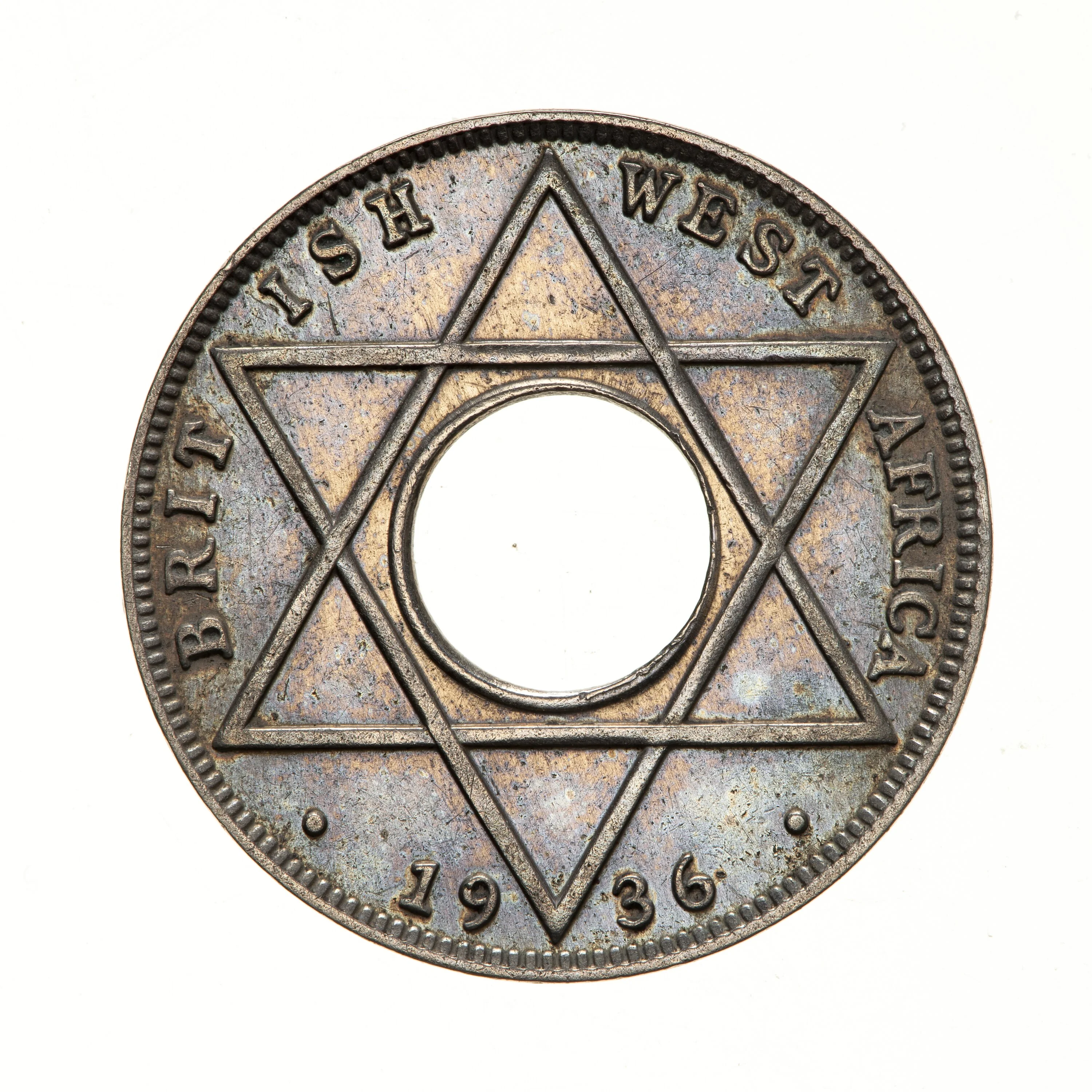
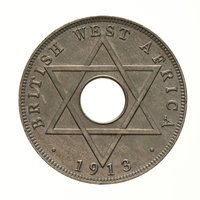
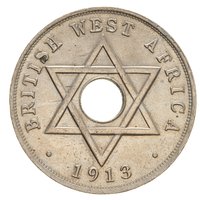
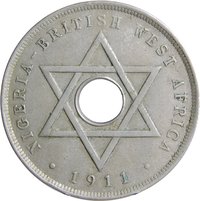
Hexagram around center hole, date below.
Inscription:
BRITISH WEST AFRICA
· 1925 ·
· 1925 ·
Script: Latin
Edge
Plain
Mints
| Name | Mark |
|---|---|
| Royal Mint (Tower Hill) | — |
| Heaton and Sons / The Mint Birmingham | H |
| Kings Norton Metal Company | KN |
Mintings
| Year | Mint Mark | Mintage | Quality | Collection |
|---|---|---|---|---|
| 1912 | H | 10,800,000 | ||
| 1913 | — | 4,632,000 | ||
| 1913 | H | 1,080,000 | ||
| 1914 | — | 1,200,000 | ||
| 1914 | H | 20,088,000 | ||
| 1915 | H | 10,032,000 | ||
| 1916 | H | 480,000 | ||
| 1917 | H | 9,384,000 | ||
| 1919 | H | 912,000 | ||
| 1919 | KN | 480,000 | ||
| 1920 | H | 1,560,000 | ||
| 1920 | KN | 12,996,000 | ||
| 1920 | KN | — | Proof | |
| 1922 | KN | 7,265,000 | ||
| 1923 | KN | 12,000,000 | ||
| 1925 | — | 2,400,000 | ||
| 1925 | H | 12,000,000 | ||
| 1925 | KN | 12,000,000 | ||
| 1926 | — | 12,000,000 | ||
| 1927 | — | 3,984,000 | ||
| 1927 | — | — | Proof | |
| 1928 | KN | 3,151,000 | ||
| 1928 | — | 11,760,000 | ||
| 1928 | — | — | Proof | |
| 1928 | H | 2,964,000 | ||
| 1930 | — | 9,600,000 | ||
| 1930 | — | — | Proof | |
| 1931 | — | 9,840,000 | ||
| 1931 | — | — | Proof | |
| 1932 | — | 3,600,000 | ||
| 1932 | — | — | Proof | |
| 1933 | — | 7,200,000 | ||
| 1933 | — | — | Proof | |
| 1934 | — | 4,800,000 | ||
| 1934 | — | — | Proof | |
| 1935 | — | 13,200,000 | ||
| 1935 | — | — | Proof | |
| 1936 | — | 9,720,000 | ||
| 1936 | — | — | Proof |
Historical background
In 1912, the currency situation in British West Africa was a complex and transitional system, primarily defined by the dominance of the British West African Currency Board (WACB) notes and coins, which had been introduced just two years prior in 1912. This new currency, denominated in pounds, shillings, and pence, was established to replace the myriad of traditional and imported mediums of exchange, including gold dust, cowrie shells, and various foreign silver coins like Spanish dollars and French 5-franc pieces. The WACB system was unique, as its currency was fully backed by sterling reserves held in London, ensuring strict convertibility and aiming to stabilize trade with the British Empire.
However, the transition was not instantaneous or complete. In many interior markets, especially away from the coastal trading hubs, older forms of money remained in active use. The new silver coins issued by the Currency Board—the shilling, sixpence, and threepence—were gaining acceptance but competed with the lingering circulation of British imperial silver coins and the physical commodity currencies. Furthermore, the system was deliberately designed to be deflationary and subordinate to the British pound; the West African pound was pegged at par with sterling, and its supply was directly tied to the region's trade surplus, effectively preventing local monetary policy and ensuring colonial economic extraction.
Thus, the landscape in 1912 was one of imposed monetary integration overlaying a persistent dual economy. The colonial government successfully centralized the currency for official duties, export trade, and coastal commerce, streamlining administration and facilitating the export of commodities like cocoa, palm oil, and groundnuts. Yet, the continued use of traditional currencies in daily local transactions highlighted the incomplete penetration of colonial economic structures and the resilience of indigenous economic practices, creating a layered monetary environment that would characterize the region for decades.
However, the transition was not instantaneous or complete. In many interior markets, especially away from the coastal trading hubs, older forms of money remained in active use. The new silver coins issued by the Currency Board—the shilling, sixpence, and threepence—were gaining acceptance but competed with the lingering circulation of British imperial silver coins and the physical commodity currencies. Furthermore, the system was deliberately designed to be deflationary and subordinate to the British pound; the West African pound was pegged at par with sterling, and its supply was directly tied to the region's trade surplus, effectively preventing local monetary policy and ensuring colonial economic extraction.
Thus, the landscape in 1912 was one of imposed monetary integration overlaying a persistent dual economy. The colonial government successfully centralized the currency for official duties, export trade, and coastal commerce, streamlining administration and facilitating the export of commodities like cocoa, palm oil, and groundnuts. Yet, the continued use of traditional currencies in daily local transactions highlighted the incomplete penetration of colonial economic structures and the resilience of indigenous economic practices, creating a layered monetary environment that would characterize the region for decades.
🌱 Very Common