

1 Cent – British Honduras
Belize
Context
Years: 1885–1894
Country: Belize 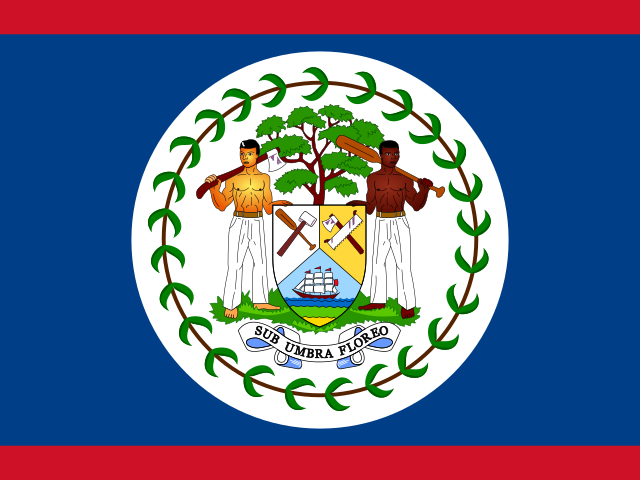
Issuer: British Honduras
Ruler: Victoria
Currency:
(1885—1973)
Total mintage: 272,000
Material
References
KM: #Click to copy to clipboard6
Numista: #22480
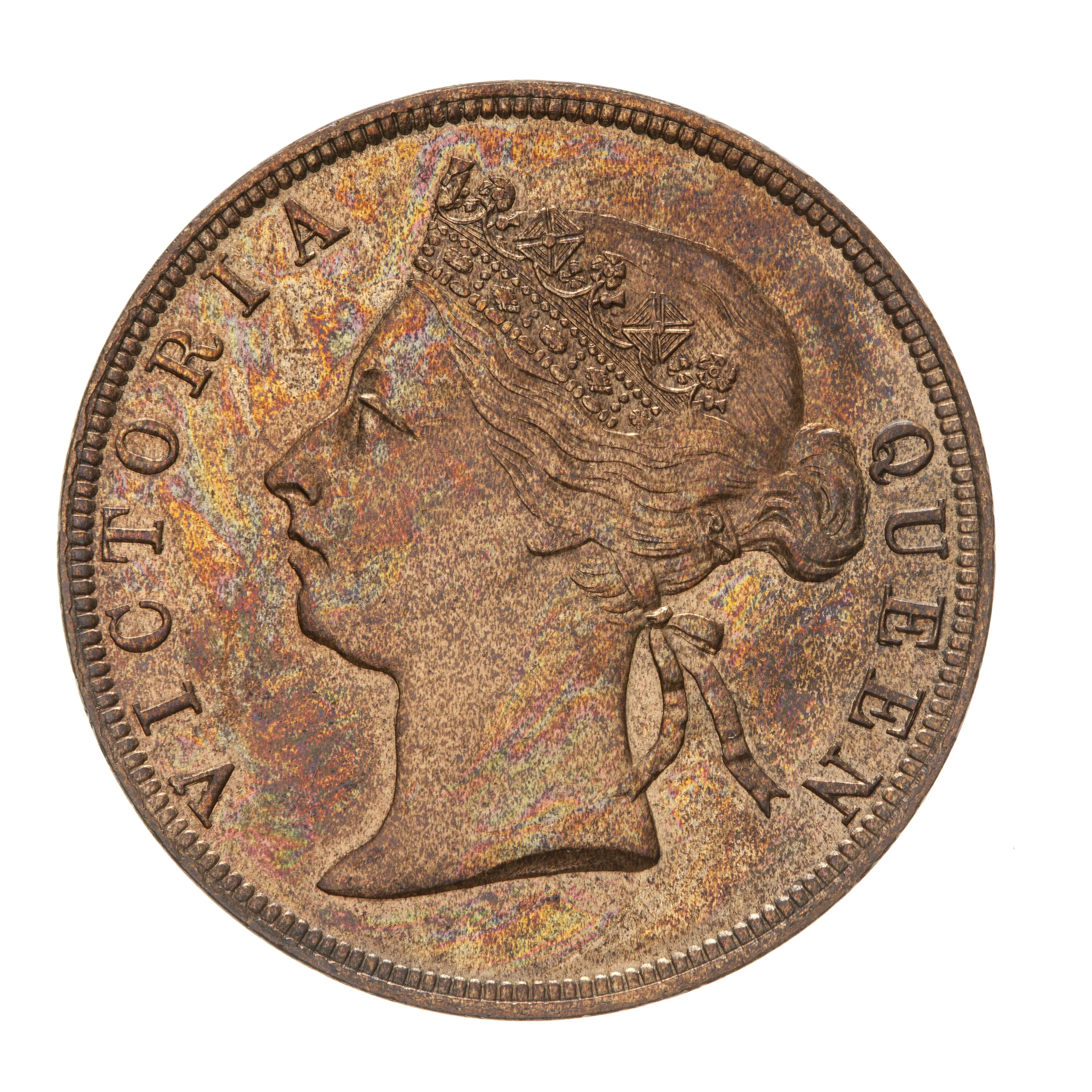
Obverse
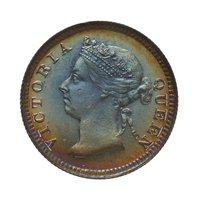
Description:
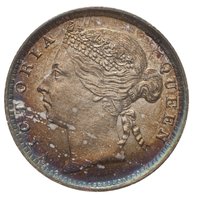
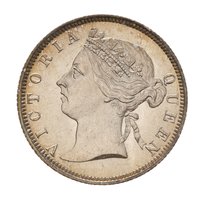
Crowned portrait of Queen Victoria in left profile.
Inscription:
VICTORIA QUEEN
Script: Latin
Engraver: Leonard Charles Wyon
Designer: William Theed
Reverse
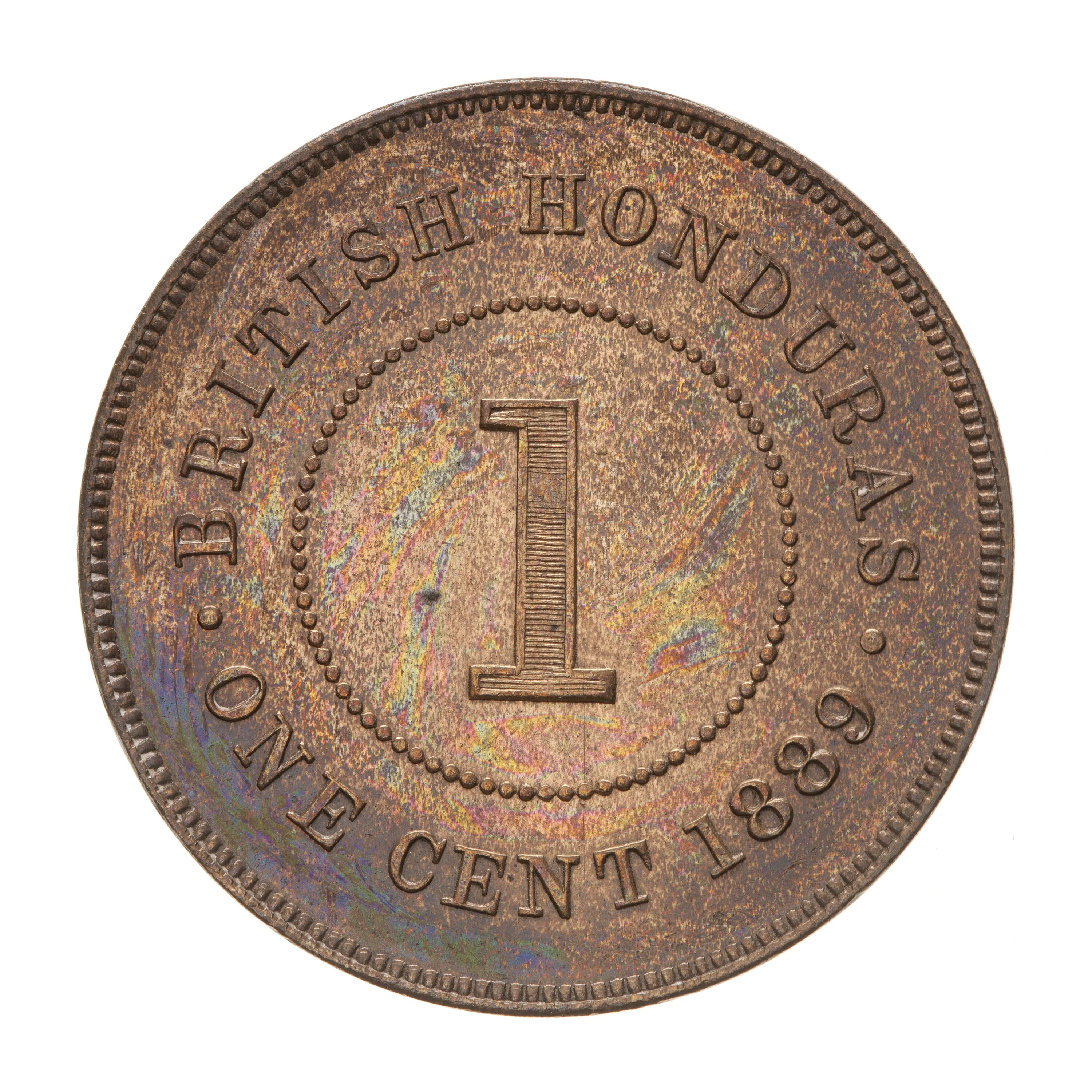
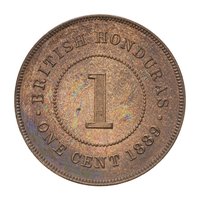
Description:
Beaded circle, toothed rim.
Inscription:
BRITISH HONDURAS
· ONE CENT 1889 ·
1
· ONE CENT 1889 ·
1
Script: Latin
Edge
Plain
Mints
| Name | Mark |
|---|---|
| Royal Mint (Tower Hill) | — |
Mintings
| Year | Mint Mark | Mintage | Quality | Collection |
|---|---|---|---|---|
| 1885 | — | 72,000 | ||
| 1885 | — | — | Proof | |
| 1888 | — | 100,000 | ||
| 1888 | — | — | Proof | |
| 1889 | — | 50,000 | ||
| 1889 | — | — | Proof | |
| 1894 | — | — | Proof | |
| 1894 | — | 50,000 |
Historical background
In 1885, the currency situation in British Honduras (modern-day Belize) was a complex and transitional one, characterized by the official use of British sterling alongside a persistent circulation of diverse foreign coins. As a colony, the official currency was pounds, shillings, and pence, with British gold sovereigns and silver coins serving as the legal tender. However, the practical reality of trade, particularly with neighbouring Spanish American republics and the United States, meant that Mexican, Spanish, and U.S. silver dollars and their fractional parts were widely used in daily commerce, creating a de facto multi-currency system.
This monetary duality was problematic. The fluctuating value of these foreign silver coins against the fixed gold standard of sterling created constant confusion and instability in local pricing and accounting. Merchants and the colonial government faced difficulties with exchange rates, and there was a chronic shortage of British small change, which further entrenched the use of fractional Spanish and Mexican reales. The colony's economy, heavily reliant on the mahogany trade and increasingly on sugar, required a more reliable and unified medium of exchange to facilitate both internal transactions and external investment.
Consequently, 1885 fell within a period of active reform. Just a few years prior, in 1882, the first government-authorized paper currency was issued by the Colonial Bank in limited denominations, representing a step toward formalizing the money supply. The underlying pressure would ultimately lead to the landmark Currency Ordinance of 1894, which formally decimalized the currency and introduced the British Honduras dollar, fixed at a value of four shillings and two pence sterling. Therefore, the situation in 1885 was one of lingering disorder, actively pushing the colony toward the definitive monetary reforms that would be enacted in the following decade.
This monetary duality was problematic. The fluctuating value of these foreign silver coins against the fixed gold standard of sterling created constant confusion and instability in local pricing and accounting. Merchants and the colonial government faced difficulties with exchange rates, and there was a chronic shortage of British small change, which further entrenched the use of fractional Spanish and Mexican reales. The colony's economy, heavily reliant on the mahogany trade and increasingly on sugar, required a more reliable and unified medium of exchange to facilitate both internal transactions and external investment.
Consequently, 1885 fell within a period of active reform. Just a few years prior, in 1882, the first government-authorized paper currency was issued by the Colonial Bank in limited denominations, representing a step toward formalizing the money supply. The underlying pressure would ultimately lead to the landmark Currency Ordinance of 1894, which formally decimalized the currency and introduced the British Honduras dollar, fixed at a value of four shillings and two pence sterling. Therefore, the situation in 1885 was one of lingering disorder, actively pushing the colony toward the definitive monetary reforms that would be enacted in the following decade.
Series: 1885 series
🌟 Uncommon