

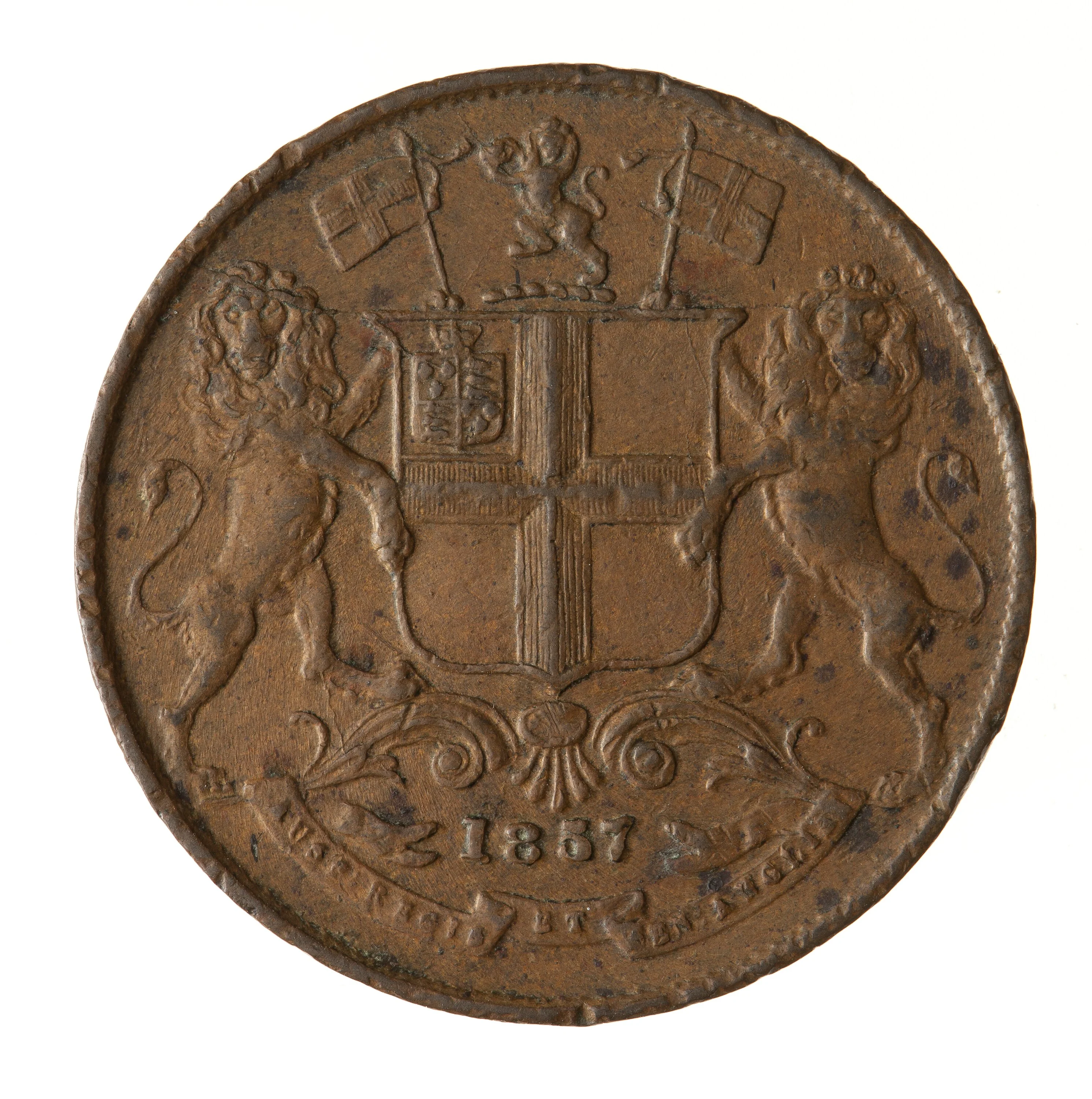
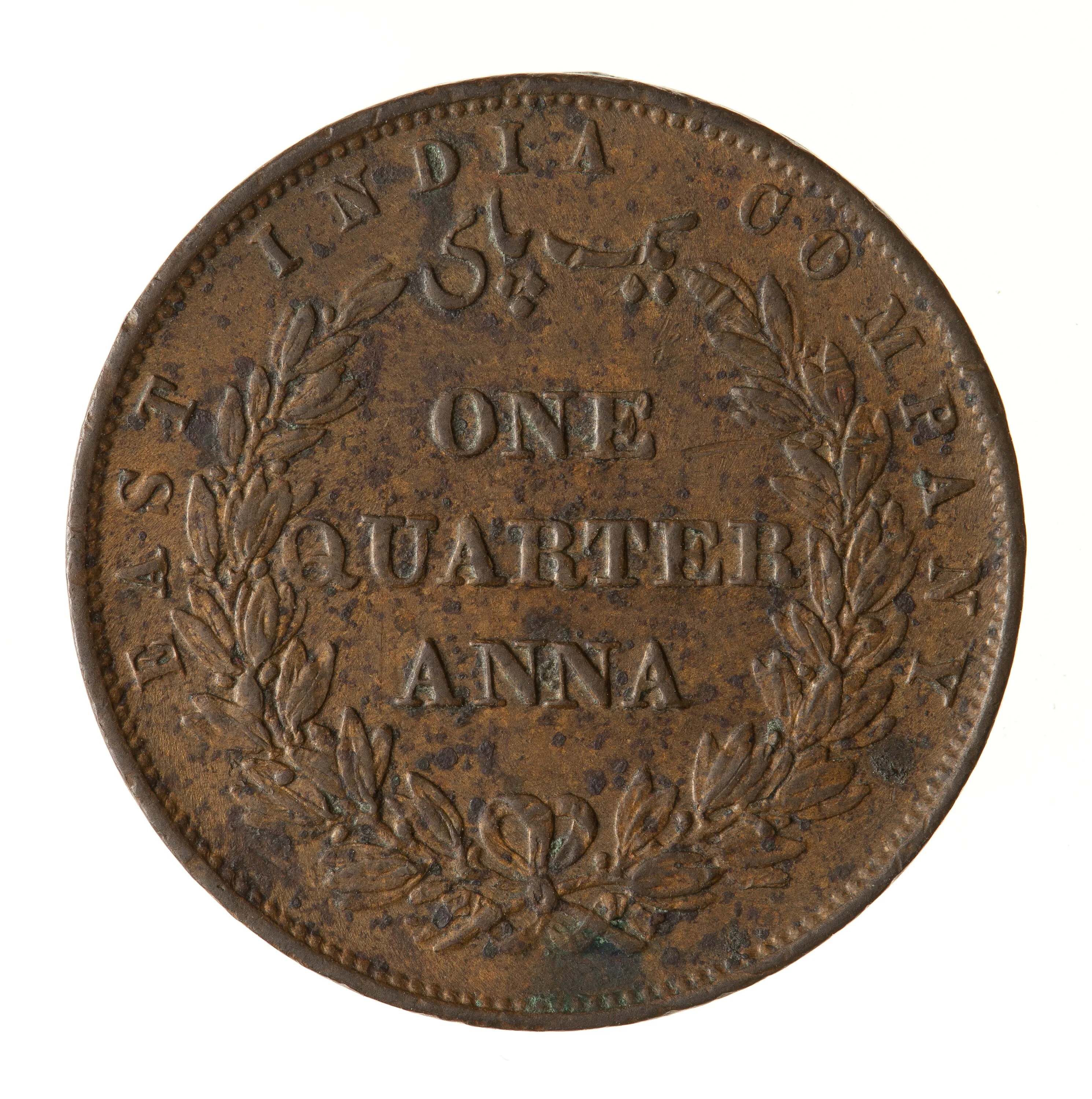
¼ anna – India - British
Add to wishlist
India
Context
Years: 1857–1858
Country: India
Issuer: India - British
Issuing organization: East India Company
Ruler: Victoria
Currency:
(1770—1947)
Demonetized: Yes
Total mintage: 219,520,000
Material
References
KM: #
Numista: #22397
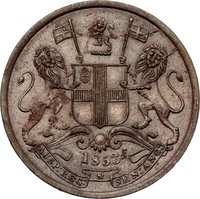
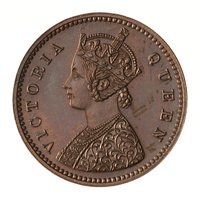
Obverse
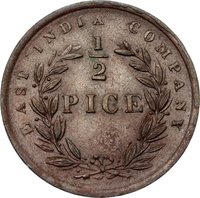
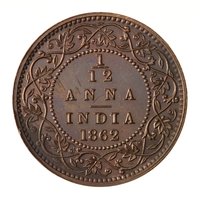
Reverse
Edge
Plain
Mints
| Name | Mark |
|---|---|
| Heaton and Sons / The Mint Birmingham | — |
| James Watt & Co. | — |
Mintings
| Year | Mint Mark | Mintage | Quality | Collection |
|---|---|---|---|---|
| 1857 | — | 47,040,000 | ||
| 1857 | — | — | Proof | |
| 1858 | — | — | Proof | |
| 1858 | — | 172,480,000 |
Historical background
In 1857, the currency situation in British India was a complex and volatile system, primarily based on a bimetallic standard of silver rupees and gold mohurs. The East India Company, acting as the sovereign power, issued the dominant silver rupee, which was the principal medium for taxation and large transactions. However, the system was fragmented, with various regional and historical coins still in circulation, and the Company's paper currency (introduced in the early 19th century) was not yet fully trusted by the public. Crucially, the value of silver rupees was officially fixed against the gold British pound, but global fluctuations in the price of silver created persistent economic strain.
This monetary landscape became a significant, though often overlooked, grievance in the uprising of 1857. While the immediate trigger was the issue of greased cartridges, the rebellion was fueled by deeper economic dislocations. The Company's land revenue demands, which had to be paid in its silver rupees, caused widespread indebtedness and dispossession among peasants and zamindars (landholders). Furthermore, the introduction of the new "Queen's Coinage" and the gradual demonetization of older, culturally significant currencies—like the Mughal rupees and those issued by regional princely states—were seen as an attack on traditional authority and economic autonomy, alienating both the populace and deposed elites.
The aftermath of 1857 led to a decisive reorganization of Indian currency. With the British Crown assuming direct control, the government moved to centralize and standardize the monetary system. The Coinage Act of 1835 was reaffirmed, making the Company's rupee the sole legal tender, and the minting of coins in the name of the Mughal Emperor ceased. This consolidation of currency was a key step in the fuller integration of India into the British imperial economy, paving the way for the later, more formal adoption of the gold exchange standard and strengthening London's financial control over the colony.
This monetary landscape became a significant, though often overlooked, grievance in the uprising of 1857. While the immediate trigger was the issue of greased cartridges, the rebellion was fueled by deeper economic dislocations. The Company's land revenue demands, which had to be paid in its silver rupees, caused widespread indebtedness and dispossession among peasants and zamindars (landholders). Furthermore, the introduction of the new "Queen's Coinage" and the gradual demonetization of older, culturally significant currencies—like the Mughal rupees and those issued by regional princely states—were seen as an attack on traditional authority and economic autonomy, alienating both the populace and deposed elites.
The aftermath of 1857 led to a decisive reorganization of Indian currency. With the British Crown assuming direct control, the government moved to centralize and standardize the monetary system. The Coinage Act of 1835 was reaffirmed, making the Company's rupee the sole legal tender, and the minting of coins in the name of the Mughal Emperor ceased. This consolidation of currency was a key step in the fuller integration of India into the British imperial economy, paving the way for the later, more formal adoption of the gold exchange standard and strengthening London's financial control over the colony.
🌱 Common