

1⁄12 anna – India - British
Add to wishlist
India
Context
Years: 1862–1876
Country: India
Issuer: India - British
Ruler: Victoria
Currency:
(1770—1947)
Demonetized: Yes
Total mintage: 70,271,040
Material
References
KM: #
Numista: #18295
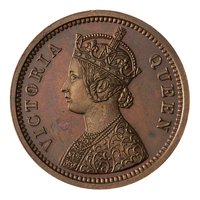
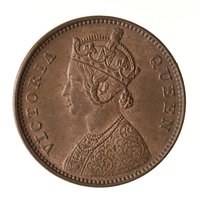
Obverse
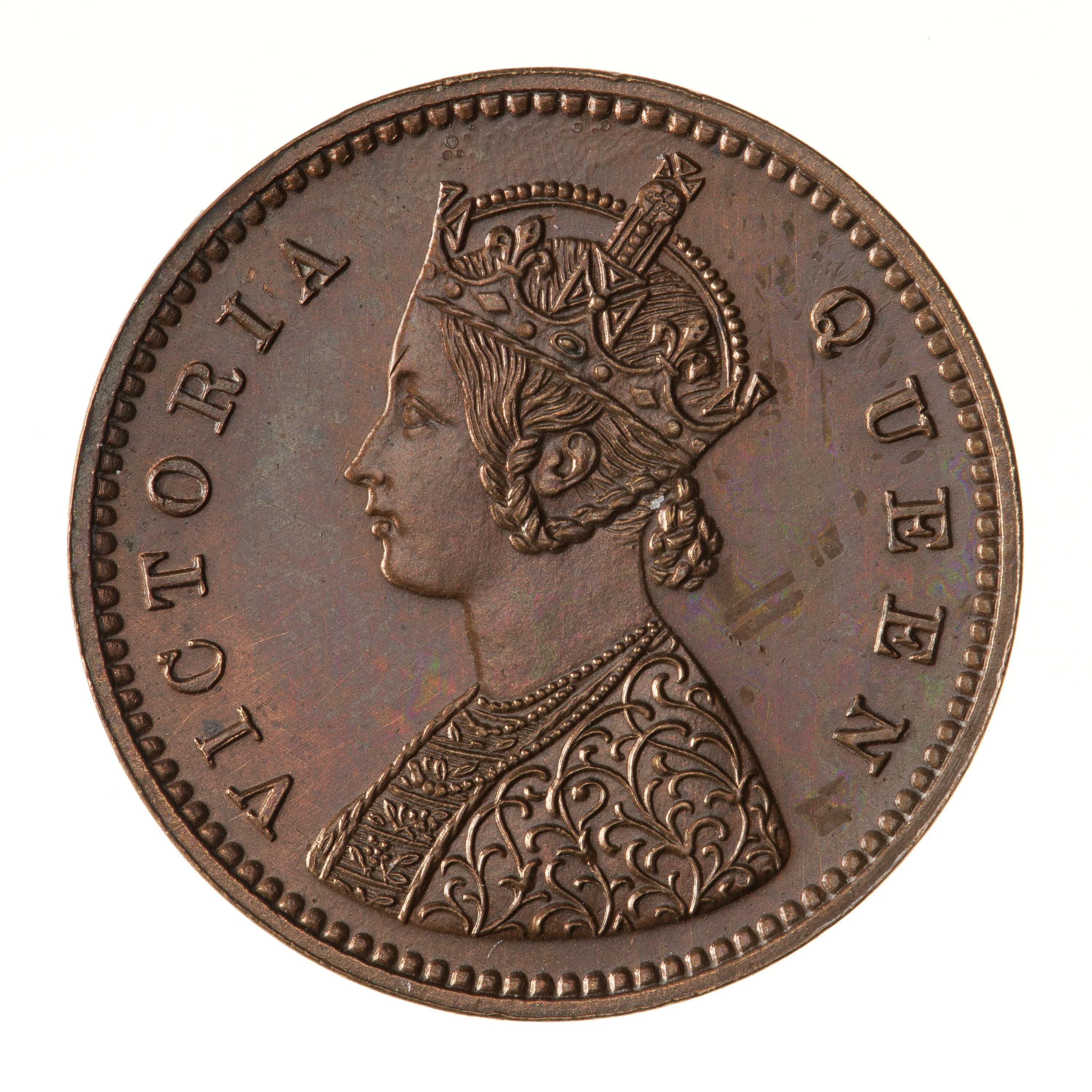
Description:
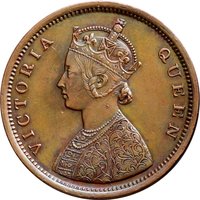
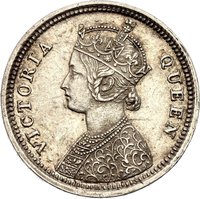
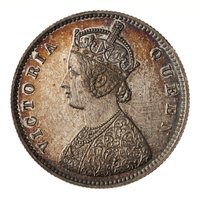
Laureate head left
Inscription:
VICTORIA Q U E E N
Script: Latin
Engraver: William Wyon
Reverse
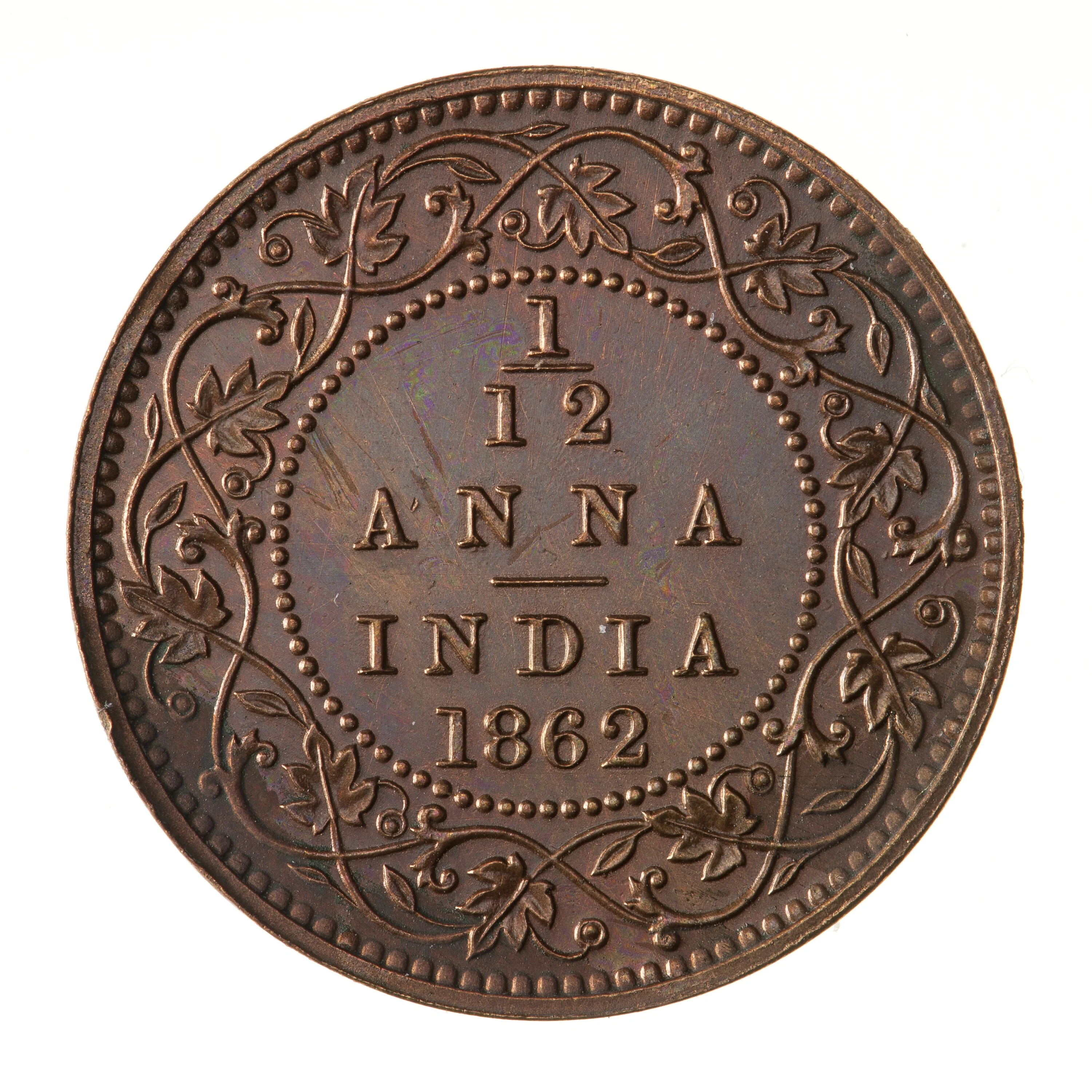
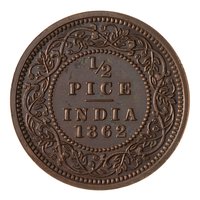
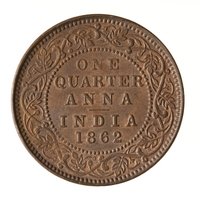
Description:
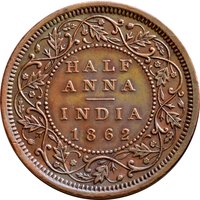
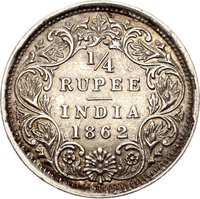
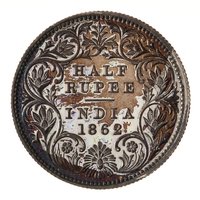
Value and date encircled by beads and wreath.
Inscription:
1/12
ANNA
INDIA
1862
ANNA
INDIA
1862
Script: Latin
Edge
Plain
Mints
| Name | Mark |
|---|---|
| Kolkata / Calcutta / Murshidabad | 1 |
Mintings
| Year | Mint Mark | Mintage | Quality | Collection |
|---|---|---|---|---|
| 1862 | — | 40,487,040 | ||
| 1862 | — | — | Proof | |
| 1862 | — | — | Prooflike | |
| 1874 | — | 4,819,200 | ||
| 1875 | — | — | Proof | |
| 1875 | — | 4,646,400 | ||
| 1876 | — | 20,318,400 |
Historical background
In 1862, British India stood at a pivotal moment in its monetary history, transitioning from a complex and chaotic system to one of imperial uniformity. Prior to this, the subcontinent operated with a bewildering array of currencies: Mughal-era silver rupees, gold mohurs, and countless local and princely state coinages circulated alongside various British-issued tokens and the silver dollar of the East India Company. This fragmentation severely hampered trade and governance, as exchange rates fluctuated wildly between regions and even between cities. The British administration, seeking to streamline the economy for more efficient revenue extraction and commercial integration, recognized the urgent need for a single, authoritative currency.
The key legislative change was the enactment of the Paper Currency Act of 1861, which came into practical effect in 1862. This act abolished the right of the Presidency Banks (in Calcutta, Bombay, and Madras) to issue notes and created a government monopoly over paper money through a new "Paper Currency Department." For the first time, uniform British Indian rupee notes were introduced, theoretically convertible to silver on demand. Simultaneously, the Indian Coinage Act of 1835 had already standardized the silver rupee as the sole legal tender, but the 1862 push consolidated its dominance in practice, systematically sidelining older, local coinages.
The move was a definitive step in integrating India into the British imperial economic sphere, facilitating the smooth transfer of colonial revenue (the "Home Charges") to London and binding Indian monetary policy to the needs of the Empire. However, the system remained firmly on a silver standard, which would soon pose significant challenges. Within a decade, the discovery of vast silver deposits abroad and the shift of major European powers to the gold standard would cause the value of silver to plummet globally. This led to a steep depreciation of the rupee, increasing India's external debt burden and causing severe economic instability—a direct and painful consequence of the currency regime solidified in 1862.
The key legislative change was the enactment of the Paper Currency Act of 1861, which came into practical effect in 1862. This act abolished the right of the Presidency Banks (in Calcutta, Bombay, and Madras) to issue notes and created a government monopoly over paper money through a new "Paper Currency Department." For the first time, uniform British Indian rupee notes were introduced, theoretically convertible to silver on demand. Simultaneously, the Indian Coinage Act of 1835 had already standardized the silver rupee as the sole legal tender, but the 1862 push consolidated its dominance in practice, systematically sidelining older, local coinages.
The move was a definitive step in integrating India into the British imperial economic sphere, facilitating the smooth transfer of colonial revenue (the "Home Charges") to London and binding Indian monetary policy to the needs of the Empire. However, the system remained firmly on a silver standard, which would soon pose significant challenges. Within a decade, the discovery of vast silver deposits abroad and the shift of major European powers to the gold standard would cause the value of silver to plummet globally. This led to a steep depreciation of the rupee, increasing India's external debt burden and causing severe economic instability—a direct and painful consequence of the currency regime solidified in 1862.
🌱 Common