

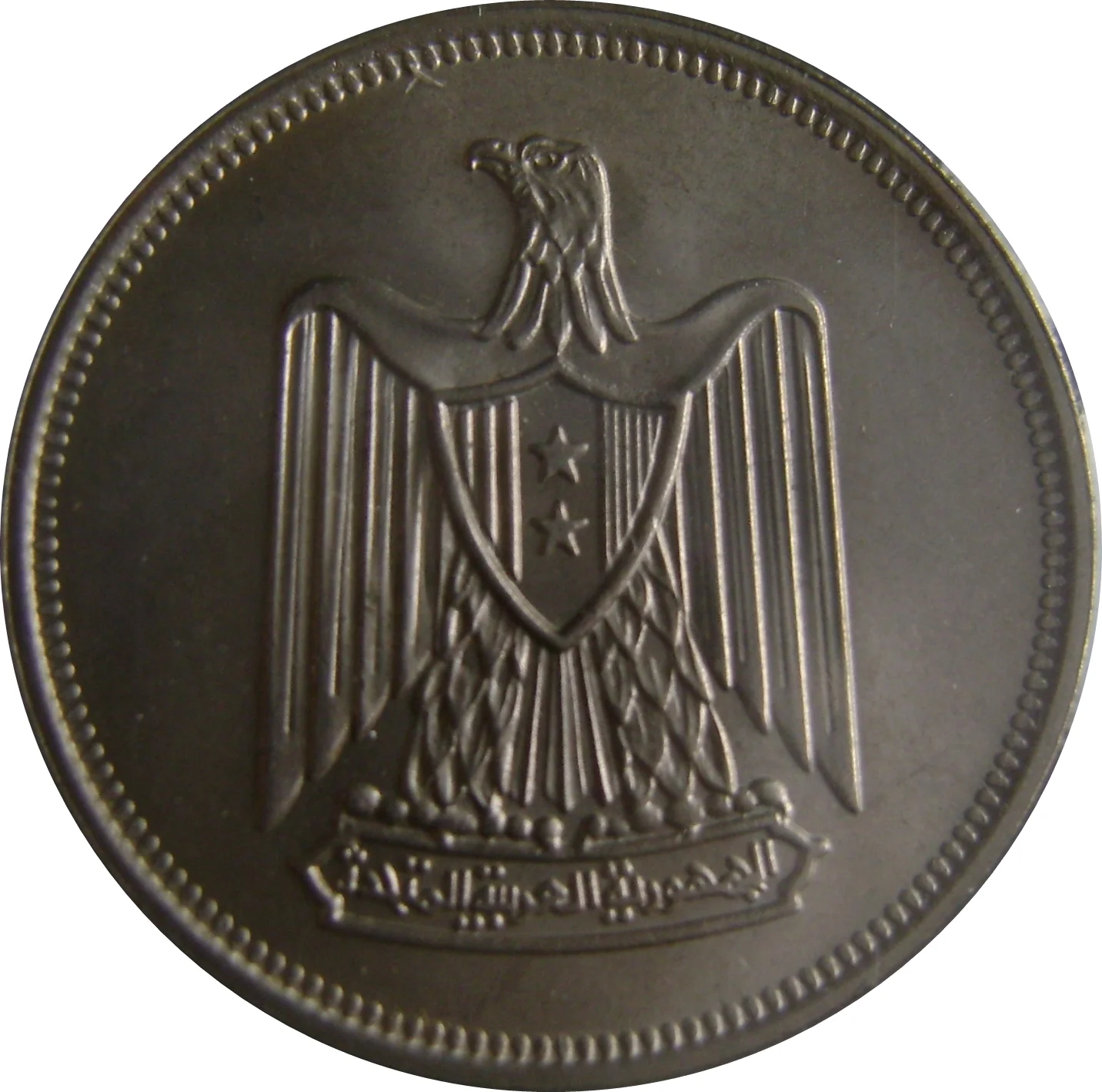
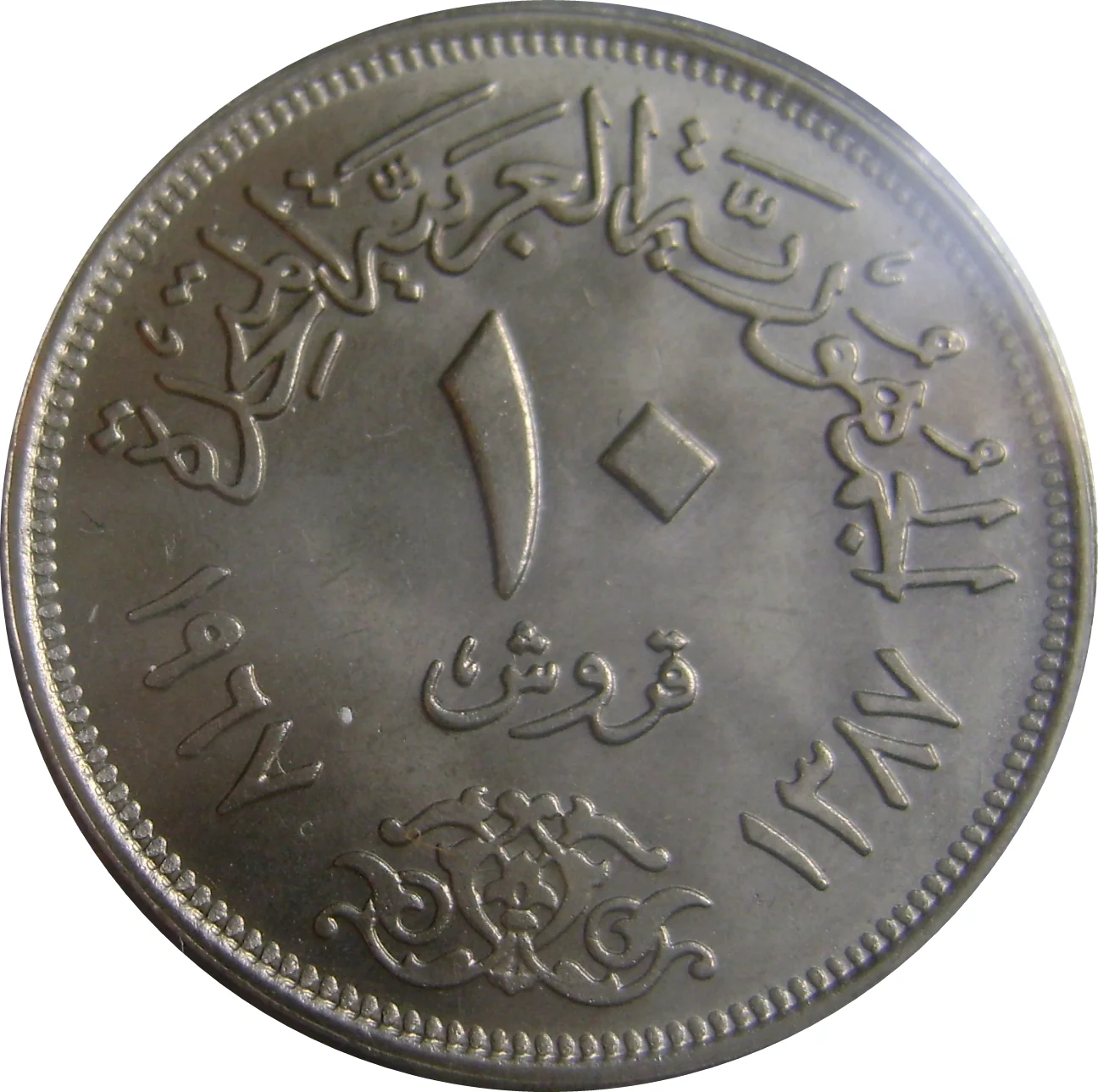
10 piastres – Egypt
Add to wishlist
Egypt
Context
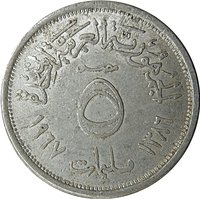
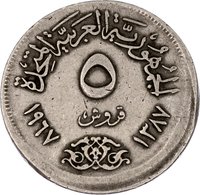
Year: 1967
Islamic (Hijri) Year:: 1387
Issuer: Egypt
Period:
(1958—1971)
Currency:
(since 1916)
Demonetized: Yes
Total mintage: 13,200,000
Material
Diameter: 26.8 mm
Weight: 5.9 g
Thickness: 1.4 mm
Shape: Round
Composition: Copper-nickel
Technique: Milled
Alignment: Medal alignment
flip
References
KM: #
Numista: #2228
Value
Exchange value: 0.10 EGP
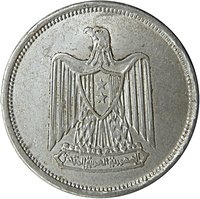
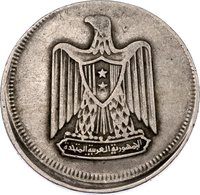
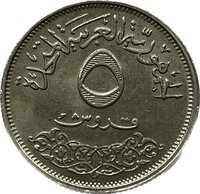
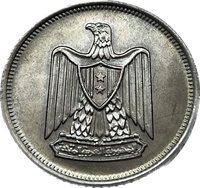
Obverse
Reverse
Edge
Milled
Categories
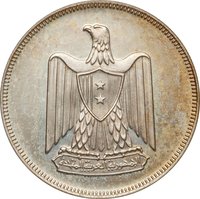
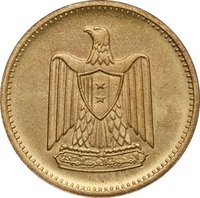
| Animal> Bird> Eagle |
| Symbols> Coat of Arms |
Mints
| Name | Mark |
|---|---|
| Egyptian Mint Authority | — |
Mintings
| Year | Mint Mark | Mintage | Quality | Collection |
|---|---|---|---|---|
| 1967 | — | 13,200,000 |
Historical background
In the wake of the 1967 Six-Day War, Egypt faced a profound currency and economic crisis. The swift military defeat resulted in the loss of the Sinai Peninsula and its critical economic assets, including the Suez Canal, which was closed, and the Abu Rudeis oil fields. These losses stripped Egypt of its two largest sources of foreign exchange earnings, creating an immediate and severe balance of payments emergency. The government was forced to dip heavily into its foreign reserves to finance the war and its aftermath, while also committing to a massive and ongoing rearmament program, further straining fiscal resources.
Domestically, the situation led to the imposition of strict austerity measures and increased dependence on foreign aid, primarily from the Soviet Union and Arab oil states. To conserve scarce foreign currency, the government tightened import controls and expanded the public sector's role in the economy. A significant parallel black market for foreign exchange emerged, as the official Egyptian pound, pegged at E£0.43 to the US dollar, became increasingly overvalued given the economic realities. This disparity created a wide gap between the official rate and the much weaker black-market rate, which reflected the currency's true eroded value.
Consequently, by the end of 1967, Egypt's economy was characterized by a heavily managed and effectively inconvertible currency, dwindling reserves, and a growing budget deficit. The currency situation was symptomatic of a broader economic malaise: war expenditures, lost revenues, and the cost of supporting a large military burden created persistent inflationary pressures and slowed growth. This financial strain set the stage for the economic re-evaluations and Infitah (open door) policies that would follow in the 1970s under President Anwar Sadat.
Domestically, the situation led to the imposition of strict austerity measures and increased dependence on foreign aid, primarily from the Soviet Union and Arab oil states. To conserve scarce foreign currency, the government tightened import controls and expanded the public sector's role in the economy. A significant parallel black market for foreign exchange emerged, as the official Egyptian pound, pegged at E£0.43 to the US dollar, became increasingly overvalued given the economic realities. This disparity created a wide gap between the official rate and the much weaker black-market rate, which reflected the currency's true eroded value.
Consequently, by the end of 1967, Egypt's economy was characterized by a heavily managed and effectively inconvertible currency, dwindling reserves, and a growing budget deficit. The currency situation was symptomatic of a broader economic malaise: war expenditures, lost revenues, and the cost of supporting a large military burden created persistent inflationary pressures and slowed growth. This financial strain set the stage for the economic re-evaluations and Infitah (open door) policies that would follow in the 1970s under President Anwar Sadat.
Series: UAR- Salaheldin Eagle

🌱 Very Common