

2 milliemes – Egypt
Add to wishlist
Egypt
Context
Years: 1962–1966
Issuer: Egypt
Period:
(1958—1971)
Currency:
(since 1916)
Demonetization: 1982
Total mintage: 25,289,000
Material
References
KM: #
Numista: #7783
Value
Exchange value: 0.002 EGP
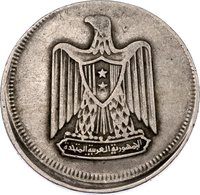
Obverse
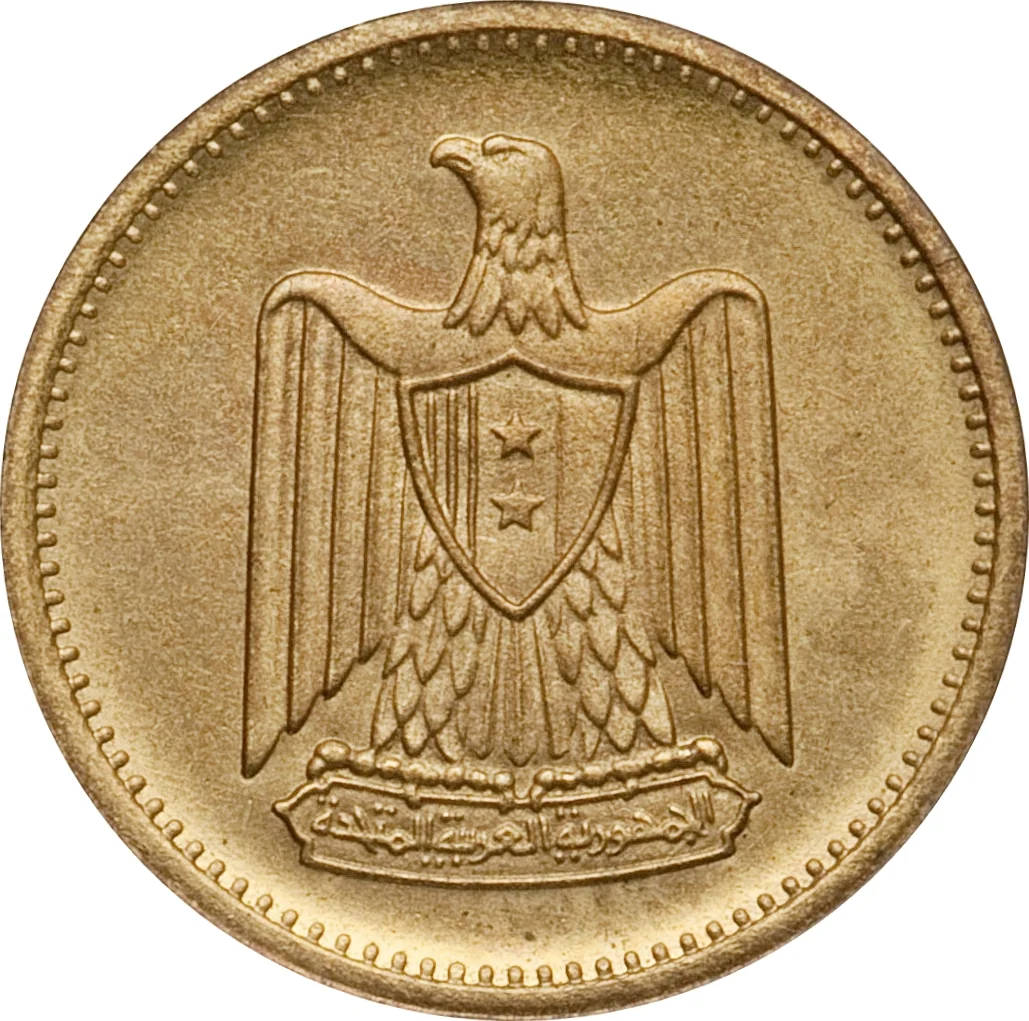
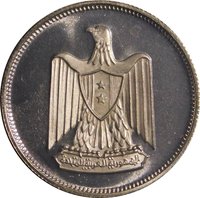
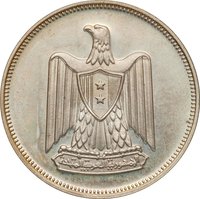
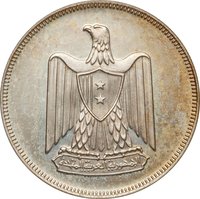
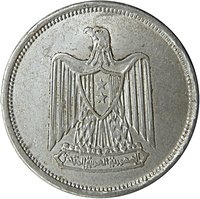
Description:
UAR coat of arms
Inscription:
الجمهورية العربية المتحدة
Translation:
The United Arab Republic
Script: Arabic
Language: Arabic
Designer: Ahmed Ibrahim Barhouma
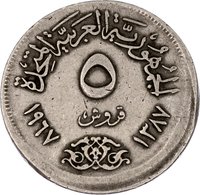
Reverse
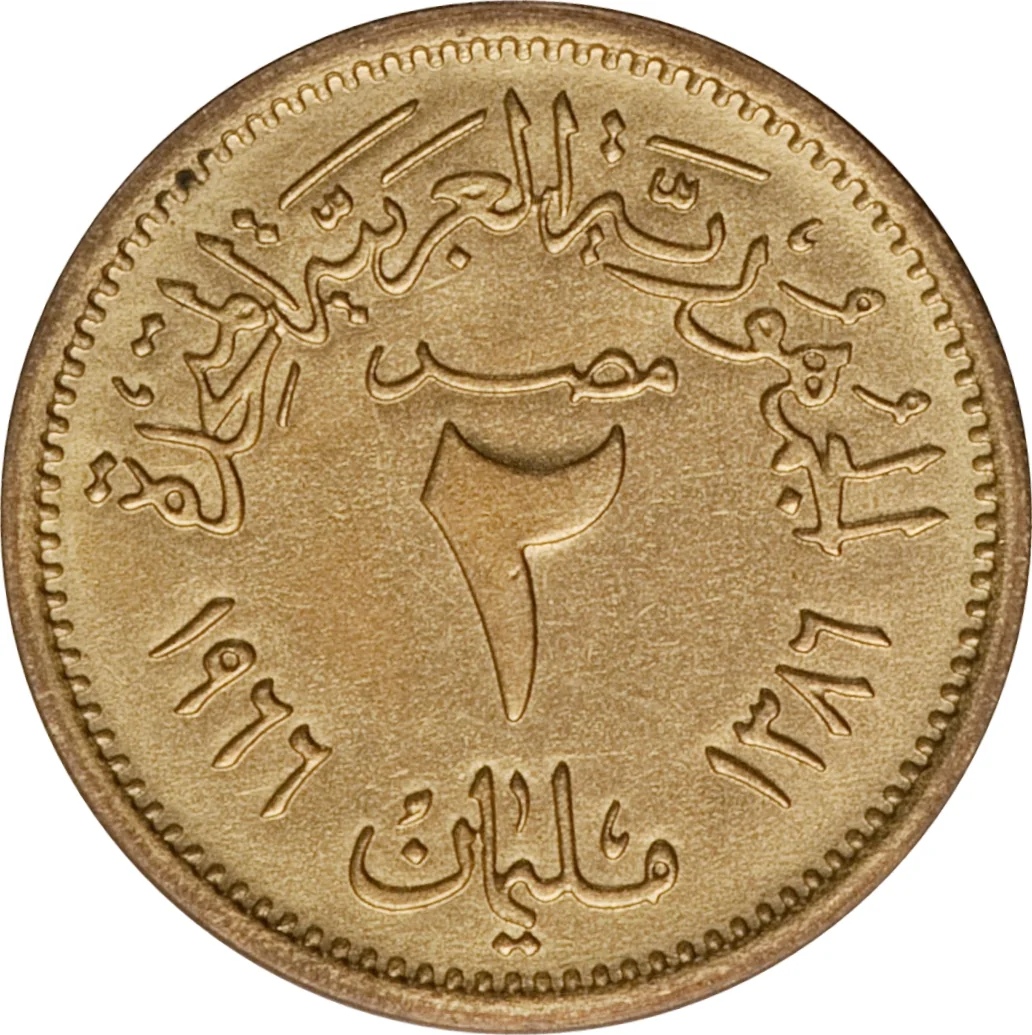
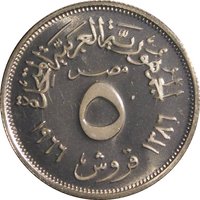
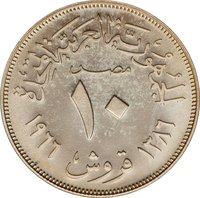
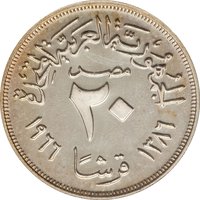
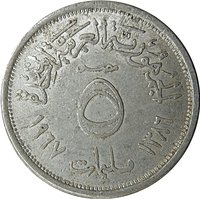
Description:
Denomination splits dates, legend atop.
Inscription:
الجمهورية العربية المتحدة
مصر
٢
مليمان
١٣٨٦ ١٩٦٦
مصر
٢
مليمان
١٣٨٦ ١٩٦٦
Translation:
United Arab Republic
Egypt
2
Milliemes
1386 1966
Egypt
2
Milliemes
1386 1966
Script: Arabic
Language: Arabic
Designer: Muhammad Abdel Kader
Edge
Plain
Categories
| Animal> Bird> Eagle |
| Symbols> Coat of Arms |
Mints
| Name | Mark |
|---|---|
| Egyptian Mint Authority | — |
Mintings
| Year | Mint Mark | Mintage | Quality | Collection |
|---|---|---|---|---|
| 1962 | — | 25,289,000 | ||
| 1966 | — | — | Proof |
Historical background
In 1962, Egypt's currency situation was fundamentally shaped by the socialist and nationalist policies of Gamal Abdel Nasser's government. The Egyptian pound (EGP) operated under a fixed exchange rate system, pegged to the British pound sterling, a legacy of the country's colonial past. However, this official rate was largely theoretical for most transactions. A complex and restrictive system of exchange controls was firmly in place, dividing foreign currency into multiple "accounts" with different rules, effectively creating a tiered and controlled financial environment to manage the state's limited hard currency reserves.
This rigid framework was a direct tool for implementing the state-led industrialization and economic planning of Nasser's "Arab Socialism." The government strictly prioritized the use of foreign exchange for importing essential capital goods, machinery, and raw materials for its development projects, while severely restricting access for consumer goods and private sector imports. Consequently, a thriving black market for foreign currency emerged, where the Egyptian pound traded at a significant discount compared to the official rate. This parallel market reflected the pent-up demand for imports and the overvaluation of the official currency peg.
The currency controls of 1962 were thus a double-edged sword. They provided the state with a powerful instrument to direct economic activity, shield domestic industry, and conserve foreign exchange during a period of ambitious national projects like the Aswan High Dam. However, they also created distortions, fostered corruption, and constrained private international trade. This system laid the groundwork for the chronic foreign exchange shortages and parallel market pressures that would become enduring features of the Egyptian economy for decades to come.
This rigid framework was a direct tool for implementing the state-led industrialization and economic planning of Nasser's "Arab Socialism." The government strictly prioritized the use of foreign exchange for importing essential capital goods, machinery, and raw materials for its development projects, while severely restricting access for consumer goods and private sector imports. Consequently, a thriving black market for foreign currency emerged, where the Egyptian pound traded at a significant discount compared to the official rate. This parallel market reflected the pent-up demand for imports and the overvaluation of the official currency peg.
The currency controls of 1962 were thus a double-edged sword. They provided the state with a powerful instrument to direct economic activity, shield domestic industry, and conserve foreign exchange during a period of ambitious national projects like the Aswan High Dam. However, they also created distortions, fostered corruption, and constrained private international trade. This system laid the groundwork for the chronic foreign exchange shortages and parallel market pressures that would become enduring features of the Egyptian economy for decades to come.
Series: UAR- Salaheldin Eagle

🌱 Common