

1 speciedaler – Denmark
Add to wishlist
Denmark
Context
Material
References
KM: #
Numista: #22191
Value
Bullion value: $62.43
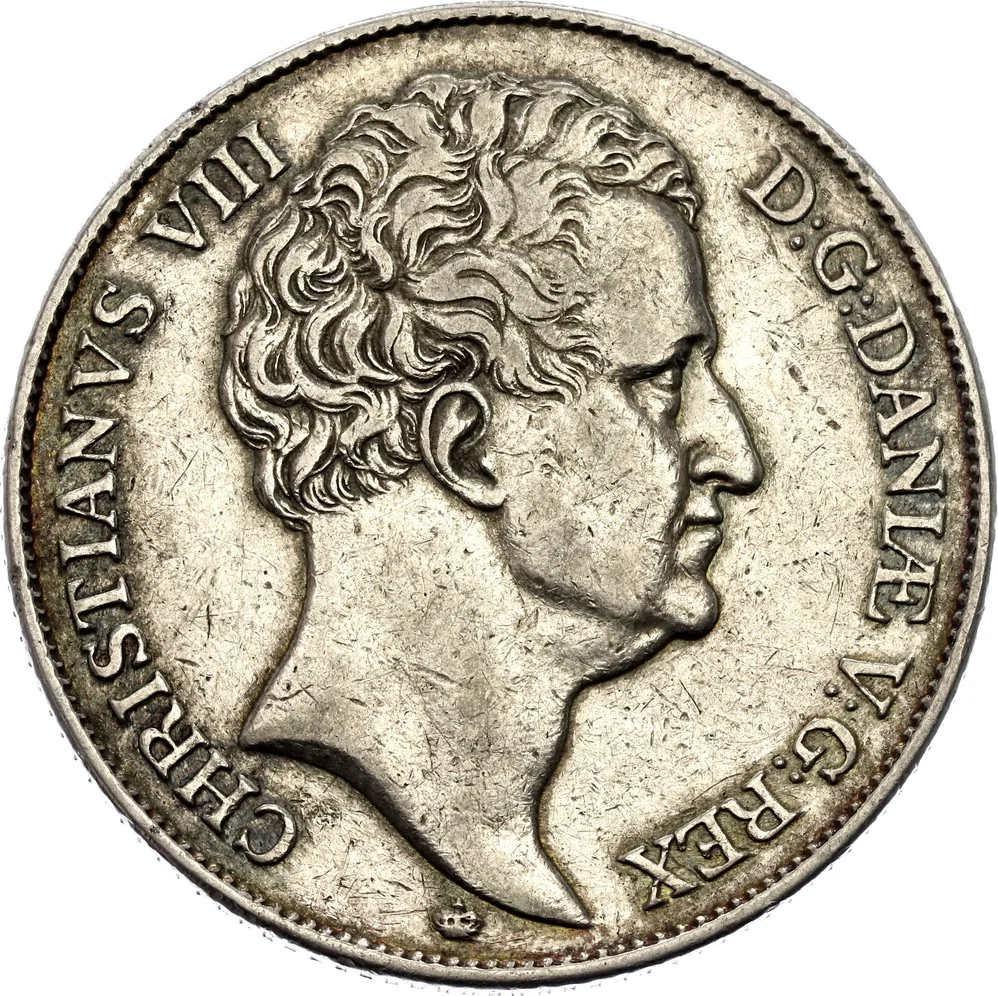
Obverse
Description:
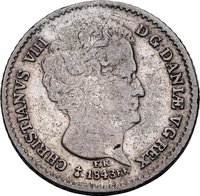
King Christian VIII facing right. Mintmark crown and engraver's initials on neck.
Inscription:
CHRISTIANVS VIII | D:G:DANIÆ V:G:REX
H. C.
♔
H. C.
♔
Translation:
Christian VIII by the Grace of God, of the Danes, Vandals, and Goths King
H. C.
♔
H. C.
♔
Script: Latin
Language: Latin
Engraver: Harald Conradsen
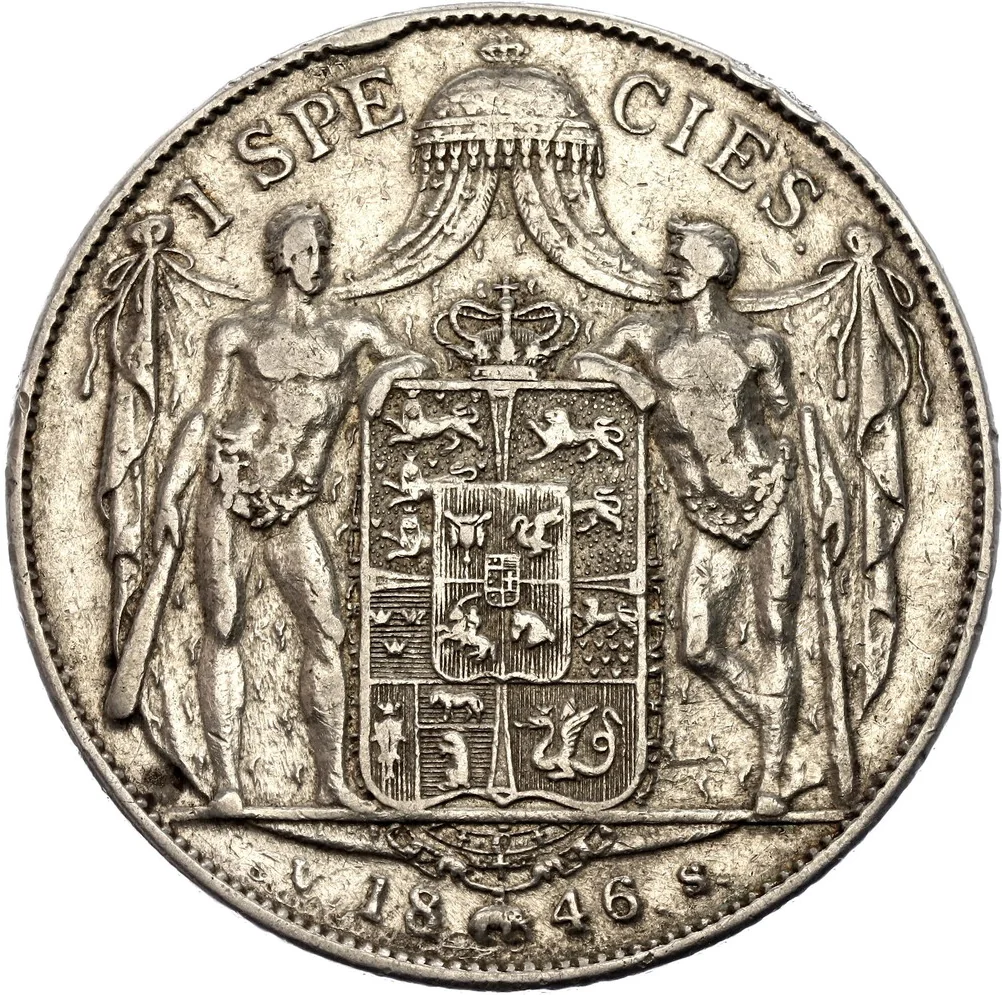
Reverse
Description:
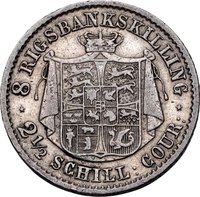
Crowned grater shield with Denmark’s arms (featuring the Elephant Order collar), supported by club‑armed wildmen. A wide crowned mantle envelops the design, dividing the value inscription above. Engraver’s name on a bar below the supporters’ feet, with date and mintmark below.
Inscription:
1 SPE | CIES
V. 18 | 46. S.
V. 18 | 46. S.
Script: Latin
Engraver: Harald Conradsen
Edge
Reeded
Mints
| Name | Mark |
|---|---|
| Royal Danish Mint | ♔ |
Historical background
In 1846, Denmark’s currency system was in a state of transition, caught between the lingering influence of the rigsdaler and the emerging Scandinavian Monetary Union. The primary unit was the rigsdaler, a silver-based currency divided into 96 skilling. This system, however, was complex and fragmented, with various subsidiary coins in circulation and a history of debasement that had eroded public confidence. Furthermore, the state faced significant financial strain following the Napoleonic Wars and the costly First Schleswig War (1848-1851), which was just on the horizon, putting pressure on the monetary system.
A key development was the National Bank of Denmark's (Danmarks Nationalbank) establishment in 1818, which had been working to stabilize the currency and introduce standardized banknotes. By the 1840s, the goal was to move toward a simpler, decimal-based system to facilitate trade and modernize the economy. This period saw serious political and economic discussions about reforming the old skilling system, laying the groundwork for the future shift to the krone and øre.
Internationally, Denmark was influenced by the German Vereinsthaler and broader European trends toward silver standards. The pivotal change would come just a few years later, in 1854, when Denmark introduced the krone as a decimal currency (1 krone = 100 øre), formally pegging it to silver. Thus, 1846 represents a critical pre-reform year, where the shortcomings of the old system were widely acknowledged, and the foundations for a modern, decimal-based monetary system were being actively debated and prepared.
A key development was the National Bank of Denmark's (Danmarks Nationalbank) establishment in 1818, which had been working to stabilize the currency and introduce standardized banknotes. By the 1840s, the goal was to move toward a simpler, decimal-based system to facilitate trade and modernize the economy. This period saw serious political and economic discussions about reforming the old skilling system, laying the groundwork for the future shift to the krone and øre.
Internationally, Denmark was influenced by the German Vereinsthaler and broader European trends toward silver standards. The pivotal change would come just a few years later, in 1854, when Denmark introduced the krone as a decimal currency (1 krone = 100 øre), formally pegging it to silver. Thus, 1846 represents a critical pre-reform year, where the shortcomings of the old system were widely acknowledged, and the foundations for a modern, decimal-based monetary system were being actively debated and prepared.
💎 Extremely Rare