

1 Rigsbankdaler – Denmark
Denmark
Context

Material
References
KM: #Click to copy to clipboard743
Numista: #191860
Value
Bullion value: $35.59
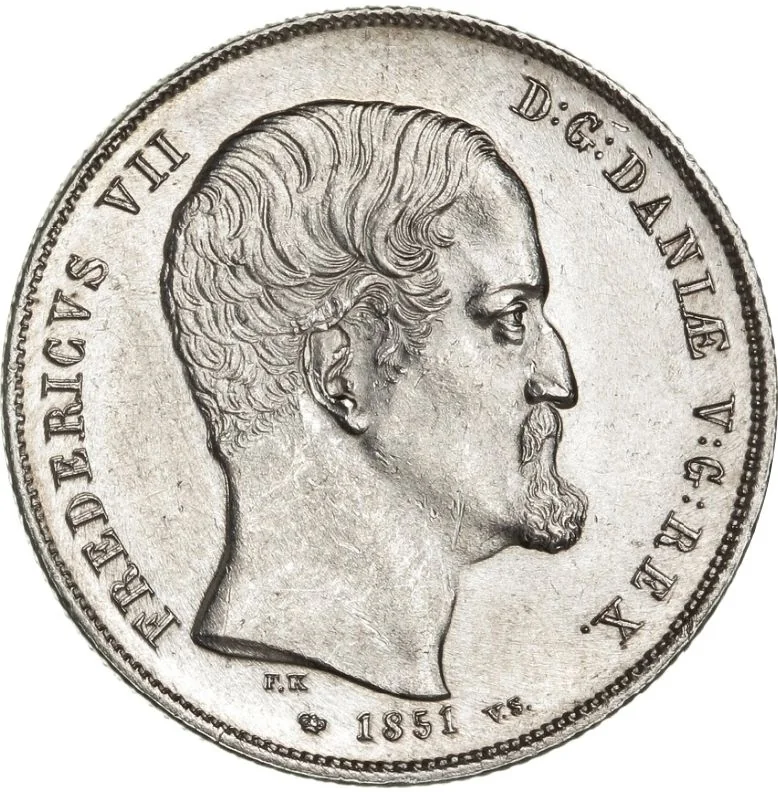
Obverse
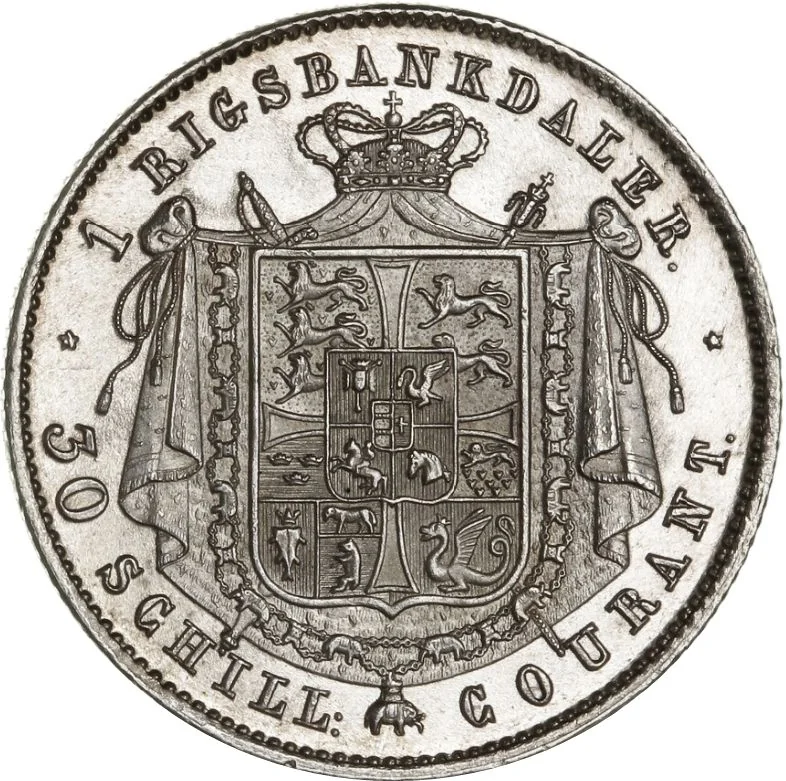
Reverse
Description:
Shield with Danish arms in an ermine mantle, crowned. Surrounded by the Elephant Order collar, crossed sword and scepter behind. Value on rim.
Inscription:
* 1 RIGSBANKDALER *
30 SCHILL COURANT
30 SCHILL COURANT
Script: Latin
Edge
Mints
| Name | Mark |
|---|---|
| Royal Danish Mint | ♔ |
Historical background
In 1849, Denmark's currency situation was complex and transitional, deeply intertwined with the nation's political transformation. That year marked the end of absolute monarchy and the adoption of a democratic constitution, yet the monetary system still operated under the older Rigsbankdaler (rix-dollar) standard. The system was bimetallic, theoretically based on both silver and gold, but in practice it was often unstable, with fluctuating values between metal coins and a growing reliance on paper money issued by private banks, leading to occasional liquidity crises and public distrust.
The economic backdrop was one of strain, heavily influenced by the costs of the First Schleswig War (1848-1851). The war effort forced the state to suspend the convertibility of banknotes into silver, effectively placing the currency on a fiat standard. This led to inflation and a disparity between the face value of money and its metallic worth, causing significant hardship for ordinary citizens and complicating trade. The currency's reliability became a pressing political issue for the new constitutional government.
Consequently, 1849 stands as a pivotal year where the need for comprehensive monetary reform became undeniable. The chaotic wartime finances and the demands of a modernizing economy created a consensus that a unified, stable national currency was essential. This urgency would culminate just a few years later with the major Currency Reform of 1854, which introduced the Rigsdaler as a new silver-based standard and laid the foundation for the later krone, finally resolving the instabilities so acutely felt during the constitutional upheaval of 1849.
The economic backdrop was one of strain, heavily influenced by the costs of the First Schleswig War (1848-1851). The war effort forced the state to suspend the convertibility of banknotes into silver, effectively placing the currency on a fiat standard. This led to inflation and a disparity between the face value of money and its metallic worth, causing significant hardship for ordinary citizens and complicating trade. The currency's reliability became a pressing political issue for the new constitutional government.
Consequently, 1849 stands as a pivotal year where the need for comprehensive monetary reform became undeniable. The chaotic wartime finances and the demands of a modernizing economy created a consensus that a unified, stable national currency was essential. This urgency would culminate just a few years later with the major Currency Reform of 1854, which introduced the Rigsdaler as a new silver-based standard and laid the foundation for the later krone, finally resolving the instabilities so acutely felt during the constitutional upheaval of 1849.
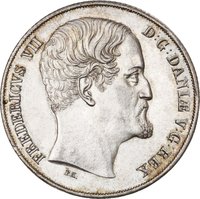
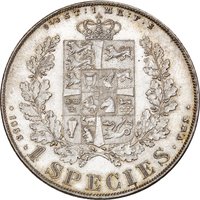
💎 Extremely Rare