

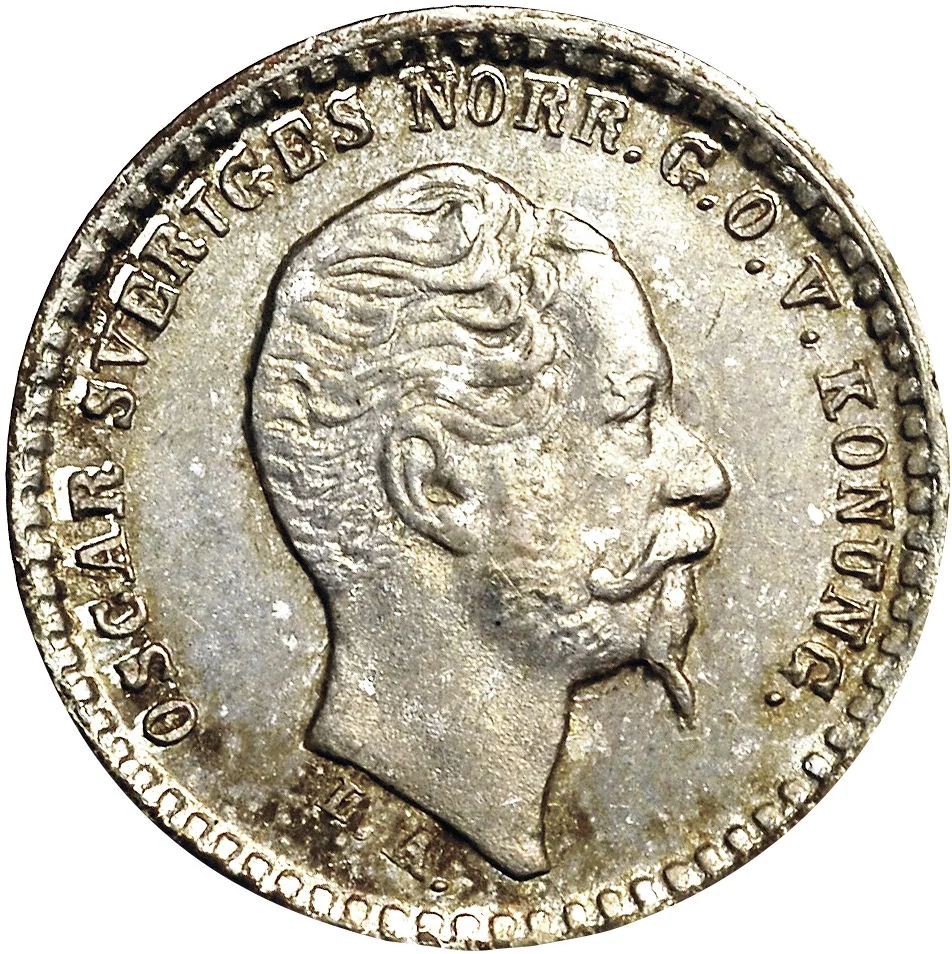
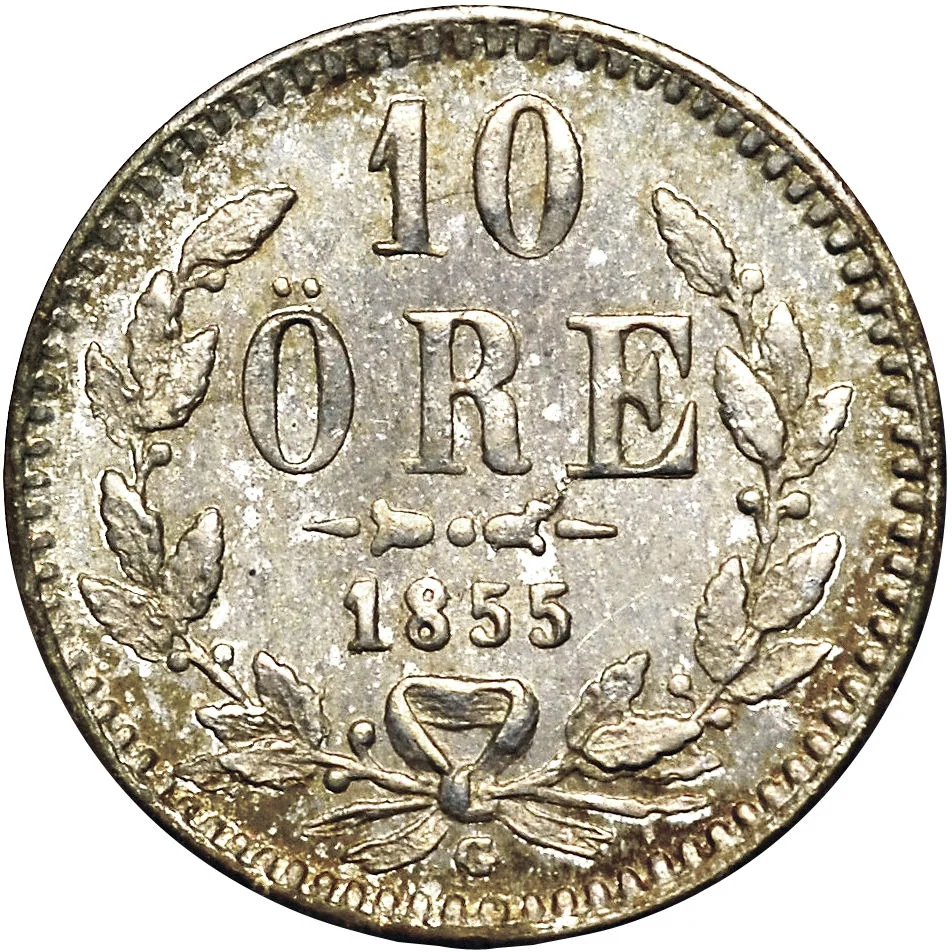
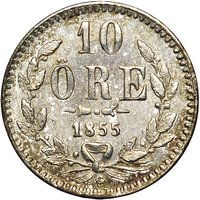
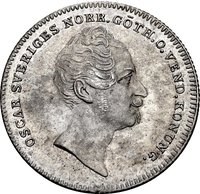
Obverse
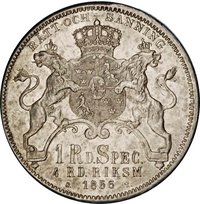
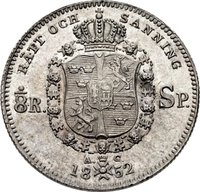
Reverse
Edge
Mints
| Name | Mark |
|---|---|
| Kungliga Myntet | — |
| Stockholm | — |
Mintings
| Year | Mint Mark | Mintage | Quality | Collection |
|---|---|---|---|---|
| 1855 | — | 1,358,560 | ||
| 1857 | — | 1,006,640 | ||
| 1858 | — | 354,000 | ||
| 1859 | — | 1,683,790 |
Historical background
In 1855, Sweden was in the midst of a significant monetary transition, operating under a complex dual-currency system. The official unit was the Riksdaler Riksmynt, a silver-based currency established in 1834, which was intended to be the sole legal tender. However, in practice, it circulated alongside the older Riksdaler Specie, a currency with a higher silver content used primarily for international trade and large-scale transactions. This created constant confusion and required frequent calculations between the two standards, as one Riksdaler Specie was worth approximately 2.66 Riksdaler Riksmynt.
The system was further complicated by the widespread use of paper money. Since 1661, Sweden had a history of banknotes, and by the mid-19th century, notes issued by the private Riksens Ständers Bank (the precursor to the modern Riksbank) were common. These notes were nominally convertible into silver, but their value and public trust fluctuated. The Crimean War (1853-1856) also had an indirect impact, causing economic uncertainty and putting pressure on the monetary system, as was common in Europe during major conflicts.
This cumbersome situation created a strong impetus for reform. The dual standards hindered commerce and modern economic development. Consequently, the year 1855 itself was a pivotal prelude to change, as it saw the Riksdag (the Swedish parliament) begin serious deliberations that would lead to the landmark 1855–1856 Currency Reform. This reform, fully enacted in the following years, successfully introduced a modern decimal system, making the Riksdaler Riksmynt the single, unified currency and laying the groundwork for the future introduction of the Krona in 1873.
The system was further complicated by the widespread use of paper money. Since 1661, Sweden had a history of banknotes, and by the mid-19th century, notes issued by the private Riksens Ständers Bank (the precursor to the modern Riksbank) were common. These notes were nominally convertible into silver, but their value and public trust fluctuated. The Crimean War (1853-1856) also had an indirect impact, causing economic uncertainty and putting pressure on the monetary system, as was common in Europe during major conflicts.
This cumbersome situation created a strong impetus for reform. The dual standards hindered commerce and modern economic development. Consequently, the year 1855 itself was a pivotal prelude to change, as it saw the Riksdag (the Swedish parliament) begin serious deliberations that would lead to the landmark 1855–1856 Currency Reform. This reform, fully enacted in the following years, successfully introduced a modern decimal system, making the Riksdaler Riksmynt the single, unified currency and laying the groundwork for the future introduction of the Krona in 1873.
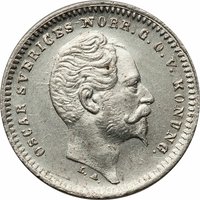
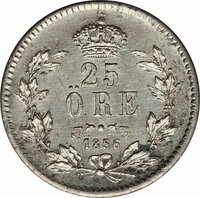
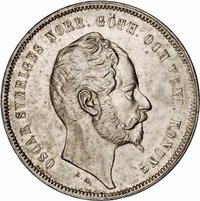
Series: 1855 Sweden circulation coins
🌟 Uncommon