

4 Rigsbankskilling – Denmark
Denmark
Context

Material
References
KM: #Click to copy to clipboard721
Numista: #19002
Obverse
Description:
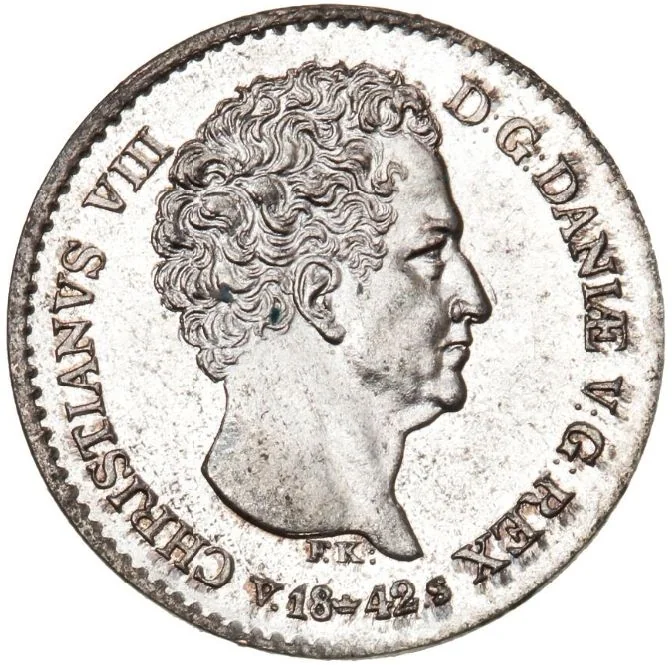
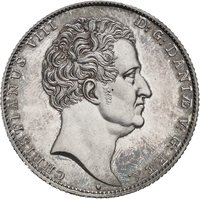
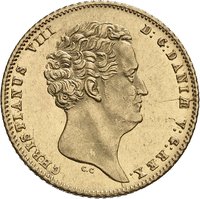
Portrait of King Christian VIII facing right, with engraver's initials and date flanking the mintmark below.
Inscription:
CHRISTIANVS VIII D:G:DANIÆ V:G:REX
F.K.
V. 18 ♔ 42 S.
F.K.
V. 18 ♔ 42 S.
Translation:
Christian VIII by the Grace of God, King of Denmark, the Vends and the Goths.
F.K.
V. 18 ♔ 42 S.
F.K.
V. 18 ♔ 42 S.
Script: Latin
Language: Latin
Reverse
Description:
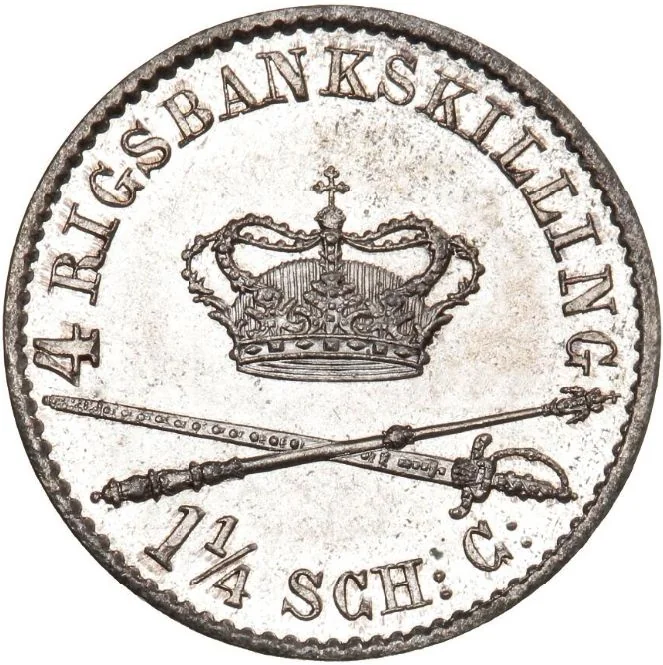
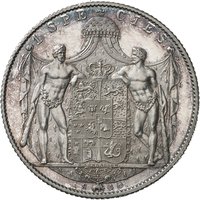
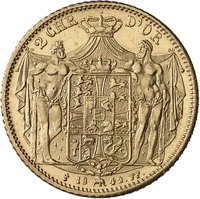
Crown above crossed sword and scepter, with Danish currency value above and Schleswig-Holstein below.
Inscription:
4 RIGSBANKSKILLING
1¼ SCH: C:
1¼ SCH: C:
Script: Latin
Edge
Plain
Mints
| Name | Mark |
|---|---|
| Royal Danish Mint | ♥ |
| Altona, Schleswig-Holstein | FF |
| Royal Danish Mint | VS |
Mintings
| Year | Mint Mark | Mintage | Quality | Collection |
|---|---|---|---|---|
| 1841 | ♥ | — | ||
| 1842 | ♁ | — | ||
| 1842 | ♔ | — |
Historical background
In 1841, Denmark's currency situation was characterized by a complex and strained system rooted in the financial aftermath of the Napoleonic Wars and the state bankruptcy of 1813. The country operated on a silver standard, having introduced the rigsdaler as the official currency unit. However, the system was practically bimetalic, with both silver and gold coins in circulation, their values fixed by law. This created persistent tensions, as the official mint ratios often diverged from fluctuating market values, leading to the disappearance of undervalued coins from circulation—a classic example of Gresham's Law.
The period was one of monetary scarcity and confusion. The state's finances remained fragile, and a lack of small-denomination coins severely hampered everyday trade, prompting businesses and municipalities to issue private tokens (skillemønter) to facilitate transactions. Furthermore, the Danish economy was still predominantly agricultural, and the money supply was insufficient and inflexible, struggling to meet the needs of a slowly modernizing commercial sector. This scarcity contributed to deflationary pressures and economic stagnation in the early 1840s.
This unsatisfactory environment set the stage for significant reform. The 1841 period was a pivotal precursor to the major monetary reorganization that would come just a few years later with the Currency Act of 1845. That act would decisively establish a new rigsdaler on a purely silver standard, simplify the coinage, and rigorously tie the currency to a specific weight of silver, finally bringing order and stability to the Danish monetary system after decades of post-war dislocation.
The period was one of monetary scarcity and confusion. The state's finances remained fragile, and a lack of small-denomination coins severely hampered everyday trade, prompting businesses and municipalities to issue private tokens (skillemønter) to facilitate transactions. Furthermore, the Danish economy was still predominantly agricultural, and the money supply was insufficient and inflexible, struggling to meet the needs of a slowly modernizing commercial sector. This scarcity contributed to deflationary pressures and economic stagnation in the early 1840s.
This unsatisfactory environment set the stage for significant reform. The 1841 period was a pivotal precursor to the major monetary reorganization that would come just a few years later with the Currency Act of 1845. That act would decisively establish a new rigsdaler on a purely silver standard, simplify the coinage, and rigorously tie the currency to a specific weight of silver, finally bringing order and stability to the Danish monetary system after decades of post-war dislocation.
🌱 Fairly Common