

1⁄52 Shilling – Jersey
Context
Years: 1841–1861
Country: British Crown dependencies
Issuer: Jersey 
Ruler: Victoria
Currency:
(1813—1971)
Demonetization: 29 January 1869
Total mintage: 116,480
Material
References
KM: #Click to copy to clipboard1
Numista: #22100
Obverse
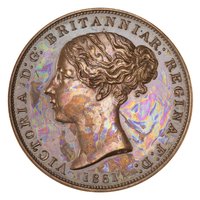
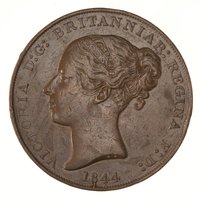
Description:
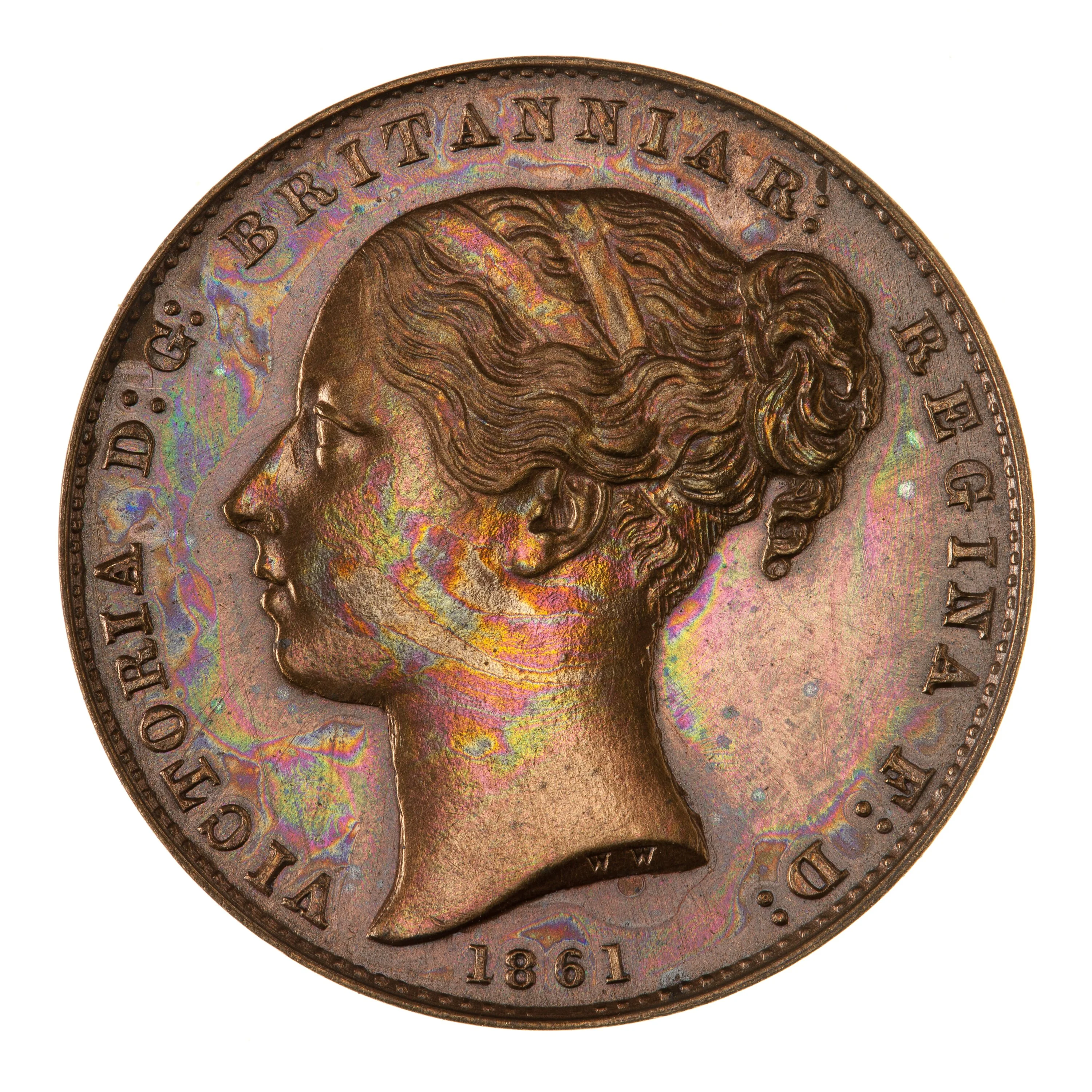
Young Victoria left, legend around, date below.
Inscription:
VICTORIA D: G: BRITANNIAR: REGINA F: D:
1841
1841
Translation:
Victoria by the Grace of God, Queen of the Britains, Defender of the Faith.
1841
1841
Script: Latin
Language: Latin
Engraver: William Wyon
Reverse
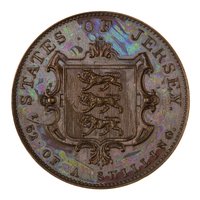
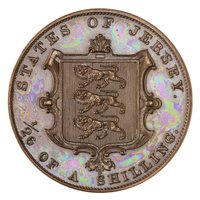
Description:
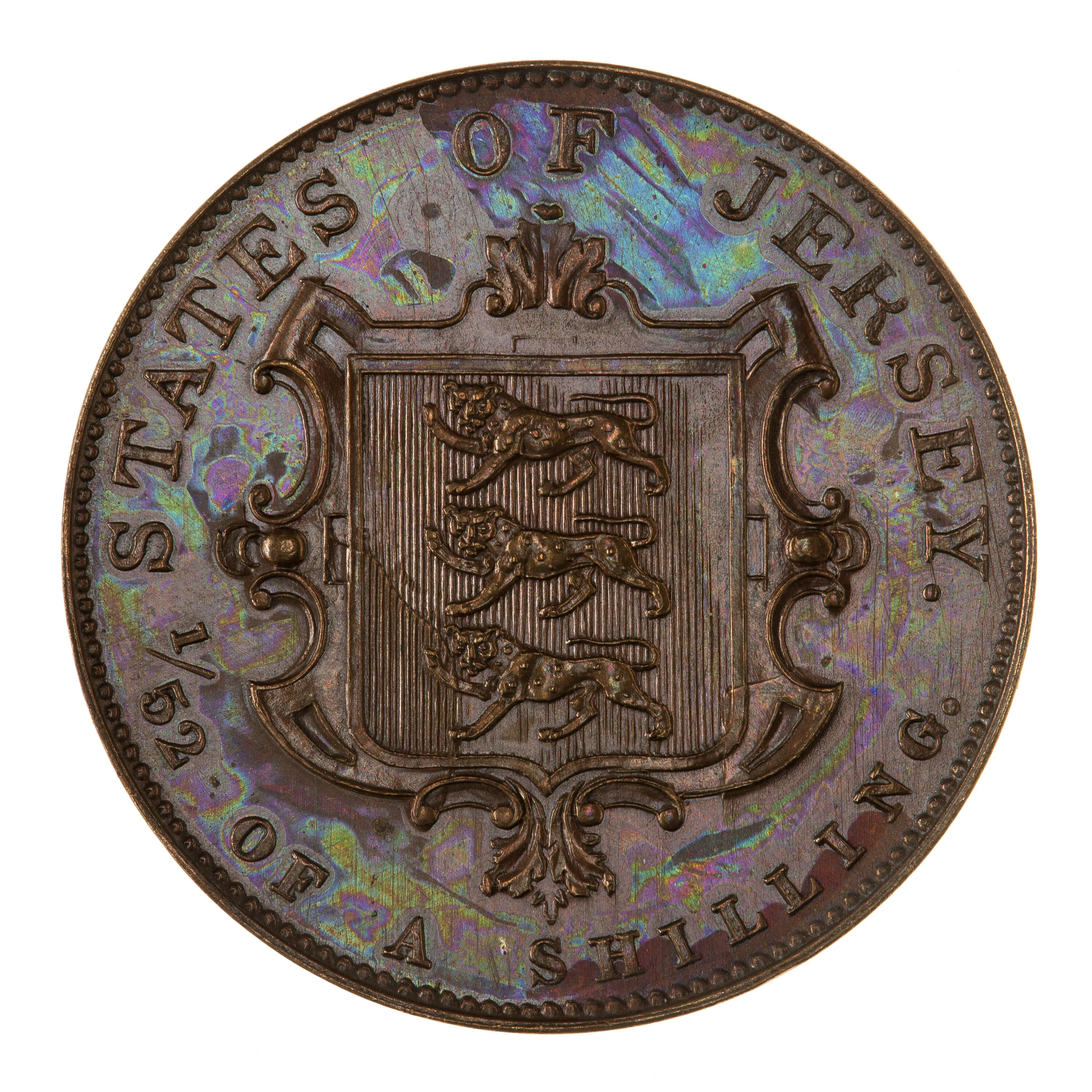
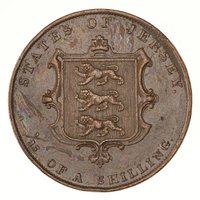
Shield of Jersey, legend above, value below.
Inscription:
STATES OF JERSEY.
1/52 OF A SHILLING.
1/52 OF A SHILLING.
Script: Latin
Engraver: William Wyon
Edge
Plain
Categories
| Symbols> Coat of Arms |
Mintings
| Year | Mint Mark | Mintage | Quality | Collection |
|---|---|---|---|---|
| 1841 | — | 116,480 | ||
| 1841 | — | — | Proof | |
| 1861 | — | — | Proof |
Historical background
In 1841, the currency situation in Jersey was a complex and locally managed system, distinct from the rest of the British Isles. The official currency was sterling, but in practice, the island's economy operated primarily on a mixture of French and Spanish coinage. The most common unit of account was the livre tournois, divided into 20 sous, with Spanish silver dollars (pieces of eight) and French francs circulating widely. This reflected Jersey's historical trade links with Normandy and its role in the Atlantic and coastal trade, where such coins were standard.
This system caused significant practical difficulties. The fluctuating value of foreign coins against sterling led to confusion and potential for exploitation in commerce. Furthermore, British copper coinage was scarce, creating a shortage of small change for everyday transactions. The States of Jersey attempted to regulate the problem by periodically issuing Ordonnances that fixed the exchange rates for various foreign coins in relation to the livre and sterling, but these were often reactive and struggled to keep pace with market realities.
Consequently, 1841 fell within a period of transition and mounting pressure for reform. The inefficiencies of the mixed-currency system were increasingly seen as a hindrance to business and modern banking. This culminated, just a few years later, in the pivotal States' decision of 1844 to adopt a proper decimalized coinage tied firmly to sterling. Therefore, the situation in 1841 was the final chapter of an archaic monetary order, characterized by pragmatic local solutions but marked by instability that would soon force the island to formally align its currency with the British standard.
This system caused significant practical difficulties. The fluctuating value of foreign coins against sterling led to confusion and potential for exploitation in commerce. Furthermore, British copper coinage was scarce, creating a shortage of small change for everyday transactions. The States of Jersey attempted to regulate the problem by periodically issuing Ordonnances that fixed the exchange rates for various foreign coins in relation to the livre and sterling, but these were often reactive and struggled to keep pace with market realities.
Consequently, 1841 fell within a period of transition and mounting pressure for reform. The inefficiencies of the mixed-currency system were increasingly seen as a hindrance to business and modern banking. This culminated, just a few years later, in the pivotal States' decision of 1844 to adopt a proper decimalized coinage tied firmly to sterling. Therefore, the situation in 1841 was the final chapter of an archaic monetary order, characterized by pragmatic local solutions but marked by instability that would soon force the island to formally align its currency with the British standard.
Series: 1841 Jersey circulation coins
⭐ Somewhat Rare