

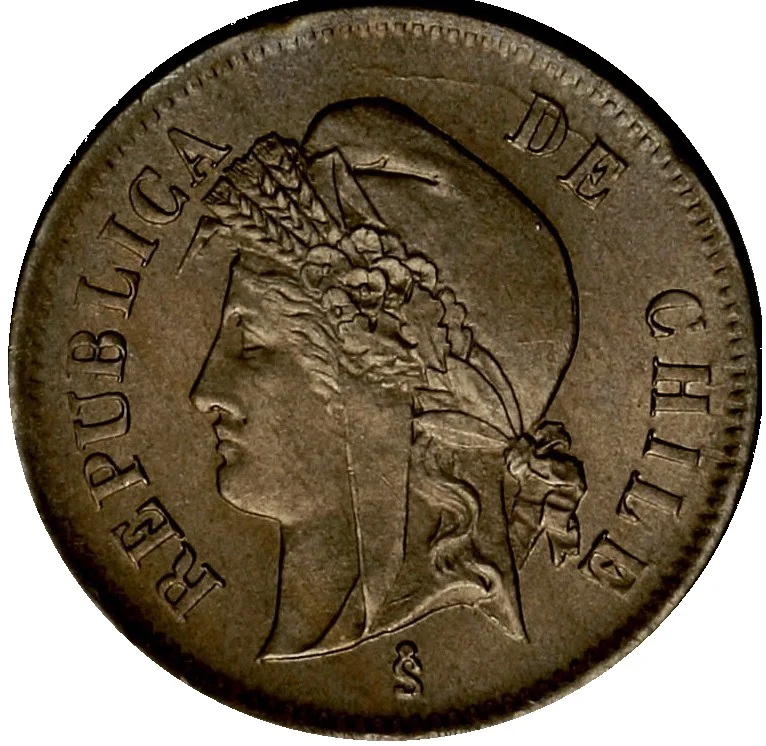
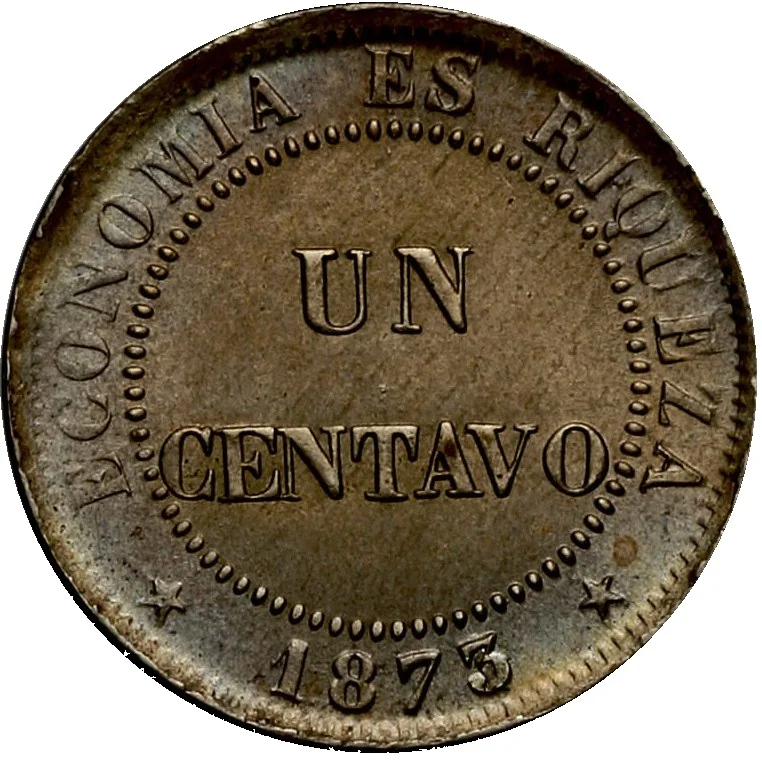
1 Centavo – Chile
Chile
Context

Material
Diameter: 21.3 mm
Weight: 5 g
Shape: Round
Composition: Copper-nickel
Technique: Milled
Alignment: Coin alignment
flip
References
KM: #Click to copy to clipboard146
Numista: #21914
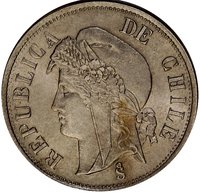
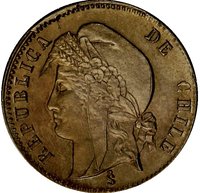
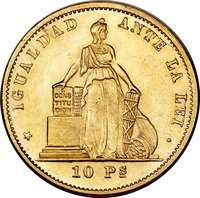
Obverse
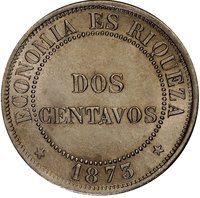
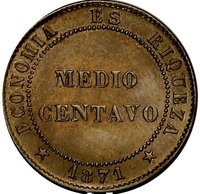
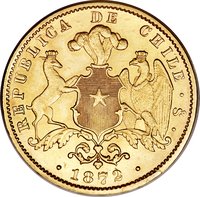
Reverse
Edge
Plain
Categories
| Symbol> Allegory |
| Symbol> Phrygian cap |
Mintings
| Year | Mint Mark | Mintage | Quality | Collection |
|---|---|---|---|---|
| 1871 | So | 1,687,000 | ||
| 1872 | So | 690,000 | ||
| 1873 | So | 779,000 | ||
| 1874 | So | 263,000 | ||
| 1875 | So | 113,000 | ||
| 1876 | So | 22,000 | ||
| 1877 | So | 16,000 |
Historical background
In 1871, Chile's currency situation was characterized by a complex and often unstable bimetallic system, a legacy of the colonial era. The official standard was based on the peso, valued at 8 reales and theoretically backed by both gold and silver. However, the fixed legal ratio between the values of gold and silver coins did not align with fluctuating international market prices. This discrepancy, a common problem with bimetallism, led to the effective disappearance of one metal from circulation—typically gold, which was often worth more as bullion abroad than as coinage at home. Consequently, the domestic economy primarily relied on a silver standard, while international trade was settled in gold or foreign currencies, creating a dual monetary environment.
This period was one of transition and debate. The discovery of rich silver deposits in the 1830s and the subsequent mining boom had initially increased the money supply, but by the 1870s, the system showed significant strain. The government of President Federico Errázuriz Zañartu, inaugurated in 1871, inherited these monetary challenges. A growing consensus among economists and policymakers favored moving toward a monometallic gold standard to achieve greater stability, simplify foreign exchange, and align Chile with the financial practices of major European trading partners like Britain. This push for reform was part of a broader, state-led modernization effort to strengthen the national economy.
Despite the clear direction of policy, tangible reform in 1871 itself was still in its preparatory stages. The most significant legislative action, the law of November 24, 1871, did not yet establish a gold standard but was a crucial step toward it. This law authorized the government to mint gold coins of specific denominations (cóndores and doblones) and, more importantly, to contract a foreign loan explicitly for the purpose of forming a gold conversion fund. This fund was intended to guarantee the value of paper money and facilitate the eventual shift to gold, setting the institutional and financial groundwork for the formal adoption of the gold standard, which would be realized with the law of June 26, 1874.
This period was one of transition and debate. The discovery of rich silver deposits in the 1830s and the subsequent mining boom had initially increased the money supply, but by the 1870s, the system showed significant strain. The government of President Federico Errázuriz Zañartu, inaugurated in 1871, inherited these monetary challenges. A growing consensus among economists and policymakers favored moving toward a monometallic gold standard to achieve greater stability, simplify foreign exchange, and align Chile with the financial practices of major European trading partners like Britain. This push for reform was part of a broader, state-led modernization effort to strengthen the national economy.
Despite the clear direction of policy, tangible reform in 1871 itself was still in its preparatory stages. The most significant legislative action, the law of November 24, 1871, did not yet establish a gold standard but was a crucial step toward it. This law authorized the government to mint gold coins of specific denominations (cóndores and doblones) and, more importantly, to contract a foreign loan explicitly for the purpose of forming a gold conversion fund. This fund was intended to guarantee the value of paper money and facilitate the eventual shift to gold, setting the institutional and financial groundwork for the formal adoption of the gold standard, which would be realized with the law of June 26, 1874.
🌟 Uncommon