

25 Piastres – Egypt
Circulating commemorative coins
Commemoration: National Assembly Inauguration
Egypt
Context
Year: 1957
Islamic (Hijri) Year: 1376
Issuer: Egypt 
Period:
(1953—1958)
Currency:
(since 1916)
Demonetized: Yes
Total mintage: 246,000
Material
References
KM: #Click to copy to clipboard389
Numista: #21802
Value
Exchange value: 0.25 EGP
Bullion value: $36.55
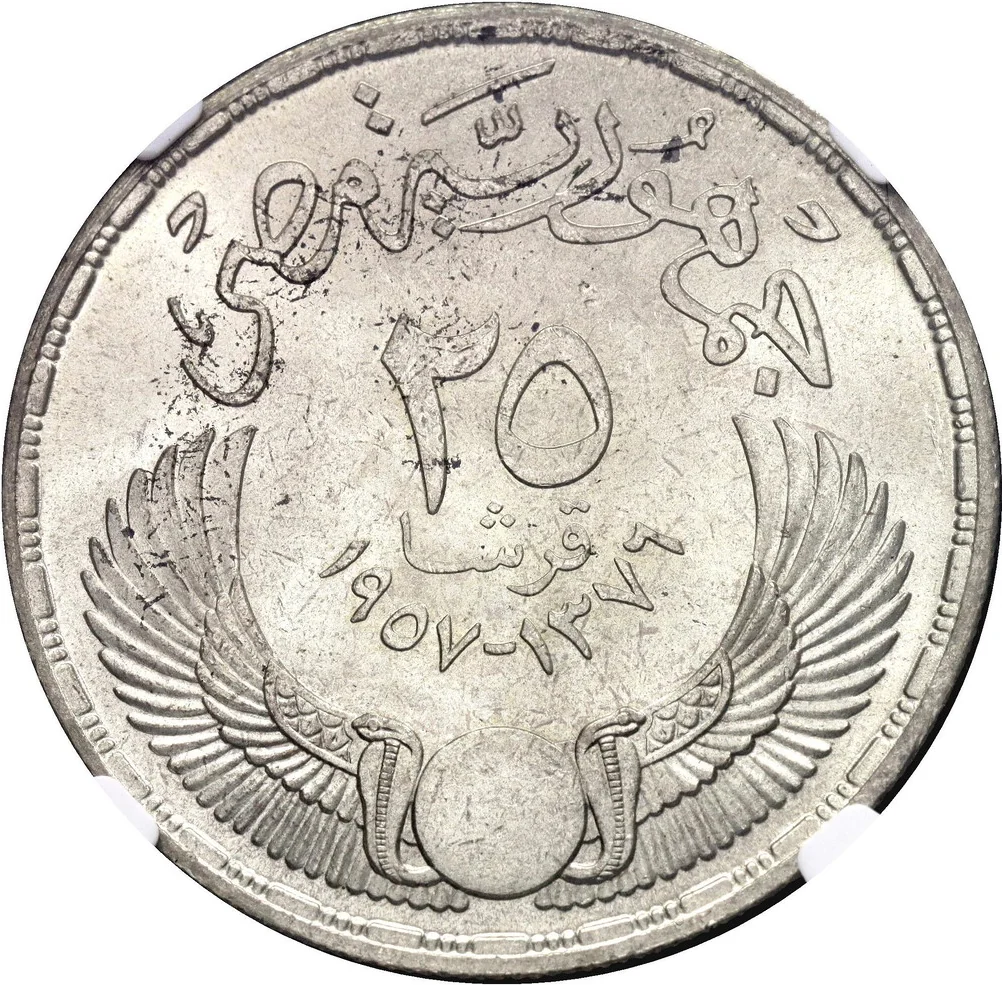
Obverse
Description:
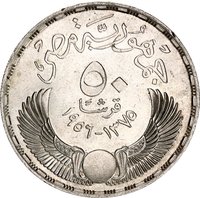
Issuer and years above wings.
Inscription:
جمهوريه مصر
۲٥
قرش
١٣٧٦ - ١٩٥٧
۲٥
قرش
١٣٧٦ - ١٩٥٧
Translation:
Republic of Egypt
25
Qirsh
1376 - 1957
25
Qirsh
1376 - 1957
Script: Arabic
Language: Arabic
Designer: Abdul Fatah Wahba
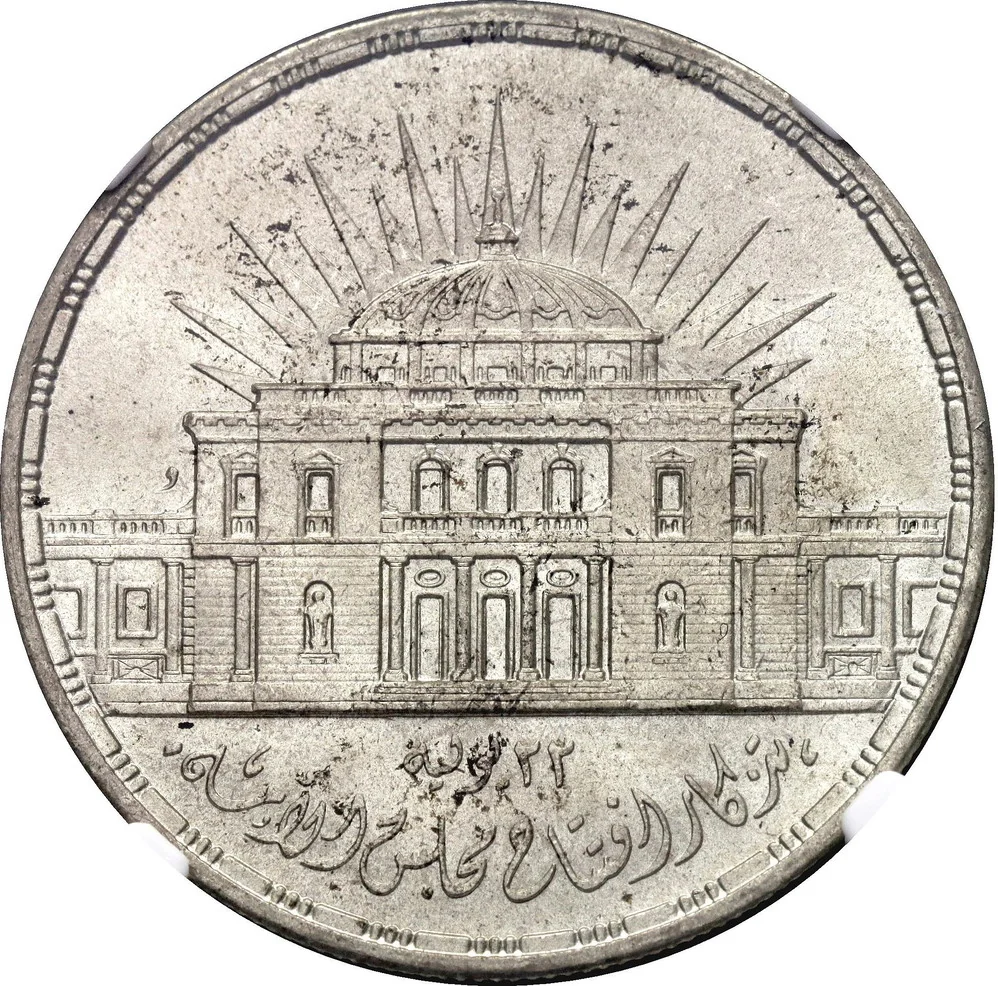
Reverse
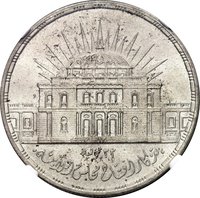
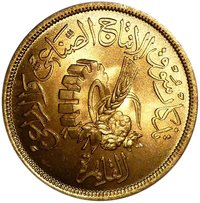
Description:
Sun behind building.
Inscription:
٢٢ يوليه
تذكار افتتاح مجلس الامه
تذكار افتتاح مجلس الامه
Translation:
Commemoration of the Inauguration of the National Assembly
Script: Arabic
Language: Arabic
Designer: Abdul Fatah Wahba
Edge
Reeded
Categories
| Building> Governmental building |
Mints
| Name | Mark |
|---|---|
| Egyptian Mint Authority | — |
Mintings
| Year | Mint Mark | Mintage | Quality | Collection |
|---|---|---|---|---|
| 1957 | — | 246,000 |
Historical background
Following the 1952 revolution and the rise of Gamal Abdel Nasser, Egypt's currency situation in 1957 was defined by the aftershocks of the Suez Crisis the previous year. In retaliation for the nationalization of the Suez Canal, Britain, France, and Israel invaded in October 1956. A critical financial consequence was the freezing of Egypt's sterling balances held in London, which constituted a major portion of the nation's foreign reserves. This aggressive move aimed to cripple the Egyptian economy but instead solidified a decisive break from Western financial dominance.
Domestically, the government responded by accelerating its nationalist and socialist economic policies. The Egyptian pound, which had been pegged to sterling, was formally devalued, and a complex system of multiple exchange rates was implemented to control scarce foreign currency. This administrative framework prioritized essential imports for industrialization and development projects, while restricting access for luxury goods. Furthermore, 1957 saw the final expulsion of foreign banks and their replacement with fully nationalized Egyptian institutions, cementing state control over all financial activity.
Internationally, Egypt sought new economic alliances to circumvent Western isolation. Trade and aid agreements were forged with the Soviet Union and Eastern Bloc countries, creating alternative markets for Egyptian cotton and sources for machinery and arms. This realignment, coupled with the successful political victory in the Suez Crisis, allowed Egypt to navigate the immediate currency crisis. However, the system of rigid controls and inward-looking policies established in this period would later contribute to long-term economic distortions and foreign exchange shortages.
Domestically, the government responded by accelerating its nationalist and socialist economic policies. The Egyptian pound, which had been pegged to sterling, was formally devalued, and a complex system of multiple exchange rates was implemented to control scarce foreign currency. This administrative framework prioritized essential imports for industrialization and development projects, while restricting access for luxury goods. Furthermore, 1957 saw the final expulsion of foreign banks and their replacement with fully nationalized Egyptian institutions, cementing state control over all financial activity.
Internationally, Egypt sought new economic alliances to circumvent Western isolation. Trade and aid agreements were forged with the Soviet Union and Eastern Bloc countries, creating alternative markets for Egyptian cotton and sources for machinery and arms. This realignment, coupled with the successful political victory in the Suez Crisis, allowed Egypt to navigate the immediate currency crisis. However, the system of rigid controls and inward-looking policies established in this period would later contribute to long-term economic distortions and foreign exchange shortages.
🌱 Fairly Common